

Manchester is known not only as an industrial but also as a scientific centre. Many discoveries, research and revolutionary inventions were made here in the 19th and 20th centuries. Among those who left an unforgettable mark on Manchester science was Sir Henry Enfield Roscoe. He is widely known for his revolutionary work in the field of photochemistry and the isolation of vanadium. In addition, he made an important contribution to chemical education and the development of analytical methods in Manchester. Learn more at manchestername.com.
What is known about Henry Roscoe?
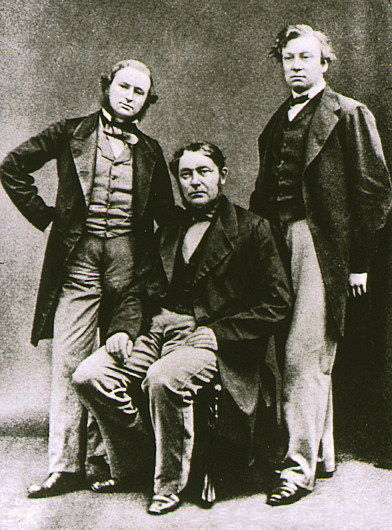
Henry Roscoe was born in London. His parents were Henry Roscoe and Maria Roscoe. He was the grandson of the famous 19th-century banker and parliamentarian, William Roscoe.
Henry attended the Liverpool Institute for Boys and University College London. After that, he went to Heidelberg, There, he studied with Robert Bunsen, with whom Henry later established a strong friendship. During that period, he became close to famous German analytical chemist William Dittmar.
Having returned to England with Dittmar in 1857, Roscoe took up the position of chemistry professor at Owens College in Manchester and Dittmar became his assistant. However, the state of the educational institution left a lot to be desired. Thus, in 1858, the Manchester Guardian newspaper called its condition “a mortifying failure”. According to Henry Roscoe’s recollections, once a tramp stopped him outside the college building and asked if it was a night asylum. The scientist replied that it wasn’t yet, but if he dropped by in six months, perhaps he could sleep there.
Roscoe worked at Owens College until 1886 when Victoria University was established on its basis.
In 1881, Henry played a key role in the foundation of the Society of Chemical Industry, becoming its first president. In addition, he headed its Manchester Section.
From 1885 to 1895, Roscoe represented Manchester South in the Parliament. His contribution to the development of education was very significant too. In particular, he participated in the work of several royal commissions dealing with educational reforms. During 1896-1902, Henry held the position of Vice-Chancellor of the University of London. In 1884, he was knighted for his services to education.
Development of analytical chemistry
Roscoe’s stay in Manchester coincided with a period when the city was struggling with the environmental problems of rapid industrialisation. His research made a huge contribution to analytical chemistry. Roscoe’s work laid down basic principles in assessing and considering the chemical composition of environmental samples, including water sources contaminated by industrial pollutants.
Vanadium isolation
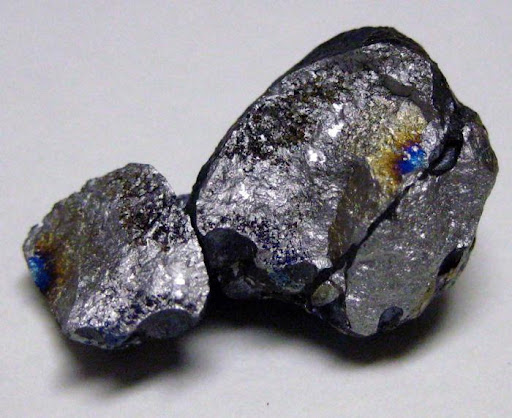
Vanadium is a metal that is widely used in the 21st century in steel alloys, batteries and even for medical purposes. However, it should be noted that this element was often underestimated in the 19th century.
Although vanadium had been identified before Roscoe’s research, it wasn’t isolated. In the 1860s, Henry successfully reduced vanadium chloride with hydrogen, obtaining the first pure vanadium metal. Roscoe’s work played an important role in understanding the properties of vanadium and paved the way for its future applications in industry, medicine and technology.
Vanadium has such unique properties as high strength, corrosion resistance and the ability to form coloured compounds. All of these make it a rather valuable element. In the 21st century, vanadium is used in various steel alloys in the production of batteries for storing renewable energy. In addition, it acts as a catalyst in chemical production. Vanadium is also used to make drugs for diabetes research and many other purposes.
It is also worth noting that Roscoe’s active scientific activity includes a series of significant studies conducted jointly with German chemist Robert Bunsen from 1855 to 1862. In the course of their work, they laid the foundations of comparative photochemistry, which played an important role in the development of science. In addition, in 1864, they carried out one of the first experiments with photography under artificial lighting, using magnesium as a light source. Three years later, Roscoe began an independent detailed study of vanadium and its compounds. He developed a method for obtaining this element in its pure form and proved that the metal, which was previously considered pure, actually contained impurities of oxygen.
For his scientific activities, Roscoe was awarded the Bakerian Lecture in 1868. In addition to vanadium, he also studied niobium, tungsten, uranium, perchloric acid and the solubility of ammonia, making a valuable contribution to the development of chemistry not only in Manchester but throughout the UK.
In addition to a number of chemistry textbooks, which have become widely distributed and translated into many languages, Henry Roscoe is the author of several significant scientific papers. Among them are Lectures on Spectrum Analysis published in 1869, Treatise on Chemistry published from 1877 to 1892 and A New View of Dalton’s Atomic Theory written jointly with Dr Arthur Harden in 1896. In 1906, he published Autobiography.
The outstanding scientist Henry Roscoe passed away in 1915. Of course, he left a huge mark on science and its development in Manchester.