

For decades, the area that now houses “Mayfield Park” was a derelict development site. Warehouses, abandoned industrial plots, and railway stations stood idle near Piccadilly Station. These vast areas were long in plain sight but unused, left in complete decay and missing out on opportunities. This was despite Manchester, as an industrial city, needing more green spaces to reconnect people with nature in the city centre. More at manchestername.com.
The city council had considered the idea of renovating this part of the city for many years. Strategic regeneration programmes were developed in 2009, 2014, and 2018, setting out ambitious plans for new homes, workspaces, leisure areas, and the creation of a park right in the centre. “Mayfield Park” was intended to drive transformational change, providing significant new commercial space and up to 1,500 new homes, as well as various retail and leisure facilities, all set within a new 6.5-acre park in the heart of Manchester.
Designing the Park
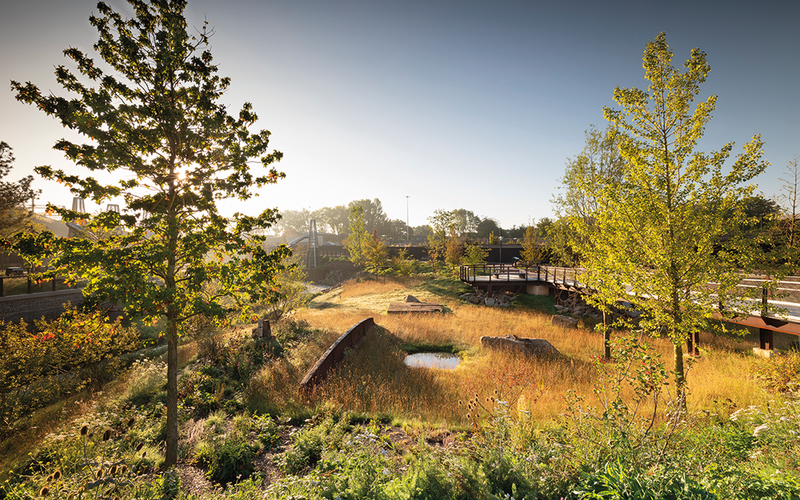
“Mayfield Park” officially opened in September 2022, becoming the first new city centre park in Manchester in over a hundred years. Its arrival was highly symbolic, uniting the city’s historical spirit, its industrial heritage, and its ecological future.
The project became an example of how urban regeneration can combine respect for history with innovative approaches to sustainable development. The architects and landscape designers preserved the unique Victorian-era railway arches, transforming them into artistic features and gateways to the park. Stone, brick, and metal – the traditional materials of old Manchester – were given new life in contemporary architectural forms.
One of the project’s most striking features was the uncovering of the River Medlock, which had flowed underground for decades, hidden beneath industrial development. Now, its riverbed is once again open to the public. It adds a sense of natural harmony to Manchester. Wetlands have appeared around the river, serving not only an aesthetic but also an important ecological function: they purify water, retain moisture, and prevent flooding, becoming an example of a nature-based climate solution.
The park covers an area of about 6.5 acres (2.6 hectares) – a true green oasis amidst the urban development. 142 trees and over 120,000 shrubs and plants have been planted here, making “Mayfield Park” one of the greenest corners of Manchester city centre. The landscape changes with the seasons: in spring, tulips and daffodils bloom; in summer, the scents of lavender and sage; in autumn, the fiery leaves of maples and birches.
The park is designed as a space for everyone. For children, there are play areas with slides, swings, and interactive elements inspired by the city’s history. For adults, there are walking and running routes, rest areas with wooden benches, shaded walkways, and open lawns for picnics, yoga, or open-air concerts.
Special attention has been paid to sustainable water use. Rainwater is collected and filtered naturally through the green plantings, and the drainage system is designed to prevent waterlogging and redistribute moisture during dry periods. This makes the park ecologically self-sufficient and resilient to climate change – an important achievement for a city where heavy rainfall and flood risks are becoming increasingly frequent.
Furthermore, “Mayfield Park” has become a hub for social interaction. It hosts cultural festivals, sporting events, community picnics, and charity fairs. The park attracts students, families, and tourists.
Since its opening, “Mayfield Park” has become a true symbol of the new Manchester – a city that knows how to learn from its past, respect nature, and look boldly towards a sustainable future.
A walk through “Mayfield Park” is not just recreation; it’s a reminder that sustainable development starts small – with a single green corner capable of changing an entire city.
Part of a Larger Programme
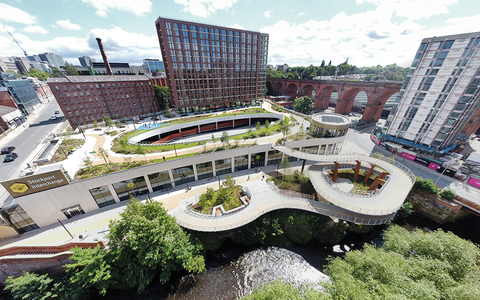
“Mayfield Park” is not just a park; it is the heart of the much larger regeneration of the Mayfield district in Manchester. The plan is vast: over 24 acres, around 1,500 homes, office space, shops, leisure areas, and transport improvements – all centred around this green hub. The first phase of housing construction has been approved: nearly 900 apartments in four high-rise buildings, some reaching 28 storeys, designed to overlook the park, with cafes, ground-floor amenities, and improved pedestrian and cycle access.
The most important aspect of this regeneration is sustainable development: the reuse of materials, high construction standards aimed at reducing carbon emissions, plantings that promote biodiversity, rain gardens, extensive cycle parking, and green transport hubs.
A Success in Ecological Innovation
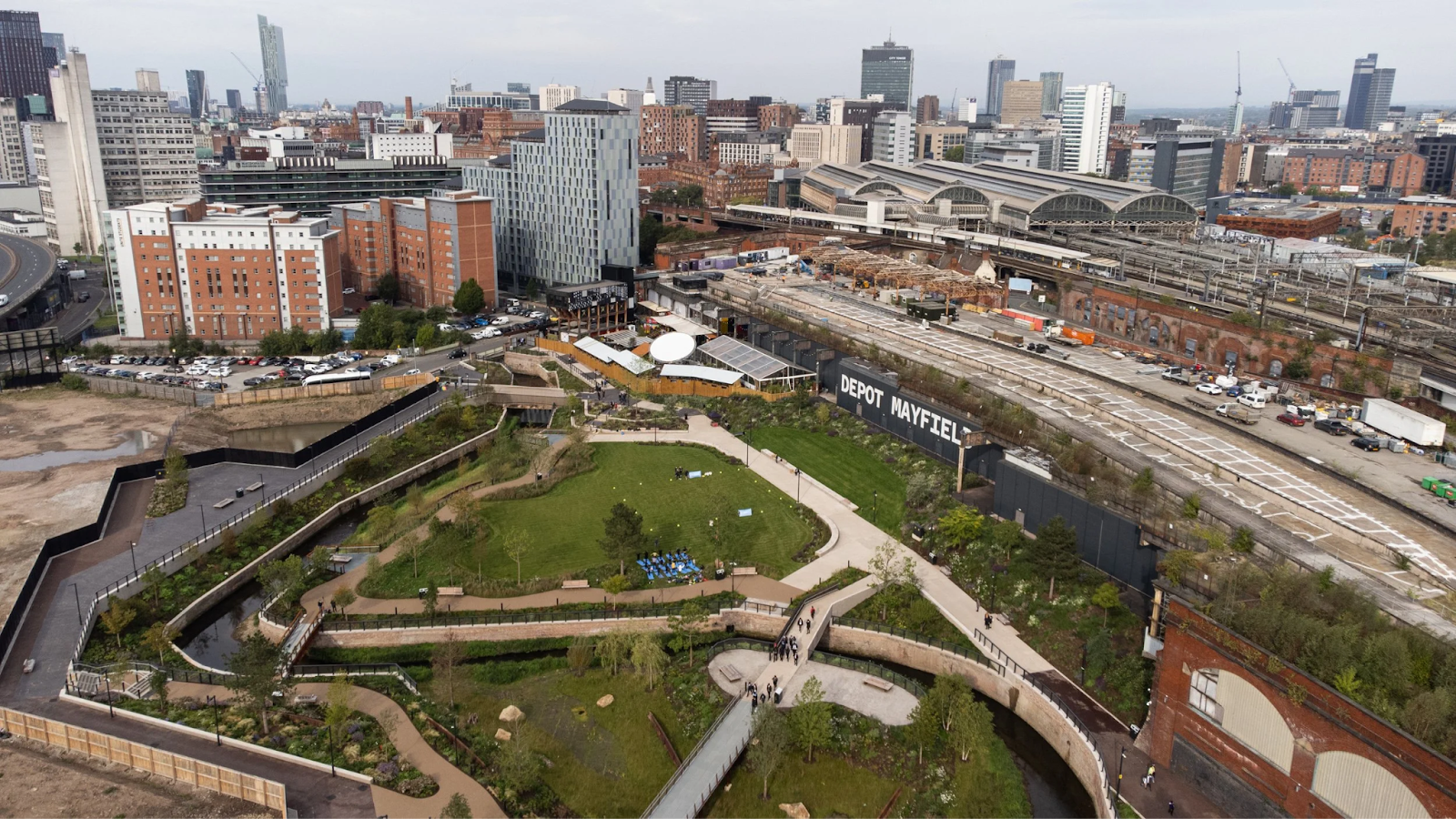
“Mayfield Park” is an example of successful ecological innovation. The park has even won awards for its design, biodiversity, and environmental impact. It serves as a natural filter for city centre residents, provides a habitat for wildlife, helps combat flooding thanks to its wetlands and ecological landscaping, and offers people new spaces for relaxation, play, and socialising.
But despite this huge step towards ecological sustainability and development, challenges remain in Manchester. Integrating new homes and high-rise buildings around the park means balancing development density with sunlight. It is also crucial to ensure affordable housing, maintain public access, and keep the park well-maintained in the long term. Furthermore, expanding green spaces and developing the transport network will be critical for fully integrating this area into Manchester’s climate resilience and liveability.
Why is the creation of “Mayfield Park” so important for Manchester?
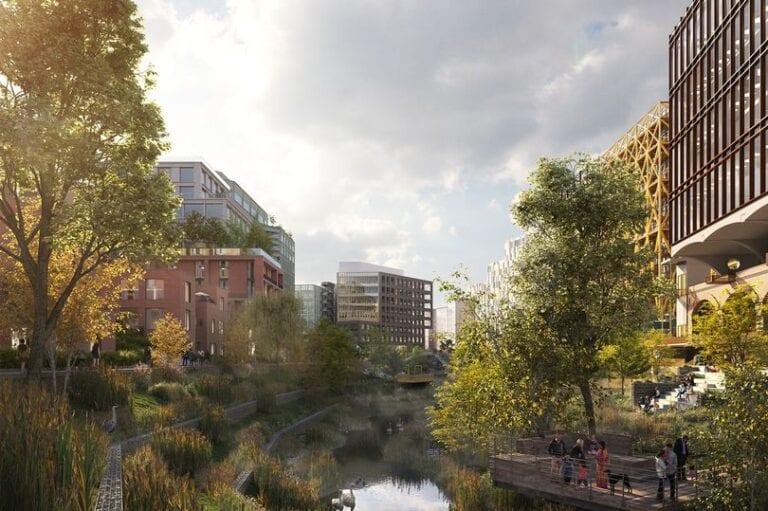
Specifically, “Mayfield Park” is the first new park in Manchester city centre in over a century. The city had long suffered from a lack of green zones, especially in the centre, which was dominated by offices, transport, and industrial development. The new park has literally become the “lungs” of Manchester – a place where residents and visitors can relax, stroll, and experience nature in the very heart of the metropolis.
A second, no less important aspect is that the River Medlock, which was hidden underground for decades, flows through the park. The project “freed” the river, returning it to its natural course. This not only revitalised the space but also became part of a sustainable drainage system — the park now helps reduce flood risk and mitigate the effects of heavy rain, which is especially important for Manchester’s damp climate.
Additionally, the planted trees and vegetation improve air quality and reduce the urban heat island effect in summer.
Previously, the “Mayfield Park” area was a derelict industrial zone – grey, unsafe, and lifeless. But in the 2020s, it is the true centre of a new district, around which homes, offices, restaurants, and sports and cultural spaces are being built.
Moreover, “Mayfield Park” has become a catalyst for the economic revival of this part of the city – jobs are being created, small businesses are developing, and residents are getting a new, more comfortable environment.
Over 140 trees and 120,000 shrubs have been planted in the park, and numerous biotopes have been created – from meadows and water bodies to flowering gardens. All of this supports urban biodiversity, creating a home for birds, insects, and small animals.
Sustainable materials and construction methods were used, and the landscape is designed to be self-sustaining – with minimal water and energy consumption.
“Mayfield Park” has also become a space for social integration and well-being. It is open to everyone. It hosts festivals, walks, yoga classes, and local community gatherings. The park has become a place where you can not only relax but also feel part of the city.
The creation of “Mayfield Park” is not just about tidying up an area; it is a new chapter in Manchester’s history. It shows that former industrial zones can become green oases, and that a city can be modern and ecological at the same time.
This is a project that unites Manchester’s past, present, and future, making it truly a city for people. Urban regeneration, when approached correctly, can bring nature back into the heart of the city, which heals it – socially, ecologically, and culturally. For Manchester, this project is not just a new park: it is a project for a sustainable future.