

Manchester has always been a city of movement. First, it was the hum of machines and steam engines, then – trams, cars, and an endless flow of people. But the 21st century brought a new goal: not just to move faster, but to live smarter. The “CyanLines” project became a symbol of this transformation. The project’s idea was very simple, yet revolutionary – to create a network of over 100 miles of routes for pedestrians, cyclists, and wildlife, connecting Manchester and its surroundings into a single ecological system. More on manchestername.com.
Instead of asphalt and noise, the residents of the city and region have gained green pathways, bodies of water, and places for recreation and socialising. “CyanLines” didn’t just create new infrastructure; it returned nature to its place in the heart of the city. Thanks to “CyanLines”, people feel that ecological harmony is a part of everyday life.
From an industrial past to a sustainable future
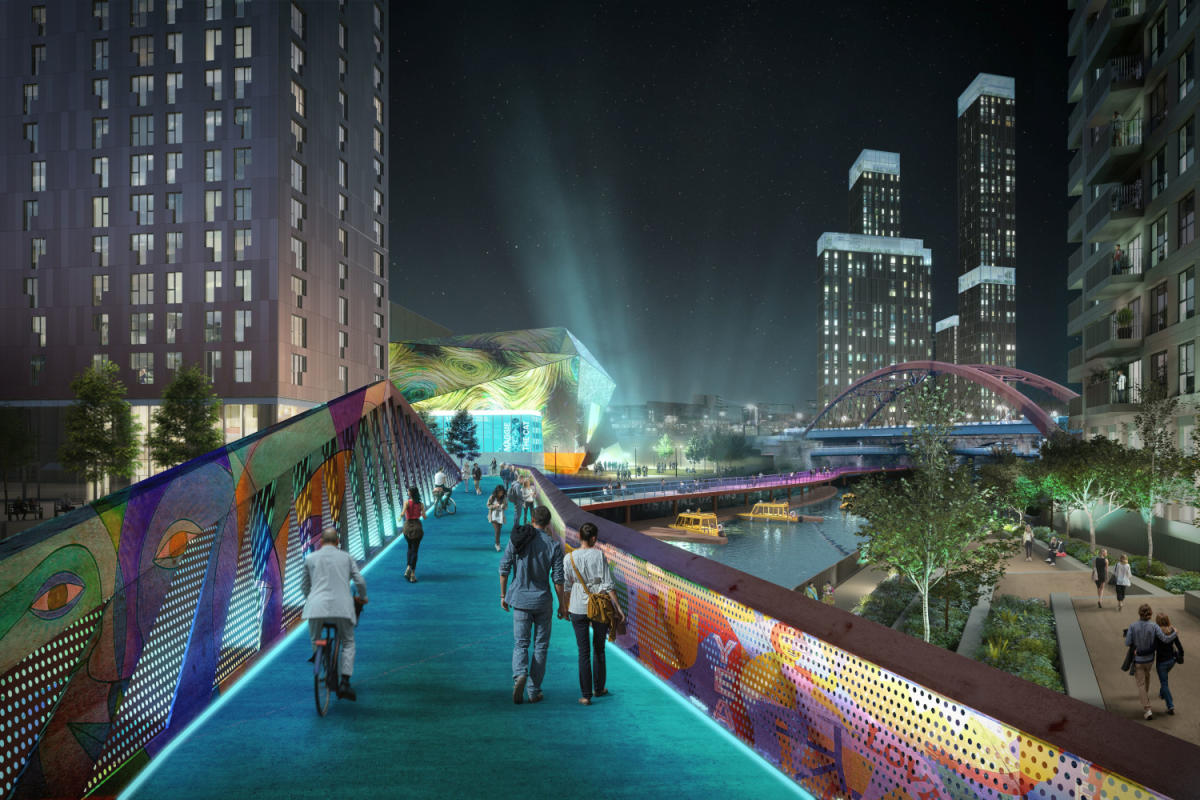
Manchester has long been known throughout the world as a symbol of the Industrial Revolution. It is a city of factories, canals, and railways. Its rapid development was driven by these very aspects, which, unfortunately, had a considerable impact on the city’s ecology. But in the 21st century, everything changed – the time has come for new, sustainable revolutions that symbolise life and renewal.
“CyanLines” is based on old transport corridors. Namely, derelict railway lines, canals, and service roads — transforming them into “green arteries” that connect urban areas with natural zones. The project not only improves conditions for car-free travel but also restores biodiversity, reduces flood risks, and purifies the air.
In an urban environment where every patch of land is worth its weight in gold, “CyanLines” offers a different approach – to return the land to people and nature simultaneously. Where the wheels of steam trains once rattled, trees now grow, birds fly, and children play.
How it all began
“CyanLines” is an urban initiative created by Tom Bloxham, chairman of the development company “Urban Splash”, and Pete Swift, CEO of the architectural practice “Planit”. The project’s name itself is symbolic: “Cyan” combines the blue of water and the green of nature, reflecting the idea of harmony between the urban environment and living ecosystems.
The official launch of “CyanLines” took place on 10 September 2025 at “Aviva Studios” in Manchester, with the support of Manchester City Council and the Greater Manchester Combined Authority.
The main goal of this initiative is to breathe new life into disused urban areas, transforming them into ecological corridors and zones of community activity. The project will connect well-known city landmarks — Castlefield Viaduct, Mayfield Park, New Islington Marina, as well as less prominent green spaces and future districts such as Victoria North and Holt Town.
“CyanLines” has become not just an urbanist idea, but a step towards a new type of city where architecture, nature, and people coexist.
Routes that connect life
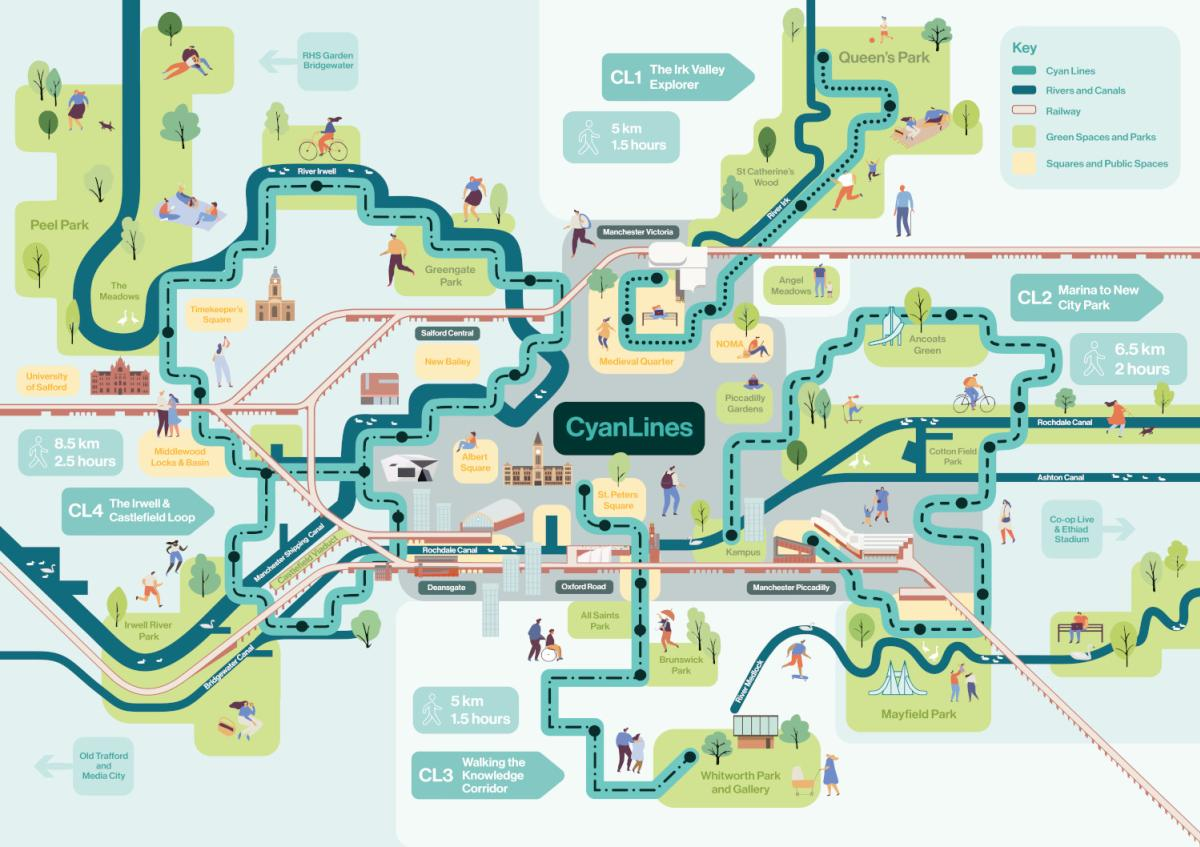
“CyanLines” is not just an ecological initiative, but a living network of routes running through city centres, parks, rivers, and surrounding neighbourhoods. In total, the project covers over 100 miles of pathways, creating a single “green belt” for Greater Manchester.
Each section has its own function. Some are designed for daily commutes to work or college by bicycle, others for quiet strolls and nature watching. Some routes run alongside bodies of water, others through woodlands or historic industrial zones. But every one of them is unique and incredibly picturesque.
The project brings together over 10 boroughs and is being implemented in partnership with local communities, schools, and environmental organisations. People are involved in planting, environmental monitoring, and volunteering. In this way, “CyanLines” not only transforms the space but also unites people around a common goal: to make Manchester a better place to live.
A city of the future — for people and nature
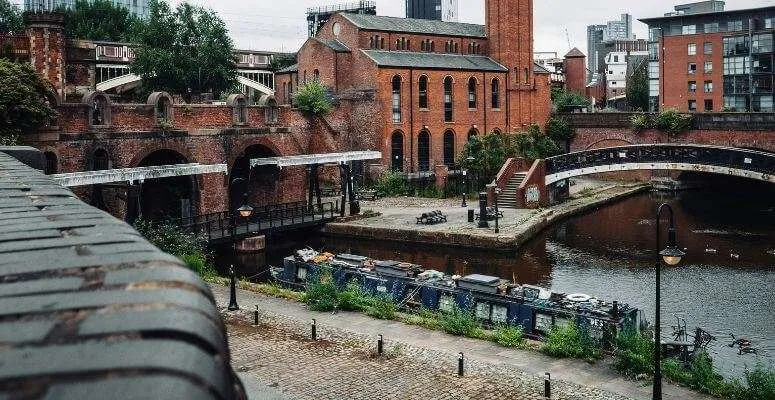
It is worth noting that “CyanLines” has become an important part of the “Green & Blue Infrastructure” strategy, developed by Manchester to combat climate change and improve quality of life. In a city that has struggled for decades with the consequences of industrialisation — air pollution, a lack of green spaces, and flooding — this project has been a real breath of fresh air.
Over the years the project has been in operation, its impacts, although small, are step by step reducing the legacy of industrialisation. These include: a reduction in CO₂ emissions thanks to the growth of cycling and walking; improved drainage and stormwater management; the restoration of natural habitats for animals and birds; and the strengthening of residents’ mental and physical health. After all, nature has a significant positive effect on a person’s psychological and emotional state.
You could say that “CyanLines” is not just a project about nature; it is a project about people and a city learning to coexist again. Even its colour – cyan – has a special meaning. It serves as a reminder that water, sky, and greenery must once again become an integral part of Manchester’s urban life.
In the near future, these routes could become not only a model for other British cities but also the foundation of a new culture – a culture of movement, tranquillity, and care for the world around us. Because the true innovation of the 21st century is not another piece of technology or artificial intelligence, but the ability to restore harmony between humanity and nature.