

It’s no secret that Manchester was at the very heart of the Industrial Revolution. Therefore, it rightfully deserves the status of the first industrial city. However, it‘s worth noting that it is completely different in the 21st century. Its once great industry has become a historical heritage. Still, over the past decades, Manchester has undergone a colossal transformation. In particular, the city areas with many factories and warehouses have been transformed through reclamation and gentrification. It has allowed not only to preserve the historical heritage and the true image of the city but also to breathe new life into these long-neglected spaces. Learn more at manchestername.com.
Ancoats: from an industrial centre to a residential area
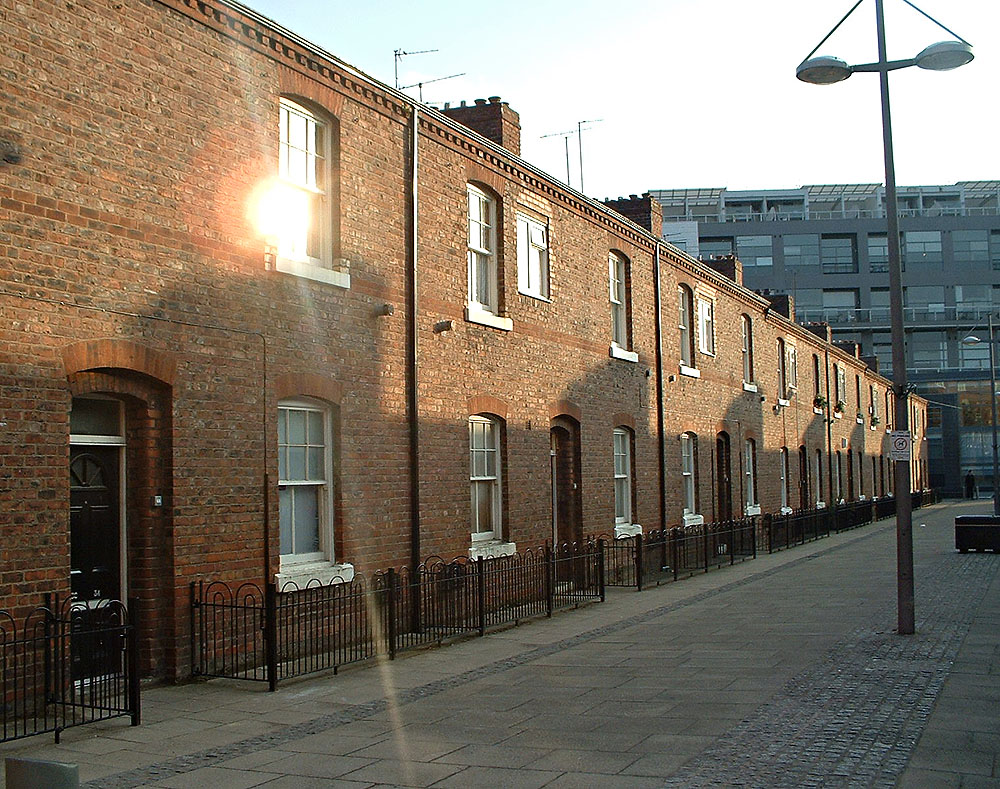
While Manchester was known throughout the world as the first industrial city, Ancoats is known as the first industrial suburb. Since the late 18th century, this area has been one of the leaders in the industrial sector. It was rapidly developing and flourishing. However, from the 1930s onwards, it experienced an intensifying economic downturn. The area faced a massive exodus after the Second World War, especially in the 1960s, when many residents were relocated as part of the slum clearance programme. As the industry declined, the area faced economic decreases and depopulation.
However, it couldn’t continue forever. After all, Manchester was rapidly expanding and Ancoats was too close to the centre to remain abandoned. It required a modern urban planning solution. Thus, in the 1990s, the city authorities recognised Ancoats’ rich industrial heritage and made significant efforts to modernise it or rather gentrify it. Historic mills and factories have been converted into modern apartments, creative studios and trendy eateries. Thus, once industrial Ancoats transformed into a vibrant urban area. In the 21st century, it is a shining example of successful urban regeneration, combining historic architecture with modern life.
Ancoats is home to such historic buildings as:
- Beehive Mill, built in the 1820s and converted into offices and a luxury co-working space in 2017
- Brownsfield Mill, built around 1825
- The Crown and Kettle pub, built in the early 19th century and voted one of the best pubs in the North West in 2023
- Murray’s Mill, built in 1798 and converted into residential and commercial premises in modern time
- Royal Mill, built around 1912 and converted into apartments, offices and shops in the early 21st century
- and many others.
Spinningfields, Manchester’s modern business area
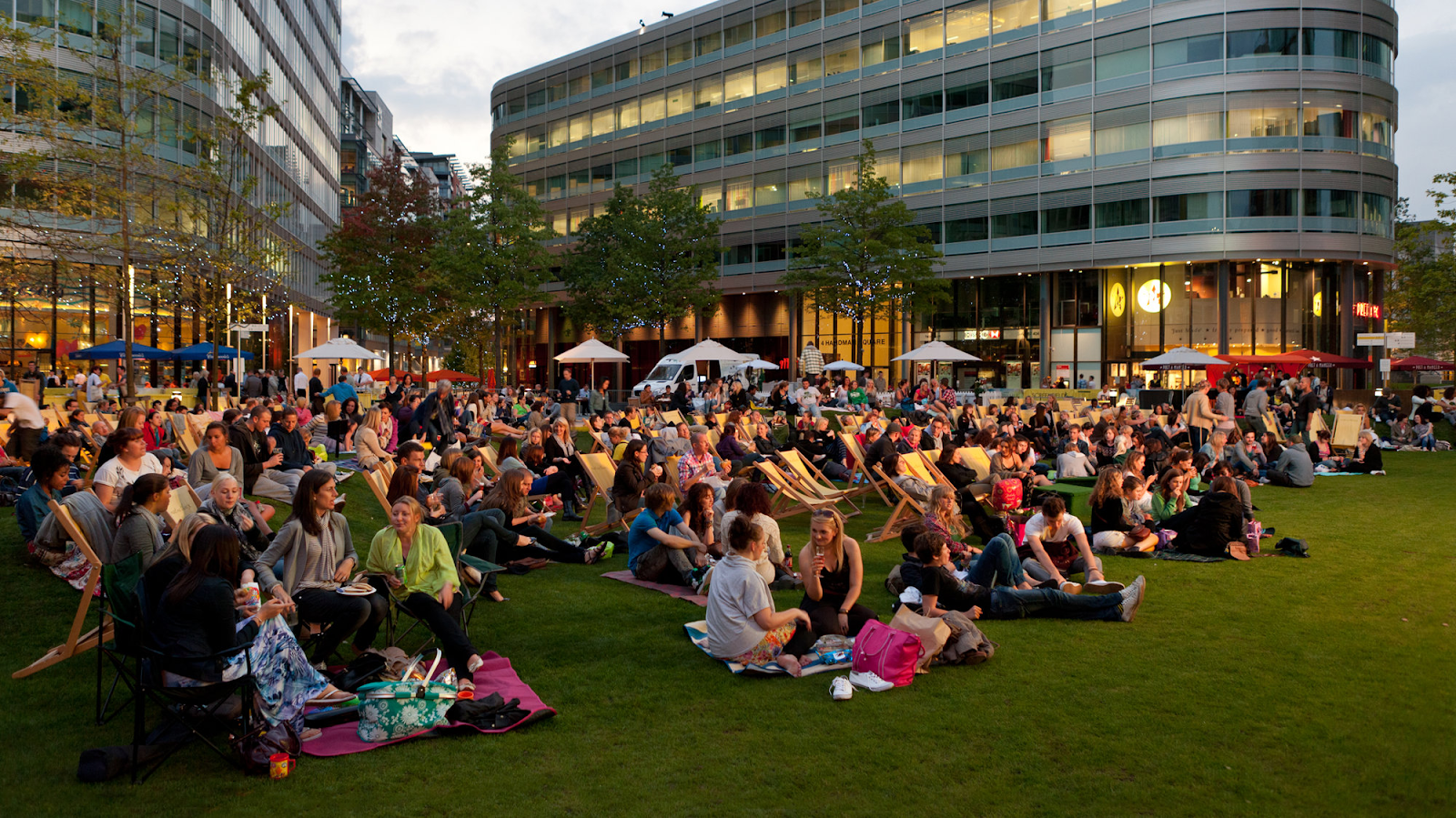
Located between Castlefield and Deansgate, Spinningfields is one of the most successful recent regeneration projects in the UK. Once a largely empty and underused place, it was transformed into a world-class business area and a modern leisure hub in the early 21st century. Its development has attracted international investment and leading organisations in real estate, retail and professional services. Spinningfields is an example of how strategic planning and investment can rejuvenate industrial areas into thriving economic centres. What’s more, the area has been planned and built using modern and environmentally friendly methods. Here, you will find not only concrete and stonework but also cosy green islands inviting you to relax.
Land reclamation and creation of green spaces
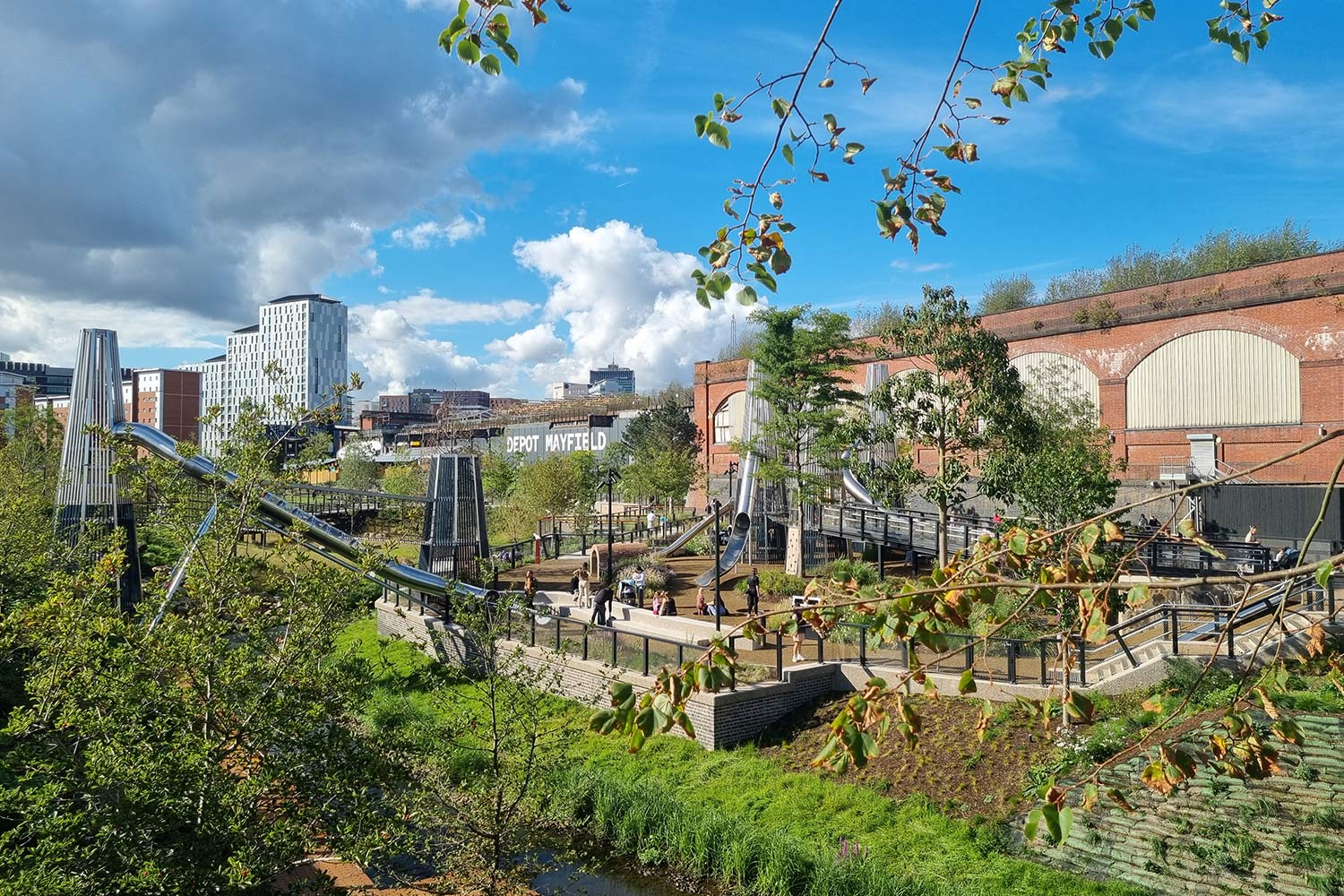
An important aspect of industrial regeneration is land reclamation. That was what happened with the Mayfield area, which used to be an abandoned industrial site in the city centre.
The area remained neglected from the 1980s. However, it is actively developing as part of a large-scale regeneration project in the 2020s. The plans include the construction of 1,500 new homes, as well as the creation of commercial, entertainment and office spaces.
The design and implementation of the new park took more than six years. In 2020, the government allocated £23 million from the Getting Building Fund for its development. It was one of the largest investments in a single project. What’s more, it is the first new park in Manchester city centre for more than a century. It was officially opened in 2022.
The project not only revitalised an abandoned part of the city but also emphasised sustainable ecology, providing residents and visitors with much-needed green spaces. Land reclamation and planting of various plants in the park help to clean the soil and the air, contributing to the improvement of the city’s ecology after many years of industrial activity.
Manchester is a real example for many similar cities and entire countries of how to preserve your historical past, creating new unique spaces through gentrification and land reclamation. Abandoned factories and warehouses are being transformed into modern residential complexes, cultural centres and creative spaces. Old areas are gaining new life thanks to thoughtful restoration. Manchester successfully combines historical heritage with innovative projects, creating a comfortable environment for living, working and relaxing. This balance between the past and the future makes the city an example of successful urban transformation.