

The Industrial Revolution began in Britain in the late 18th century, marking a shift from manual labor to mechanized production and from artisanal workshops to large-scale factories. Manchester emerged as a pioneer during this transformation, with its roots in textile manufacturing dating back to the 14th century. The invention of the steam engine and mechanization of labor drove economic growth and the rise of industrial society. However, these advancements came at a significant cost to the health of Manchester’s residents. The city was enveloped in thick clouds of black smoke, with sunlight barely penetrating the heavy haze. Next on manchestername.com.
Coal Burning: The Problem of the 19th Century
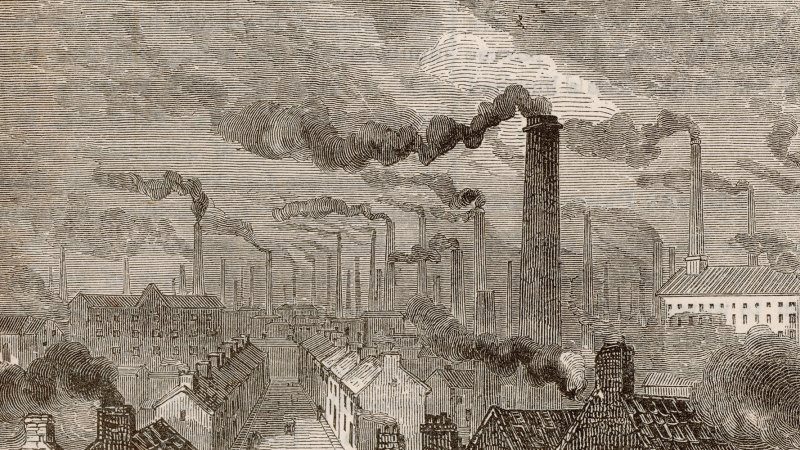
The primary source of air pollution in 18th and 19th-century Manchester was the burning of coal. Coal, supplied from the Lancashire coalfields, powered the engines that ran factories and mills. Its combustion released carbon dioxide, ash, and water vapor into the atmosphere. In those days, coal burned inefficiently, producing large amounts of black smoke and soot that settled on buildings, roads, and other surfaces.
By the late 19th century, nearly 2,000 industrial chimneys in Manchester and Salford constantly emitted thick black smoke. Consequently, respiratory diseases, asthma, and eye irritation were common among workers. Areas with heavy industrial activity experienced particularly high mortality rates.
Early Efforts to Address Air Pollution
The citizens of Manchester sought ways to improve the situation. Initially, committees and societies were formed to combat excessive smoke emissions. In 1800, the police commissioners established a committee to monitor businesses responsible for heavy smoke pollution.
In 1842, the Manchester Association for the Prevention of Smoke was founded. Activists believed that innovation held the key to resolving the problem, advocating for the use of more efficient steam boilers. For example, factory owners were encouraged to install the so-called Lancashire boiler, which burned coal more effectively, thereby reducing black smoke emissions.
Activists also attempted to persuade business owners to switch to gas-powered engines. However, the transition to gas was costly compared to using Lancashire coal, and many factory owners resisted the change.
Legislative Measures
Efforts to regulate the use of fossil fuels through legislation began later. Clear laws governing the consumption of fossil fuels in industry emerged only in the 20th century. The turning point came in December 1952 when London was enveloped by the infamous Great Smog. In response, Parliament passed the Clean Air Act of 1956, which limited the use of certain fuels in industry and households. This legislation extended to Manchester, transforming the city into a “smoke control area,” where burning solid fuels was prohibited.
Vehicle Emissions and Air Pollution
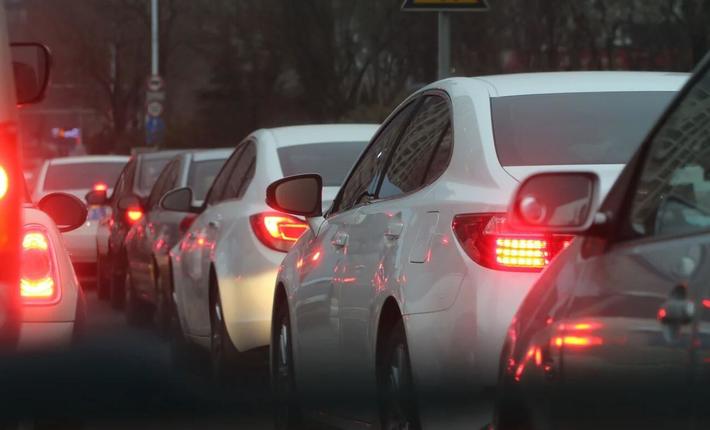
In the 19th century, Greater Manchester suffered from air pollution caused by vehicle emissions. According to a 2018 IPPR North report, “toxic air reduces life expectancy in the region by an average of six months.”
The report noted that discussions about air pollution had been overly focused on London, while Greater Manchester faced similar challenges. Cities in the county, including Manchester, recorded high hospitalization rates for asthma and elevated incidences of lung cancer.
The challenges of the 21st century, such as pollution caused by vehicle emissions, require innovative solutions to mitigate their impact.