

Park · Manchester · ⭐ 9.3/10 · 3690 reviews · updated: 2026-08-04 20:23:01
Address: 74 Maitland Ave, Manchester M21 7WH, United Kingdom
Chorlton Water Park — a motorway gravel pit that became Manchester’s first nature reserve
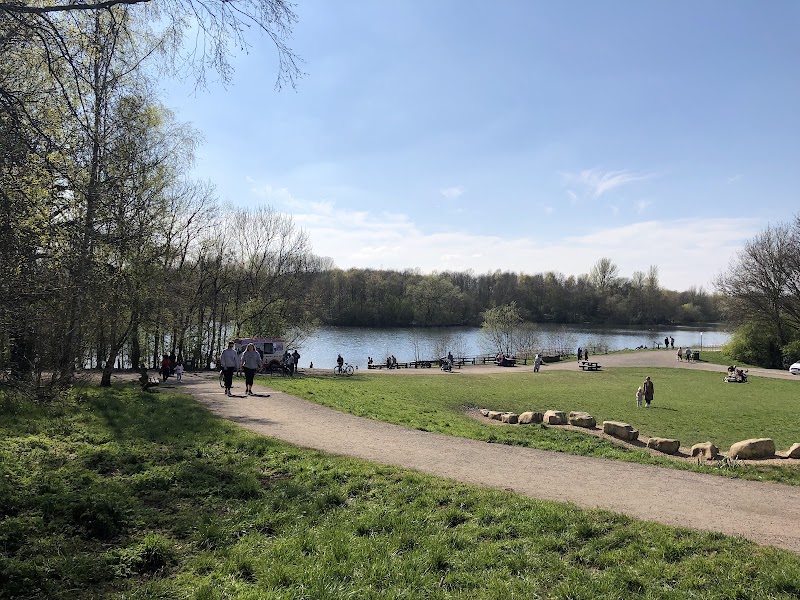
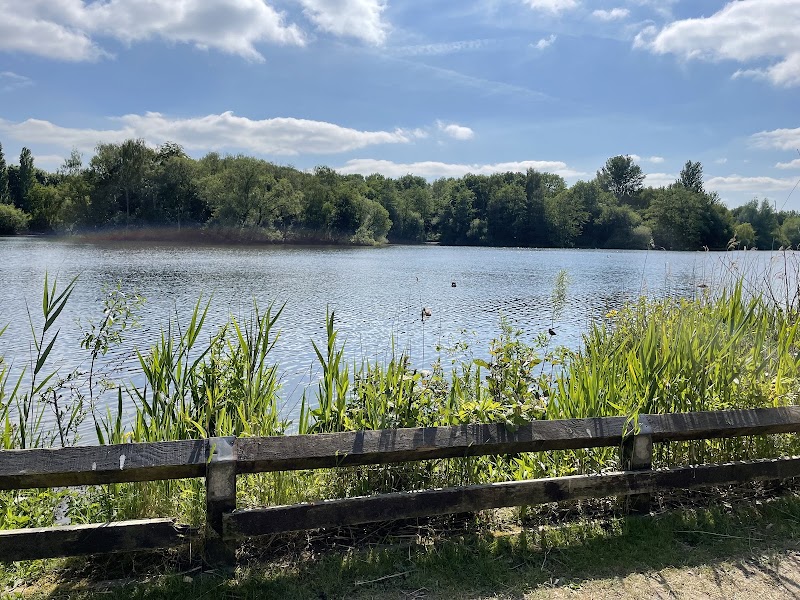
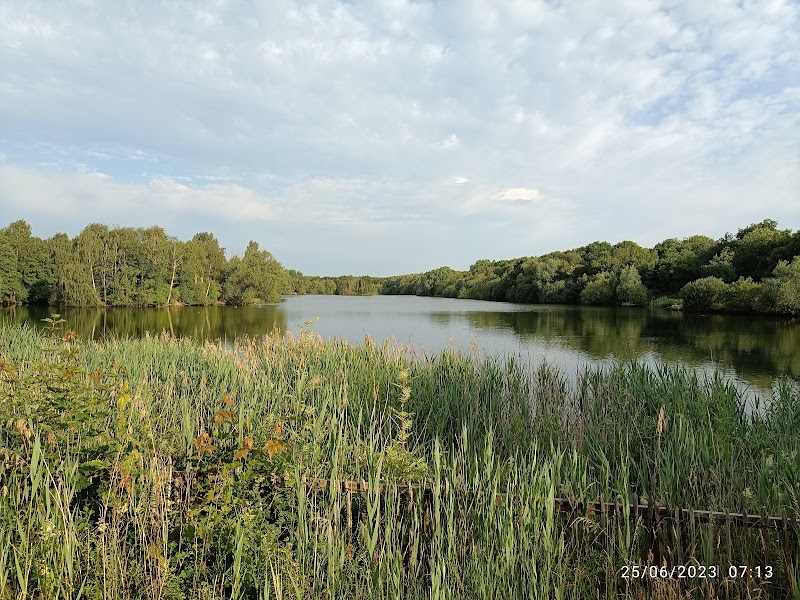
There is a particular kind of English landscape that only exists because something industrial happened first, and Chorlton Water Park is one of the best examples in the north-west. In the 1970s contractors dug gravel out of the Mersey floodplain to build the motorway that now orbits Greater Manchester. The pit filled with water. In 1978 the city opened the result as a park and designated it a Local Nature Reserve — the first in Manchester. Fifty years on it reads as if it had always been there: a broad lake ringed by a level mile of path, reedbeds, wet woodland, meadows, and a bird list long enough to keep serious birdwatchers coming back through the winter.
Highlights
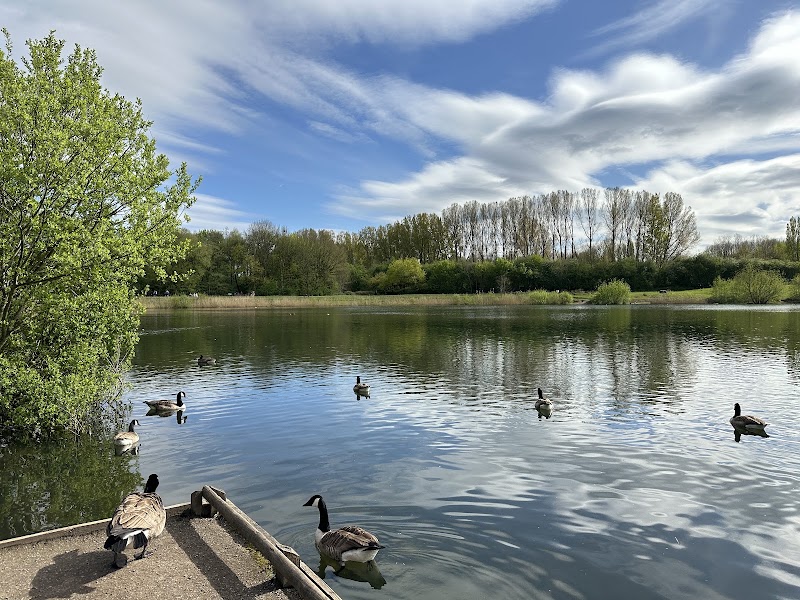
- The lake — roughly seventeen acres of open water occupying the old gravel workings, the visual and ecological centre of the reserve and a magnet for waterbirds all year.
- The circular path — a level surfaced route of about one mile right around the water, easy underfoot, pushchair-friendly and usable in almost any weather.
- Local Nature Reserve status — designated in 1978, the first in Manchester, and managed ever since by the Mersey Valley Countryside Warden Service alongside Manchester City Council.
- The bird life — herons and kingfishers along the margins, swans and geese on the open water, pochard in winter, sand martins and swallows over the surface in summer, plus woodpeckers, owls, ring-necked parakeets and warblers including blackcap, chiffchaff and willow warbler in the trees.
- The Trans Pennine Trail — the long-distance coast-to-coast route runs through the site, which is why you will meet cyclists, horse riders and long-haul walkers as well as local dog owners.
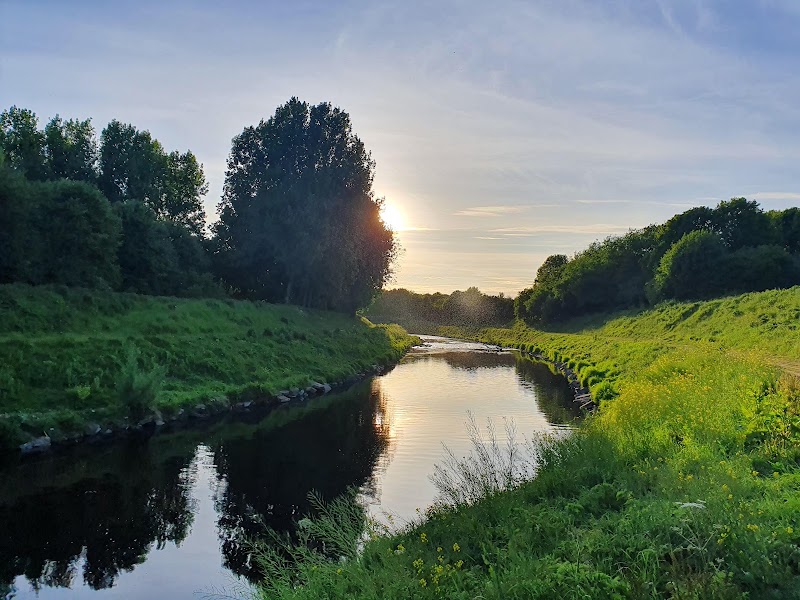
- The Mersey frontage — the reserve sits on the north bank of the river, with a footbridge crossing to the wider valley and Sale Water Park beyond.
What you’ll find
The reserve is compact — a lake of about seventeen acres inside roughly twenty-two acres of woodland, grassland and meadow — but it sits inside the much larger Mersey Valley green corridor, so a short visit and a half-day expedition are equally possible. It holds a Green Flag Award and is recognised as a Site of Biological Importance, and the management reflects that: this is a nature reserve that happens to be excellent for walking, not a recreation ground with some trees.
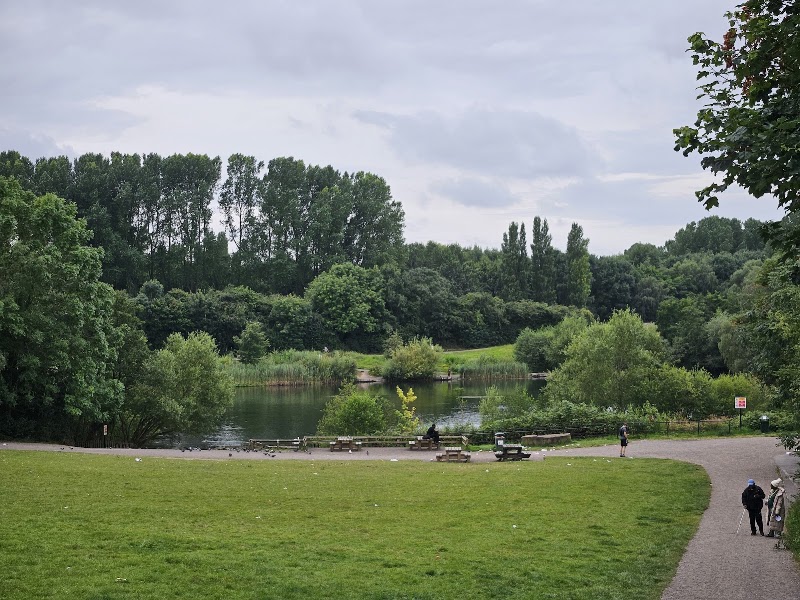
- Open water and margins — the lake itself, with reed and scrub edges that do the ecological heavy lifting.
- Woodland and meadow — mixed planting and grassland managed for wildflowers, butterflies and dragonflies.
- Fishing — a coarse fishery holding carp, bream and roach, operated under a permit system to keep the water in balance.
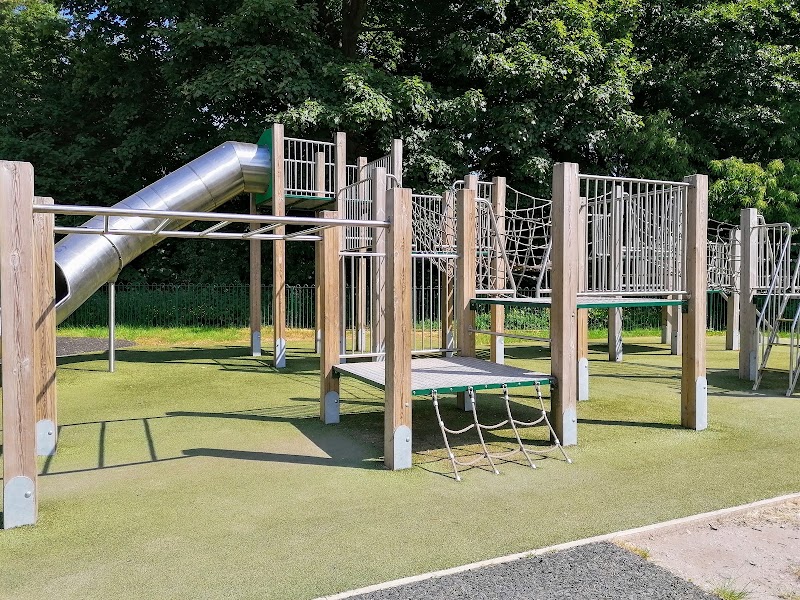
- Family basics — a small playground, picnic benches, toilets near the entrance and a car park with accessible spaces.
- Connections — direct links on foot to Chorlton Ees, the Mersey riverside path and, over the footbridge, Sale Water Park.
- Health walks — the reserve forms one of the five Mersey Valley Health Walks, a structured programme of guided routes through the valley.
Things to do — and who it’s for
- Birdwatchers — the single best reason to come; the species list runs well beyond the usual urban waterbirds, and winter brings ducks that are hard to see elsewhere in the city.
- Families with young children — the flat mile round the lake is exactly the right length for small legs, and the playground and toilets make it low-risk.
- Runners — a measured, level, traffic-free loop that can be repeated as often as your legs allow, with a longer riverside extension available.
- Cyclists and long-distance walkers — the Trans Pennine Trail passes through, making this a natural staging point rather than a destination in itself.
- Anglers — a well-stocked, quiet coarse water within the city boundary, with permits required.
- Anyone who needs twenty minutes of quiet — it is close to a busy suburb yet genuinely calm, particularly on the far side of the water.
Getting there & practical
The reserve is in the southern reaches of Chorlton, hard against the north bank of the Mersey and within the wider Mersey Valley. By Metrolink, take the pink East Didsbury–Rochdale line to Chorlton and walk south for about twenty to twenty-five minutes, or use the local buses that serve the district, including routes 23 and 85, and finish on foot. There is a car park on site with accessible spaces, but it is modest and fills on fine weekends, and the surrounding residential access is tight. Entry is free, all year, with no charge for the paths, the playground or the birdwatching; fishing requires a permit. There are toilets near the entrance but no café on site — the nearest cafés are in Chorlton itself. The park is open daily during daylight hours. Swimming is not permitted, dogs must be under control and on leads in designated areas, and kayaking or canoeing is only allowed under specific arrangements. An hour covers the circuit; two to three hours lets you add the riverside and the footbridge crossing.
When to visit
Spring is when the reserve is at its noisiest and most rewarding: warblers arrive and start singing from the scrub, sand martins and swallows work the surface of the lake, and the first broods of cygnets and goslings appear. Summer brings the meadow into flower, with dragonflies over the water and butterflies through the grassland, and the woodland shade makes the circuit comfortable even on the hottest days. Autumn strips the leaves back and opens sightlines across the water just as passage birds move through the valley; it is also when the fishing is at its best and the paths are at their quietest. Winter is the birdwatcher’s season — duck numbers build on the open water, pochard and other wildfowl settle in, the reedbeds are bare enough to reveal herons and the occasional kingfisher, and the level surfaced path stays usable when the riverside meadows have turned to mud.
Good to know
The land here was part of Barlow Hall Farm before the motorway age. In the 1970s, contractors building the orbital motorway around Greater Manchester — then numbered as the M63, absorbed into the M60 when the route was renumbered in 1998 — extracted gravel from the site, leaving a deep pit in the Mersey floodplain. The pit filled with water, and rather than backfill it Manchester City Council took the far more interesting decision to make it public. The park opened in 1978 and was designated a Local Nature Reserve, the first such designation in the city, and the Mersey Valley Countryside Warden Service has managed it continuously since that year. That combination — a young, deliberately naturalised site with half a century of consistent conservation management — is exactly why the ecology is now so strong. The reserve holds a Green Flag Award and is recognised as a Site of Biological Importance, and well over a hundred bird species have been recorded in and around it. Its position matters as much as its size: the site sits within the Mersey Valley, the long green corridor that runs through south Manchester and functions as both wildlife route and flood management landscape. Immediately adjoining are Chorlton Ees, an area whose sewage works were cleared and reclaimed in 1972, and, across the river by footbridge, the larger Sale Water Park. The Trans Pennine Trail, the national coast-to-coast route, threads through the reserve, and one of the five Mersey Valley Health Walks is based here. In practical terms the site is unusual for an urban nature reserve in being genuinely accessible: the main circuit is level and surfaced, so the birdwatching, the water and the woodland are open to people who cannot manage rough ground.
Visitor tips
- Bring binoculars, even casually. The lake looks ordinary from the car park and completely different once you can identify what is sitting on the far side of it.
- Cross the footbridge and continue into the wider valley if you want more than an hour. The riverside path and Sale Water Park turn a short circuit into a proper half-day walk.
- Plan for no café. There is nothing on site, so either bring a flask and use the picnic benches or build the walk around a stop in Chorlton afterwards.
Questions & answers
Why is it called a water park? Because the lake is the whole point. It occupies a gravel pit dug in the 1970s during motorway construction, which filled with water and was opened as a park in 1978.
Is it really a nature reserve? Yes — it was designated a Local Nature Reserve in 1978, the first in Manchester, and it is also recognised as a Site of Biological Importance and holds a Green Flag Award.
How long is the walk round the lake? About a mile, on a level surfaced path. Most people take between twenty-five and forty minutes, longer if they stop to look at birds.
Can you swim in the lake? No. Swimming is prohibited. Kayaking and canoeing are only permitted under specific arrangements.
Can you fish? Yes, it is a coarse fishery with carp, bream and roach, but a permit is required — the permit system exists to protect the ecological balance of the water.
What birds can I expect to see? Herons and kingfishers along the edges, swans, geese and other waterfowl on the open water, pochard in winter, sand martins and swallows in summer, and woodpeckers, owls, ring-necked parakeets and warblers such as blackcap, chiffchaff and willow warbler in the trees.
How do I get there without a car? Metrolink on the pink East Didsbury–Rochdale line to Chorlton, then about twenty to twenty-five minutes on foot; local buses including routes 23 and 85 also serve the district.
Is there a café or toilets? There are toilets near the entrance but no café on site. The nearest places to eat are in Chorlton.
Can I bring a dog? Yes, but it is a nature reserve — dogs must be kept under control and on leads in the designated areas, particularly around the water margins where birds nest.
Photos
Show 1 more photos
Visitor reviews
Reviews last updated: 2026-08-04 20:23:01
Data is refreshed monthly. Sources: manchestername.com and editorial picks based on reviews.
It's a lovely place for a walk or run, the path is a huge ring which makes for a pleasant stroll with out worrying about making your way back.
There's usually food and drink vans there and there's a kids play area a sh…
A wonderful place for a family day out in nature!
We came from Lithuania to visit our grandson and were very impressed by this park. The nature here is simply amazing – peaceful surroundings, a big lake, and the paths ar…
A nice little place where you can have a walk and admire nature. It is also great to watch the animals in nature enjoying the sun
A nice little café, and the ice cream van is reasonably priced too.
Great that the car…
Did not stay too long, it was raining and windy, had a walk, lots of people walking or running, expected to see more birds, ducks, even squirrels, but not much luck, very green, enjoyed watching the River Mersey, managed…
Wonderful to get out into nature, it would be nice to have more places for a snack, hides for birdwatching or some other attractions.