It is hard to imagine life in Manchester without rain—after all, wet weather is practically a hallmark of the UK climate. However, river networks, high urban density, and vast expanses of impermeable surfaces leave the metropolis particularly vulnerable to flooding. During severe downpours, storm drains and sewers are pushed to their limits, putting neighborhoods at risk of waterlogging. That is why the city has been rolling out innovative engineering solutions in recent years to slow the flow of water and relieve pressure on drainage networks. To learn more about how Manchester tackles flooding and manages stormwater, visit manchestername.
How Manchester Manages Flood Risk
For Manchester, managing surface runoff and mitigating flood hazards is an urgent priority. In January 2021, over 1,000 residents in Didsbury and Harpurhey were evacuated when Storm Christoph brought torrential rains and triggered surging water levels. While urban flooding poses an escalating challenge, municipal authorities are tackling it head-on by implementing Sustainable Drainage Systems (SuDS). These systems mitigate localized flooding by controlling surface runoff during intense rainfall. Combining engineering with nature-based solutions, SuDS intercepts runoff as close to the source as possible—temporarily holding water, facilitating natural infiltration into the ground, or releasing it into the drainage network at a controlled pace.
Key SuDS management principles include:
- The Management Train. Applying a hierarchy of SuDS components tailored to specific land uses and localized drainage needs.
- Source Control. Managing and attenuating runoff as close to where rain falls as possible.
- Managing Water on the Surface. Prioritizing above-ground runoff management wherever feasible.
- Early Integration. Factoring SuDS into site selection and spatial master planning from the very outset.
Shallow drainage swales substantially reduce the volume of stormwater diverted into underground pipes. By temporarily holding runoff, they give water time to filter naturally into the soil or discharge into the wider network in a controlled, measured flow.
Engineering Approaches Deployed Across the City
Beyond SuDS, Manchester relies on several conventional and advanced flood engineering measures:
- Stormwater attenuation tanks and underground storage reservoirs.
- Flood storage basins, such as the Didsbury Flood Storage Reservoir on the River Mersey, which hold back excess river water during peak flows.
- Reinforcing and raising flood defense embankments and river walls.
- Minimizing the overall volume of surface runoff diverted into the sewer system.
The Role of Manchester City Council
Local authorities steer flood risk governance under Manchester’s Local Flood Risk Management Strategy (LFRMS), applying rigorous standards to new developments. The dedicated council team works in close partnership with regional and statutory agencies.
The team’s core responsibilities include:
- Developing and updating the local flood risk management strategy.
- Investigating significant flooding incidents across the city.
- Maintaining a comprehensive register of flood defense and drainage assets.
- Consenting land drainage works and interventions on ordinary watercourses.
Across urban regeneration projects, planners are increasingly incorporating rain gardens, permeable paving, green roofs, bioretention basins, attenuation ponds, and specialized drainage tree pits. Thanks to this multifunctional design, public spaces serve as vibrant leisure amenities in dry weather while doubling as vital protective infrastructure during severe cloudbursts.
West Gorton’s “Sponge Park” and the Ancoats Example
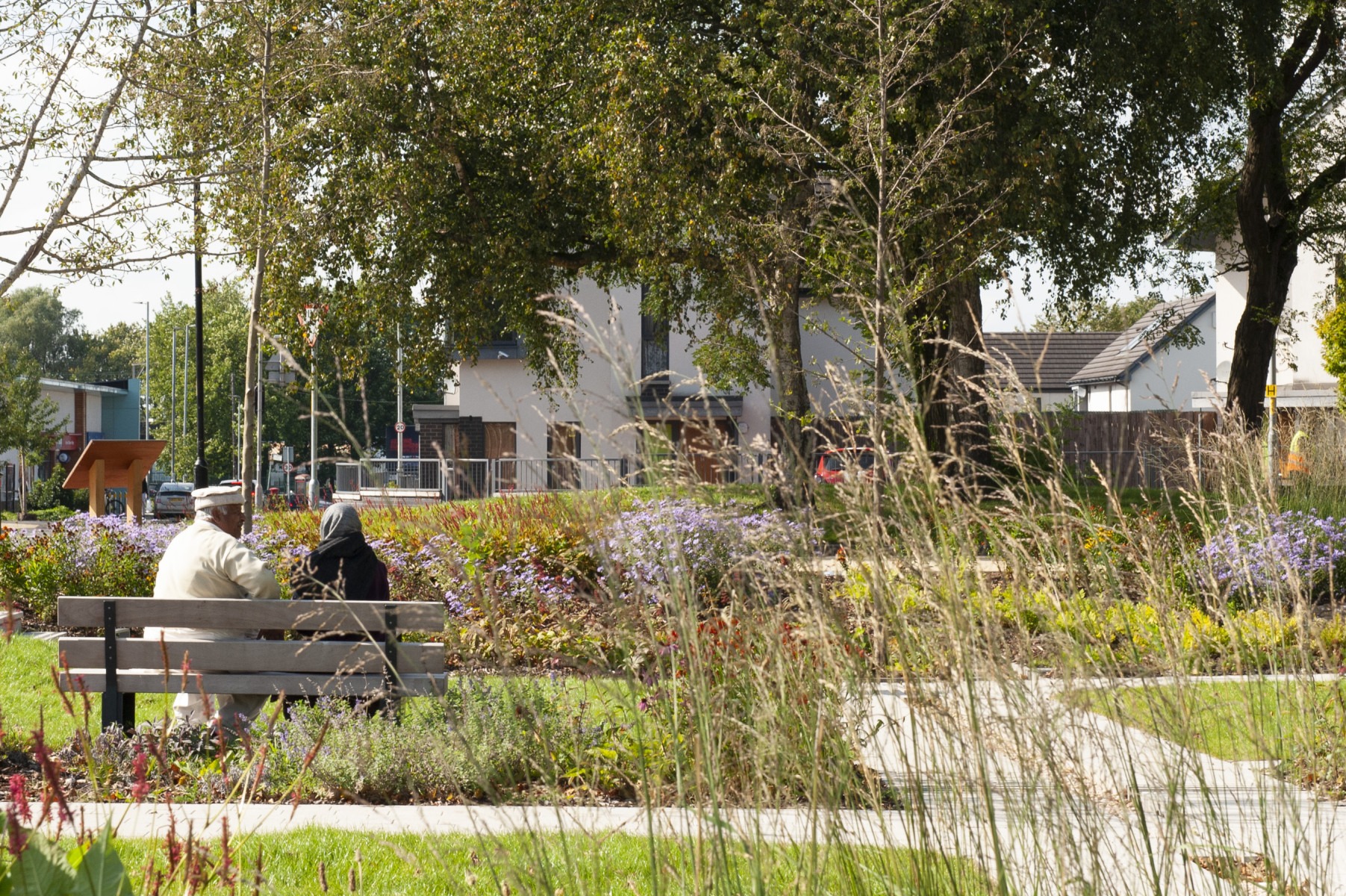
In 2020, Manchester redeveloped an underutilized green space in West Gorton into a vibrant community park that quickly earned the moniker “Sponge Park.” Delivered through the EU-funded GrowGreen project, the park was engineered specifically to absorb excess surface water and mitigate localized flood risks.
Source: content.presspage.com
The park blends an array of nature-based solutions, including rain gardens, vegetated swales, permeable pathways, and bioretention tree planters. During heavy storms, water is detained across specially designed zones and slowly percolates into the ground instead of flooding municipal sewers. The project’s impact won widespread recognition, earning the Landscape Institute Award for Excellence in Flood and Water.
Another prime example is the regeneration of the historic Ancoats neighborhood. Sustainable drainage was integrated directly into the redesign of public realms and buildings. Within the Ancoats Green scheme, permeable surfaces, detention basins, rain gardens, and water retention features act as a natural buffer during cloudbursts. Alongside water management, the project brings extensive tree planting, urban cooling, and ecological enhancements to foster local biodiversity.
Summary of Key Engineering Solutions
| Engineering Solution | Flood Defense Function | Practical Benefit for Manchester |
| Permeable Pavements | Reduces surface runoff | Prevents standing water and street ponding |
| Rain Gardens | Captures and filters surface water | Enhances street-level urban greening |
| Green Roofs | Retains stormwater at roof level | Improves the urban microclimate |
| Urban Trees | Intercepts rainfall via canopy and roots | Provides shade and cools the streetscape |
Today, Manchester proves that flood resilience is not just about building higher concrete walls and massive underground conduits. Modern nature-based solutions—permeable pavements, rain gardens, and absorbent public parks—are just as critical. By fusing civil engineering, green infrastructure, and forward-looking urban design, the city is learning to live harmoniously with water rather than simply fight against it.