Over time, the rapid expansion of developments, commercial districts, and transport networks could have threatened Manchester’s flora and fauna. In response, the city is placing ever greater emphasis on green infrastructure, ecological corridors, and reconnecting its natural spaces. Parks, lakes, public squares, and river valleys are being woven together into a unified ecosystem. The planning and preservation of these habitats have become central to the city’s environmental strategy. To learn more about designing urban landscapes to protect biodiversity amid ongoing development, visit manchestername.
Manchester’s River Valleys and Green Infrastructure
Today, more than half of the world’s population lives in urban areas, and urbanization rates continue to climb. Cities are particularly vulnerable to the impacts of climate change. Manchester is expanding just as quickly, all while striving not to lose touch with nature. Historically, the city was defined by factories, concrete, and rivers culverted or channelled in stone. In 2021, however, Manchester became the first major English city to sign the Edinburgh Declaration—an international commitment recognizing the urgent need to address global biodiversity loss and backing the new Global Biodiversity Framework. The strategy includes a 10-year action plan detailing agency commitments to protect urban wildlife. On October 13, 2022, the City Council’s scrutiny committee reviewed the draft Manchester Biodiversity Strategy, and the Executive formally approved it on October 19, 2022.
Manchester boasts numerous urban and semi-rural sites that play a vital ecological role, serving as green arteries connecting natural spaces across the city. The City Council highlights three key river valley systems: the Irk Valley, the Medlock Valley, and the Mersey Valley. These corridors safeguard critical wildlife habitats, provide scenic recreational routes, and link fragmented green spaces.
The River Irk valley is a prime example. Stretching from Collyhurst to Higher Blackley and across the city from Crumpsall to Moston, council investment is breathing new life into this once-neglected landscape. By collaborating with local communities and partner organizations, the initiative aims to create safe, accessible routes that benefit both residents and wildlife.
River valleys are not the only components driving Manchester’s ecological network. Other vital elements include:
- The Rochdale and Ashton Canals, which serve as dual transport links and wildlife corridors.
- Public parks, nature reserves, and pocket green spaces.
- Restored hedgerows, tree-planting schemes, and wildlife corridors running through residential neighbourhoods.
- Elevated spaces, such as Castlefield Viaduct, which has been transformed into a sky park.
Together, these spaces form a living infrastructure that underpins the city’s vitality, offering welcoming recreational havens for people and secure sanctuaries for wildlife.
“CyanLines”: An Ambitious 100-Mile Vision for Nature
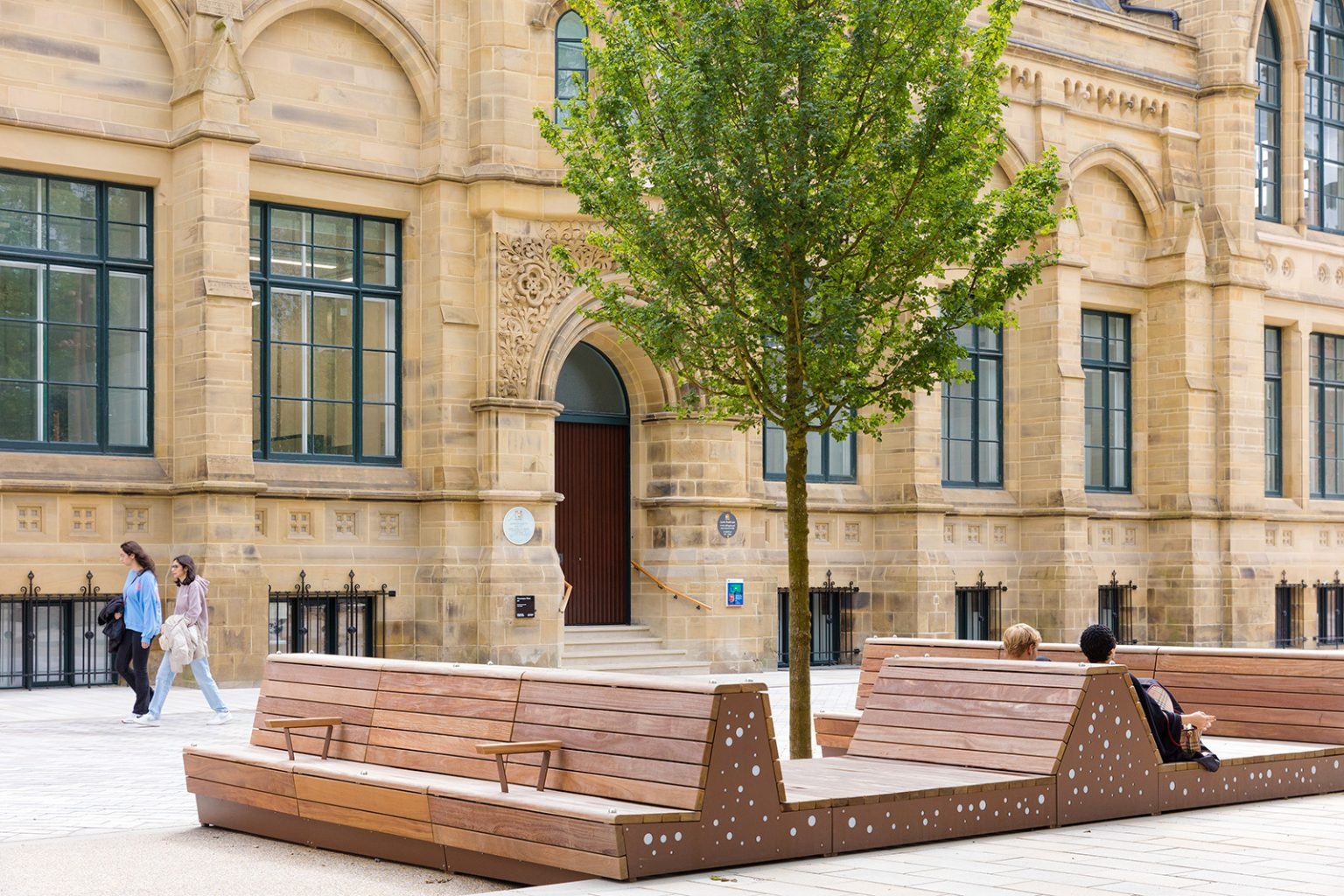
One of the boldest initiatives unveiled in recent years is “CyanLines.” The master plan envisions a 100-mile network of pedestrian routes looping through the heart of Manchester, complete with striking walkways suspended above canals and waterways. This network aims to seamlessly link city parks, rivers, and canals with major infrastructure hubs. Project organizers estimate the venture will require at least £100 million over a 10-year rollout.
Source: cyanlines.com
Key proposals include timber boardwalks along the Manchester and Salford banks of the River Irwell, rowing boat docks, and dedicated cycle paths. The initiative was launched on September 10, 2025, at Aviva Studios, home of Factory International in Manchester. Manchester City Council backed the initial phase, and the CyanLines team is setting up a dedicated non-profit organization to steer delivery. Delivery will involve a broad coalition of stakeholders, spanning property developers, landowners, local residents, businesses, and volunteers.
At its heart, the scheme is designed to bring nature within everyday reach of city dwellers. New green connections between the city centres of Manchester and Salford will knit them more closely into the wider Greater Manchester region.
Flagship Green Projects Across the City
Establishing green corridors in Manchester demands ingenious engineering solutions, as vacant land is virtually non-existent. Landscape architects are developing inventive ways to retrofit nature into dense, former industrial settings.
Source: cyanlines.com
Key examples of these ecological connections include:
- Castlefield Viaduct Sky Park. A disused Victorian railway viaduct reimagined as a vibrant elevated garden. Planted with trees, wildflowers, and shrubs, the deck provides a peaceful retreat for visitors while functioning as an aerial highway for birds and pollinating insects above industrial Castlefield.
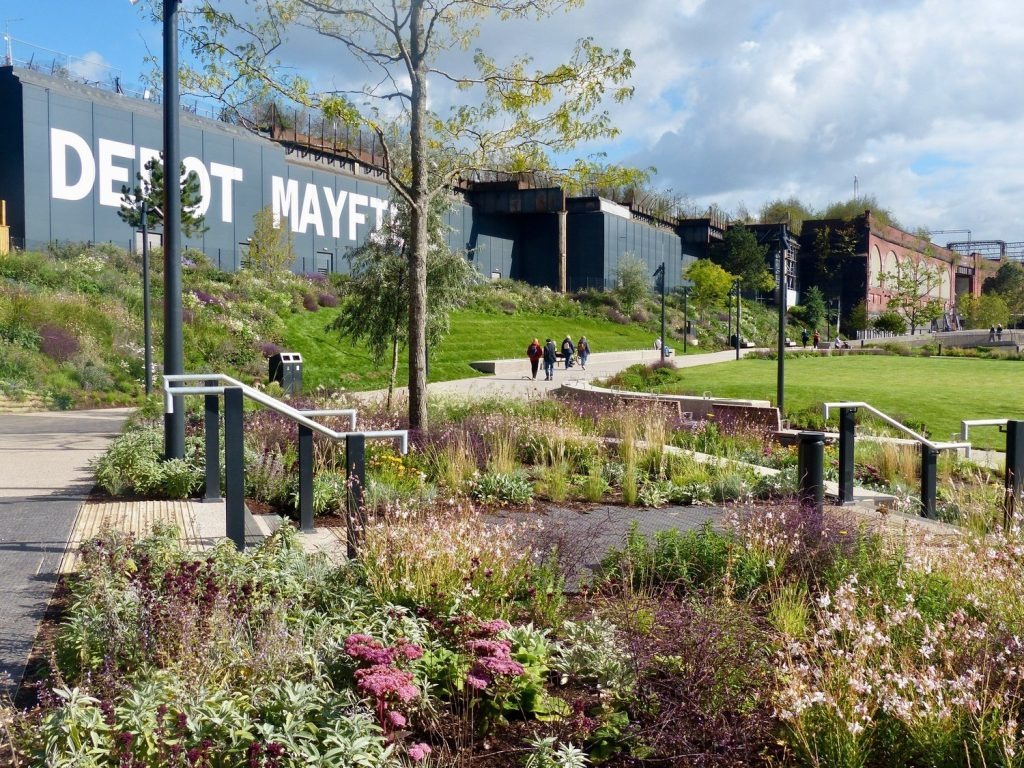
- Mayfield Park. Centred on the daylighting of the River Medlock, this is Manchester’s first new public park in more than a century and a vital green lung for the city. Its rich planting scheme incorporates diverse tree and plant species. After spending over a hundred years buried in an underground culvert, the River Medlock was uncovered, creating a thriving natural floodplain that welcomes back fish, kingfishers, and otters.
- Rochdale and Ashton Canal Corridors. Manchester’s historic waterways double as essential wildlife thoroughfares. Notably, the Rochdale Canal is designated a Special Area of Conservation (SAC) because it supports populations of the rare floating water-plantain (Luronium natans).
Manchester is reshaping how cities approach urban greening and environmental stewardship. Innovative solutions like these prove that even within dense urban fabrics, nature can thrive alongside modern growth.