

Park · Manchester · ⭐ 8.9/10 · 1804 reviews · updated: 2026-08-04 20:23:04
Address: Oxford Rd, Manchester M14 4PW, United Kingdom
Whitworth Park — an engineer’s legacy, dug up and put back together
Eighteen acres in the middle of Manchester’s university and hospital quarter, Whitworth Park is the smallest of the city’s serious historic parks and the one with the strangest recent story. Opened in 1890 with a boating lake, a bandstand, an observatory and a pavilion, it lost every one of them to twentieth-century neglect and demolition. Then, from 2011, archaeologists and volunteers started digging the lost features back out of the ground. Today it is a park with a world-class art gallery embedded in it and its own excavated history under the grass.
Highlights
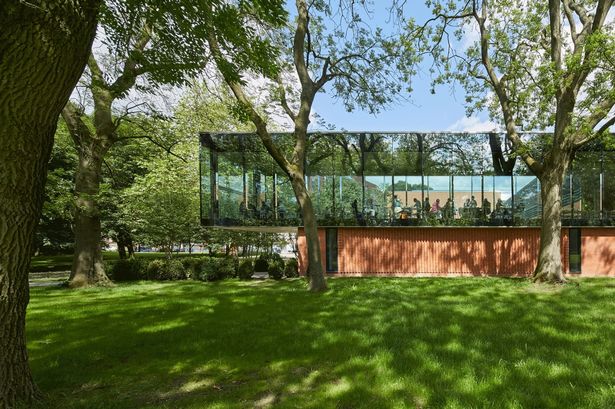
- The Whitworth — the art gallery stands within the park, completed in 1908 and doubled in size by a major redevelopment that reopened in February 2015, adding new galleries, a café among the trees and gardens that reach into the park itself.
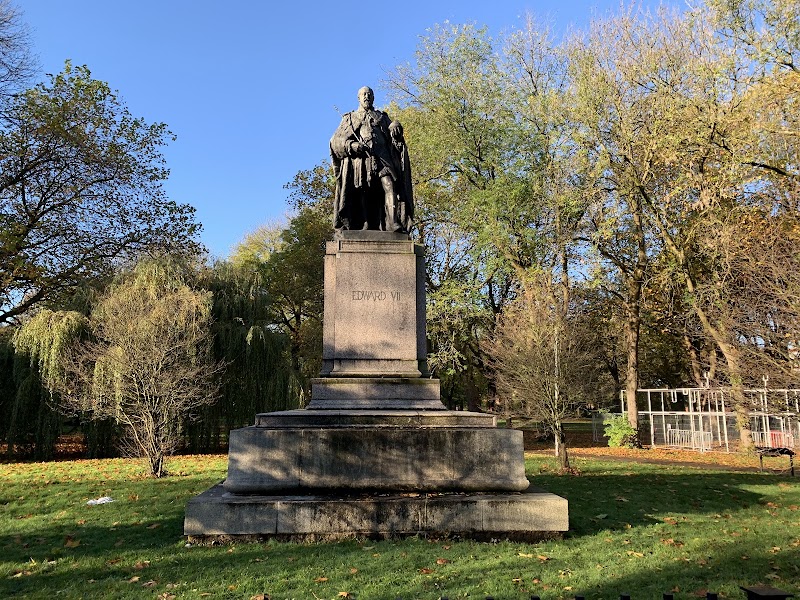
- The Edward VII monument — a Grade II listed bronze by the Manchester sculptor John Cassidy, unveiled in 1913 at the park gates, commemorating the king’s 1909 visit to open the new Manchester Royal Infirmary.
- The Art Garden — designed by the landscape designer Sarah Price, built in waves of texture, colour and scent that change through the seasons, alongside a sculpture terrace and an orchard garden.
- The excavated bandstand — the octagonal brick foundation of the original bandstand was uncovered in the community digs of 2011 and 2013, along with bottles, ceramics, coins, keys and buttons from a century of park life.
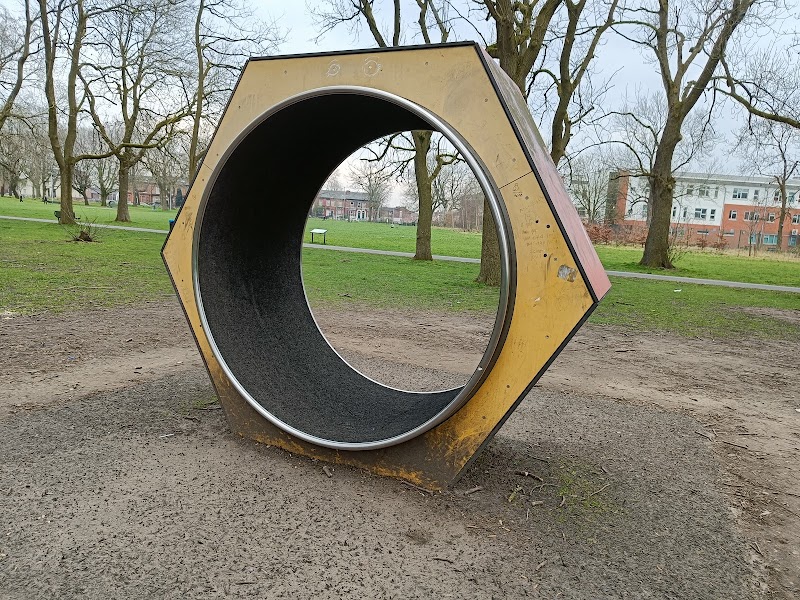
- The playground — a substantial play area including a zip line, and one of the busiest in the inner south of the city.
- The birdlife — goldfinches, greenfinches, fieldfares, redwings and waxwings use the park, alongside a now well-established population of ring-necked parakeets.
What you’ll find
This is an urban park in the truest sense: hospital on one side, university halls on another, and a constant flow of students, staff, patients and families crossing it. It is small enough to walk in fifteen minutes but layered enough to keep returning to, and the gallery gives it a cultural weight no other park of this size in Manchester has.
- Open lawns and mature trees, including a notable paperbark maple.
- The Whitworth gallery with its café, terrace and gardens.
- A children’s play area with a zip line.
- The Edward VII monument and the sites of the vanished lake, pavilion and bandstand.
- The restored Centre Circle planting, which earned an RHS silver-gilt award.
- Pollinator habitat supporting several bumblebee species and honeybees flying in from nearby rooftop colonies.
Things to do — and who it’s for
- Gallery-goers — few parks let you walk out of a major art collection straight onto grass; the Whitworth and the park function as one place.
- Students and hospital staff — this is the green lung of the whole quarter and the default place to eat lunch outdoors.
- Families in the inner city — the playground, the flat paths and the gallery café make it a rare all-weather option close to the centre.
- Urban birdwatchers — winter thrushes and the resident parakeets make it unexpectedly good for a small park.
- People interested in archaeology — the community dig has made the park’s own buried history part of what you come to see.
- Garden enthusiasts — Sarah Price’s planting is a serious piece of contemporary design, best read slowly and across seasons.
Getting there & practical
The park lies in the university and hospital quarter immediately south of Manchester city centre, in the Moss Side ward on the historic Rusholme and Chorlton on Medlock boundary. There is no Metrolink stop nearby; the nearest rail stations are Manchester Oxford Road and Manchester Piccadilly, both a short bus ride or a walk of around half an hour. The corridor running past the park is one of the busiest bus routes in Europe, with frequent services including the 42, 43, 142 and 143 heading south towards Rusholme, Fallowfield and Didsbury. Entry to the park is free and it is open at all times; the gallery, its café and the gardens keep their own opening hours and are closed on some days. Thirty minutes covers the park; add two hours if you go into the gallery.
When to visit
Spring brings bulbs across the lawns and the Art Garden into its first flush, with the gallery’s outdoor spaces reopening properly after winter. Summer is the park at full use: lunch crowds from the hospital and university, the playground busy from morning, and the shade of the mature trees genuinely needed in the middle of a dense district. Autumn is the quiet reward — the planting was designed to hold structure and colour late, the winter thrushes start arriving, and the light through the trees onto the gallery’s glass is the best of the year. Winter is short-daylight and functional, but the gallery makes it the only park on this list where bad weather is not a reason to stay home, and bare branches make the parakeets and waxwings far easier to spot.
Good to know
The park is named after Sir Joseph Whitworth (1803–1887), the Manchester engineer who standardised the screw thread as British Standard Whitworth. He intended his fortune to serve public education but died before settling the details, so his executors — his widow, Richard Copley Christie and the solicitor Robert Dukinfield Darbishire — carried out his intent. Darbishire negotiated the purchase of the twenty-acre Potter Estate in Rusholme after the death of Edmund Crompton-Potter in 1884, and the Whitworth Institute and park opened in 1890 on land known as Potters Field. The original design was lavish: a lake with islands, a fountain and a boathouse, a pavilion with a semi-circular bay and red-tiled roof, an octagonal bandstand for regular concerts, an observatory added in 1893 for meteorological readings, and diagonal blue-brick paths around a central circular feature. In 1904 the city corporation took a lease running close to a thousand years at a nominal rent, which allowed the Institute to complete its gallery building in 1908. The Second World War brought trench shelters to one edge; post-war decline was severe, and between the 1970s and 1990s the council filled in the lake and removed the pavilion, bandstand and observatory. The Friends of Whitworth Park formed in 2005, a management plan followed for 2011 to 2016, and the park won Green Flag Awards from 2012 to 2014. The Whitworth Park Community Archaeology and History Project, run with the University of Manchester and Heritage Lottery funding, excavated in 2011 and 2013, and the finds were shown at Manchester Museum in the exhibition Pleasure, Play and Politics in Whitworth Park from May to October 2014.
Visitor tips
- Check the gallery’s opening days before planning a wet-weather visit — the park is always open but the building is not.
- Walk the Art Garden slowly and more than once; it is planted for sequence through the year rather than for a single peak.
- Look for the paperbark maple, whose orange-brown bark peels in thin sheets, and use bare-branch months for the winter thrushes and parakeets.
Questions & answers
Is there still a lake in Whitworth Park? No. The original boating lake with its islands and fountain was filled in by the council in the later twentieth century. Its site was one of the main targets of the community archaeology digs.
Who was Joseph Whitworth? A Manchester engineer, 1803 to 1887, best known for standardising the screw thread as British Standard Whitworth. The park and gallery were created by his executors from the fortune he left for public benefit.
Is the Whitworth gallery free? The gallery stands in the park as a University of Manchester institution with its own opening hours; the park itself is free and open at all times.
What did the archaeologists find? The octagonal brick foundation of the bandstand, plus glass bottles, broken ceramics, coins, keys and buttons — everyday debris that documented how Mancunians actually used the park.
Who is the statue of? King Edward VII, sculpted by John Cassidy and unveiled in 1913. It is a Grade II listed bronze on a granite plinth and marks the king’s 1909 visit to open the new Manchester Royal Infirmary.
How big is the park? Eighteen acres, about 7.3 hectares — small by the standards of Manchester’s historic parks, but unusually dense in features.
Are there really parakeets? Yes. Ring-necked parakeets are established here, alongside goldfinches, greenfinches and winter visitors such as fieldfares, redwings and waxwings. Their status as a non-native species is debated locally.
Is it good for children? Yes — there is a substantial play area with a zip line, the ground is level and surfaced, and the gallery café provides an indoor fallback when it rains.
Photos
Show 1 more photos
Visitor reviews
Reviews last updated: 2026-08-04 20:23:04
Data is refreshed monthly. Sources: manchestername.com and editorial picks based on reviews.
Whitworth Park is a wonderful green space, ideal for quiet walks, spending time with family or simply enjoying nature. The park is well looked after, with open grassy areas, mature trees and plenty of space for children…
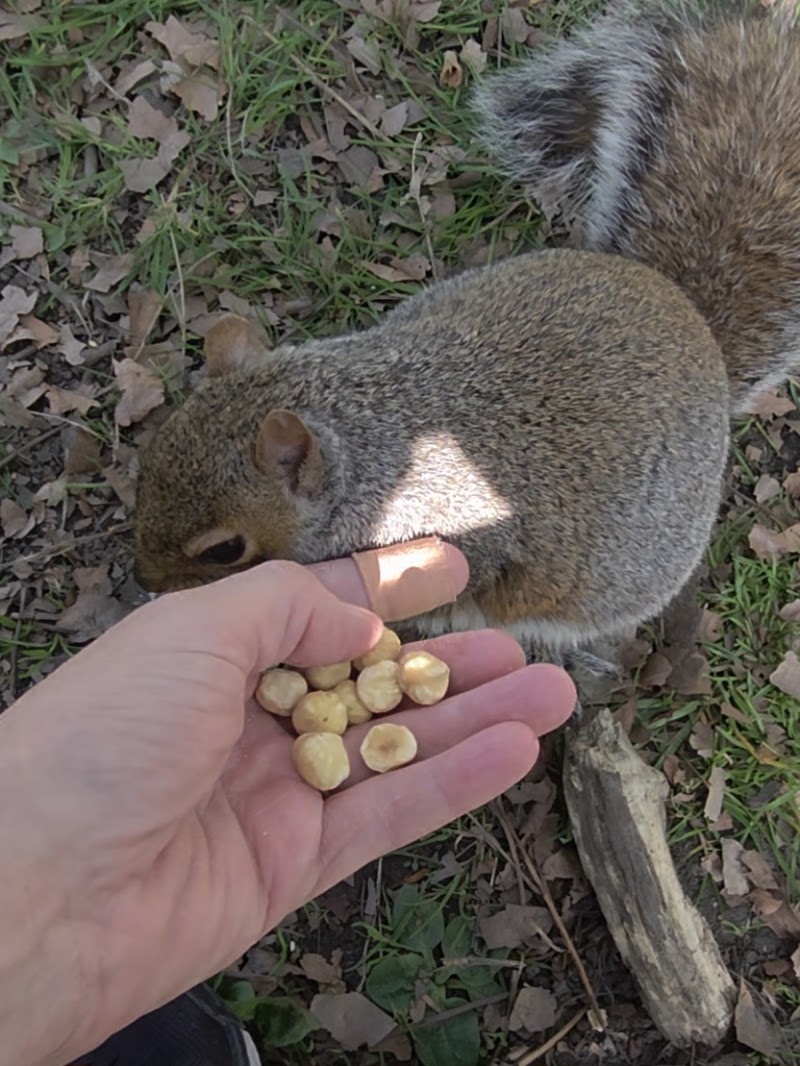
A lovely and clean park. Next to the Whitworth Gallery with its great exhibitions. We went for walks early in the morning while we were on holiday, and there were always lots of squirrels coming over to say hello. The pa…
A lovely park, well looked after, pleasant to spend time here. Highly recommend.
A very clean, lovely open space. If you like tame wildlife, this park is simply incredible. Take a bag of fruit and nuts, and the pigeons and squirrels will climb all over you to be fed! Great interaction for children! V…
A very lovely and quiet park. You feel calm here, the rest gives you strength to move forward. Here you really feel nature and love playing with the squirrels. What a joyful park.