

Park · Manchester · ⭐ 8.9/10 · 2078 reviews · updated: 2026-08-04 20:23:03
Address: Charlestown Rd, Blackley, Manchester M9 7DH, United Kingdom
Boggart Hole Clough — the ravine where Manchester won the right to speak
Blackley’s great wooded valley is two things at once: a genuine piece of ancient woodland cut by steep ravines, and one of the most politically important patches of ground in the north of England. In 1896 the city corporation tried to stop socialists holding open-air meetings here and ended up creating a cause célèbre that drew forty thousand people to a single Sunday gathering. Around a hundred and ninety acres of brook, gully, lake and old trees, it is a park where the landscape does the work and the history is genuinely national.
Highlights
- The cloughs themselves — the name describes the place. A series of steep-sided ravines and sloping gullies cut through what survives of ancient woodland, giving the site a relief and enclosure almost nothing else in the city has.
- The free-speech ground — the natural amphitheatre that hosted the 1896 meetings, where Keir Hardie, Richard Pankhurst and Emmeline Pankhurst spoke to a crowd reported at forty thousand on Sunday 5 July.
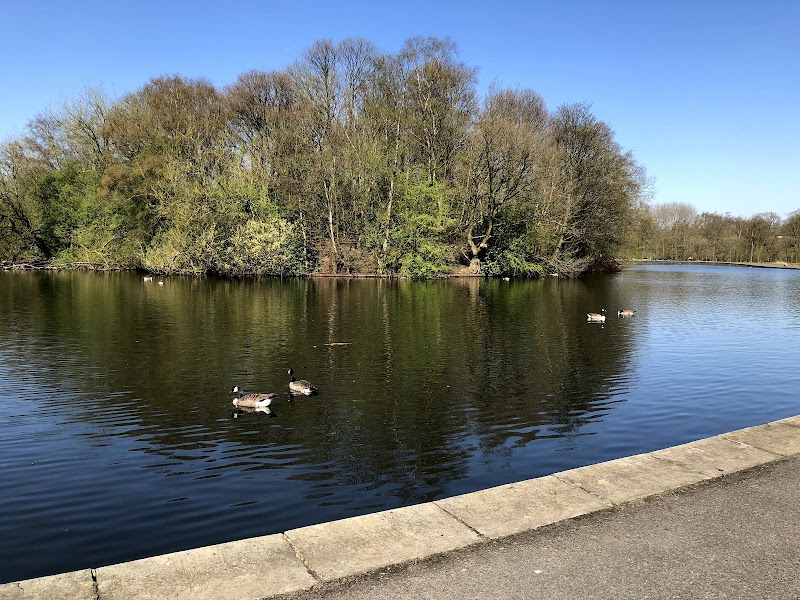
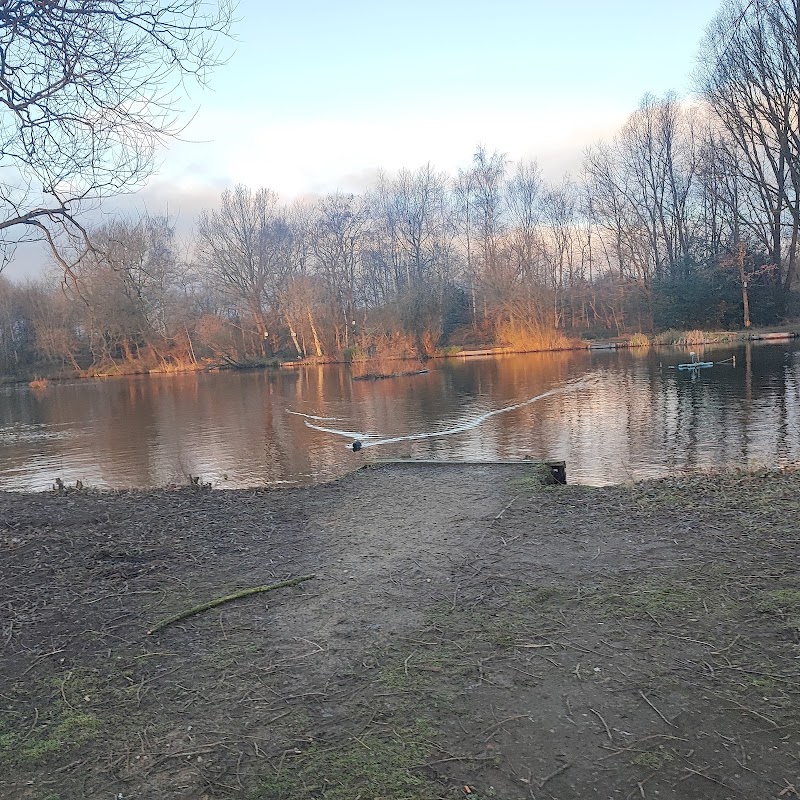
- The boating lake — the park’s social centre, with fishing alongside and the Lakeside café close by, and the point most first-time visitors head for.
- The athletics track and arena — a full track within the park, alongside tennis courts, a bowling green and a multi-use games area.
- Boggart Hole Brook — the watercourse rises within the clough itself and is the reason the valley is shaped the way it is.
- The Local Nature Reserve designation — granted in 2008, recognising woodland and stream habitat unusual for a site this deep inside a built-up area.
What you’ll find
The clough is big enough to hold two entirely different experiences. Around the lake and the sports facilities it is a busy municipal park with a café, toilets, play equipment and organised activity. Ten minutes into the ravines it is woodland: steep, wet underfoot, loud with birds and effectively out of sight of the city.
- A boating lake with fishing and a lakeside café.
- An athletics track, tennis courts, bowling green and multi-use games area.
- A children’s play area and open grassland for informal games.
- A visitor centre with free public WiFi and toilets.
- Ancient woodland, steep gullies and the brook system through the valley floor.
- A dense network of paths, steps and bridges linking the upper plateau to the valley bottom.
Things to do — and who it’s for
- Cross-country runners — the clough has hosted cross-country events for generations and the terrain is the reason: real climbs, real mud, no flat sections to hide in.
- Mountain bikers — organised rides use the valley, and the gradients are the closest thing to off-road riding within the city boundary.
- Families — the lake, play area, café and open grass cluster together and make a straightforward day out without leaving Manchester.
- Anglers — the fishing area on the lake is well used and quiet on weekday mornings.
- People interested in radical history — this is where the right to hold public meetings in open spaces was fought over and effectively won.
- Wildlife watchers — the Local Nature Reserve status reflects woodland and stream habitat that supports species you will not see in the flatter city parks.
Getting there & practical
The clough lies in Blackley, in north Manchester, roughly halfway between the city centre and the Middleton boundary. The nearest Metrolink stops are on the Bury line served by the Green Line from Altrincham and the Yellow Line from Piccadilly, at Crumpsall and Abraham Moss, each leaving a walk or short bus ride; Moston railway station on the Manchester Victoria to Rochdale line is also close. Frequent buses run from the city centre into Blackley. There is on-site parking and entry is free, with the park open at all times, although the ravine paths are unlit and not a place to be after dark. Allow an hour for the lake circuit, two to three hours if you want to walk the full ravine network.
When to visit
Spring is the clough at its best — the ancient woodland floor comes alive before the canopy closes, birdsong in the ravines is genuinely loud, and the paths have usually dried enough to be pleasant. Summer belongs to the lake and the open grass, with fundays and organised events and the shade of the valley a real relief in heat. Autumn gives leaf colour banked up the ravine sides and the park’s biggest single evening of the year, the annual bonfire and firework display. Winter is muddy and dark early, but the bare trees expose the shape of the valley and the cross-country season is at its height, so the clough is often busier on a cold Saturday than a mild Tuesday. Whatever the season, the valley bottom holds water long after the plateau has dried.
Good to know
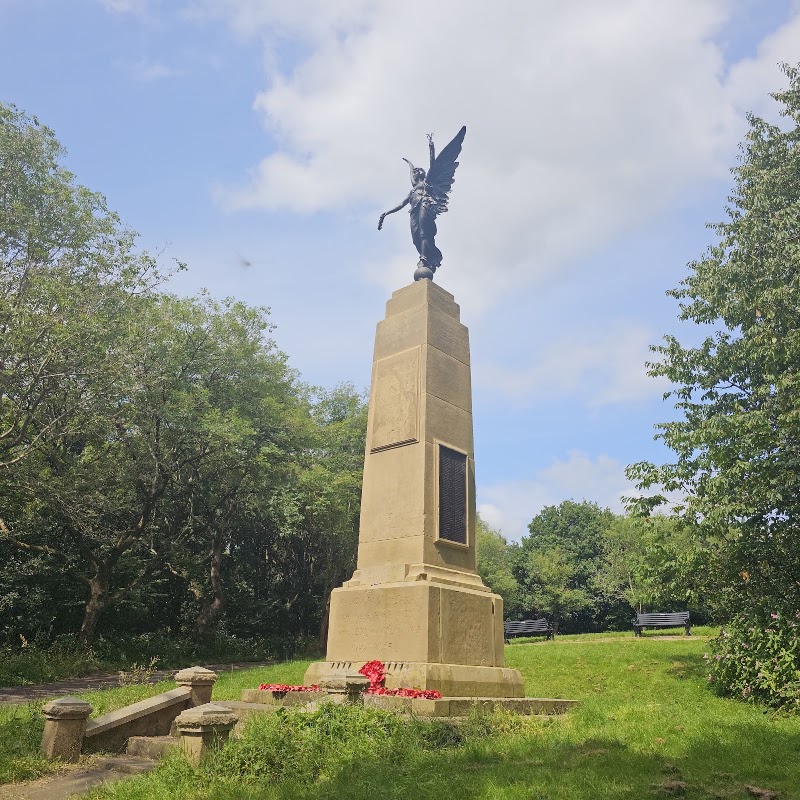
The free-speech fight is the clough’s real claim on history. From 1892 the North Manchester Fabian Society, and later the Independent Labour Party, held Sunday open-air meetings here while the land was still private. After Manchester Corporation bought it in the mid-1890s the Parks Committee moved to suppress them; through May and June 1896 speakers were arrested and fined, and several chose a month in prison rather than pay. The attempt backfired spectacularly: audiences grew from hundreds into tens of thousands, and on Sunday 5 July 1896 a reported forty thousand people came to hear Keir Hardie, one of the founders of the Independent Labour Party, alongside Richard and Emmeline Pankhurst. A decade later, on 15 July 1906, a women’s suffrage demonstration here drew fifteen thousand, with the suffragist Elizabeth Clarke Wolstenholme Elmy taking part and recording the day. The park’s name comes from the boggart, a mischievous household spirit of Lancashire and Yorkshire folklore; John Roby’s Traditions of Lancashire of 1829 tells of a farmer named George Cheetham driven out of his house by one, only to hear the creature’s voice coming from a churn on the loaded cart. The Manchester Times suggested in 1892 that the tale had been supplied to Roby from an earlier printed source and that nobody in Blackley or Moston had ever heard of Cheetham, so the legend may be literary rather than local.
Visitor tips
- Wear proper footwear for the ravines in any season — the valley floor is wet even in a dry spell and the steps are steep.
- Start at the lake and work uphill into the cloughs; navigating down into the ravines from the plateau edge is much easier to get wrong.
- The bonfire and firework night is the busiest date in the park’s calendar, so plan travel and parking accordingly or come on foot.
Questions & answers
What is a boggart? A mischievous spirit of Lancashire and Yorkshire folklore, usually attached to a house or a specific place rather than roaming. The park’s name reflects a local tradition of such a creature living in the hollow.
Is the boggart story true? The story appears in John Roby’s Traditions of Lancashire in 1829, but by 1892 the Manchester Times was arguing it had been borrowed from an earlier publication and that the farmer George Cheetham was unknown to anyone in Blackley or Moston.
Why is the park historically important? Because of the 1896 free-speech campaign, when the city tried to ban open-air political meetings here and instead created a national cause. Keir Hardie and the Pankhursts addressed a crowd of around forty thousand on 5 July 1896.
Is there really an athletics track? Yes. The park has a track and arena alongside tennis courts, a bowling green and a multi-use games area, which is unusual for a woodland site.
Can I fish or go boating? There is a boating lake with a designated fishing area. Availability of boats and fishing arrangements varies by season and operator.
How big is it? Around seventy-six hectares, roughly a hundred and ninety acres, much of it ancient woodland broken by ravines and gullies.
Is it accessible? The lake area, café and sports facilities are on relatively level ground and manageable. The ravine paths involve steps, steep gradients and mud, and are not suitable for wheelchairs or pushchairs.
Does it have a Friends group? Yes — the Boggart Hole Clough Community Action Trust, a long-standing volunteer body that works on the site and its programme, and the park held the Green Flag Award for eight consecutive years.
Photos
Show 1 more photos
Visitor reviews
Reviews last updated: 2026-08-04 20:23:03
Data is refreshed monthly. Sources: manchestername.com and editorial picks based on reviews.
Another day, another place, took the bus from Piccadilly Gardens, it was not hard to find. By the entrance the first thing I noticed was a duck vending machine (a duck feeder). A big lake with ducks, I spotted a heron bu…
A really lovely place to get some fresh air and enjoy nature. There are plenty of footpaths and lots of green space, which makes it a great place for a quiet walk or just for spending time in the open air. The area seems…
A fantastic place for dog walks, a very well looked after lake with plenty of bird species, a wonderful café
A little spooky ghost walk was definitely needed here because of the folklore and the history. This area has some of the oldest woodland and a wonderful story about a boggart who apparently drove a family out. I am from…
I have been going to the Clough lake for almost 50 years. It is a lovely park with wonderful views. Although it is located in the middle of Blackley, it is a real gem.
Great for long walks or runs, there are long paths h…