

The story of Richard Buxton from Manchester is fascinating. By trade, he was an ordinary local shoemaker, but he was driven by a deep passion for botany from a young age. Despite growing up in poverty and lacking formal education, Buxton became one of the leading botanists of his time. His life was fuelled by an immense love for plants. Not only did Buxton study local botany, but he also sought to share his knowledge of the flora in the Manchester region with others. Learn more about the extraordinary life of botanist Buxton below. Next on manchestername.com.
Challenging Early Years
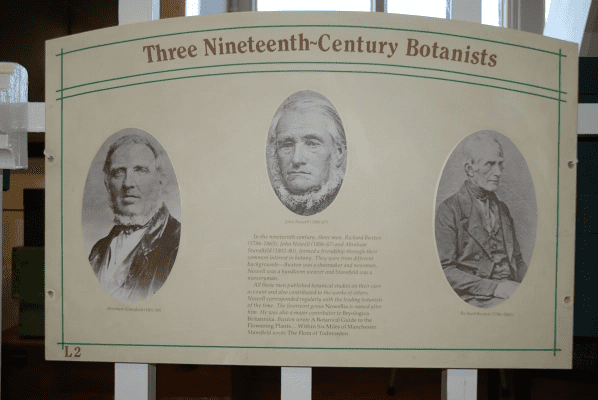
Richard Buxton was born in 1785 at Sedgley Hall Farm in the parish of Prestwich, near Manchester. His parents were labourers originally from Derbyshire. When Buxton was just two years old, his family faced severe financial difficulties, forcing them to move to Bond Street in Ancoats, Manchester. There, his father worked as a manual labourer until the end of his life.
Buxton’s upbringing was shaped by the harsh realities of working-class life in early 19th-century Britain. His family was very poor, and from a young age, Buxton had to find ways to contribute financially. Child labour was commonplace in Manchester at the time. Factory owners paid workers very little, and many lived in abject poverty. Working conditions were hazardous, and children often endured long hours under dangerous circumstances.
A Love for Botany
In addition to poverty, Buxton suffered from various illnesses throughout his childhood and adolescence, making formal education impossible. However, amid these bleak circumstances, Buxton found a beacon of light—his love for botany. He often wandered through Manchester’s fields and brick yards, observing and collecting wildflowers.
During his early years, Buxton was particularly drawn to flowers such as Germander speedwell, creeping cinquefoil, and chickweed.
Yet, Buxton had to prepare for adulthood and earn a living. Without formal education, his parents decided to apprentice him to a shoemaker, James Heap, to learn the trade of crafting children’s leather shoes. At 12, Buxton began working at Heap’s workshop on Port Street in Manchester. After a year, he moved to James Hyde’s workshop, where he spent several years.
Despite being tied to the shoemaking trade, Buxton’s love for nature remained steadfast. In his rare moments of free time, he continued to roam Manchester’s surrounding fields and woods, marvelling at the wild plants he encountered. He had a strong desire to study botany, but formal education was out of reach for someone of his working-class background. Undeterred, Buxton pursued self-education in botany, a path requiring years of dedication and self-discipline.
Buxton taught himself to read at the age of 16, poring over books like The History of England and The History of Greece and Rome. Learning to read consumed all his free time, even as he worked long hours as a shoemaker from 6:00 a.m. to 9:00 p.m.
In the early 1800s, Buxton began systematically studying the wild plants of Lancashire. Initially working alone, he later connected with other nature enthusiasts and scientists in Manchester. These connections gave him access to books and botanical guides, expanding his understanding of plant biology, reproduction, and classification.
Career Development
At 18, Buxton returned to work at his former master James Heap’s workshop. Heap not only taught him the shoemaking trade but also frequently took him on countryside walks. Together, they collected herbs for dietary drinks and other purposes. Often, they encountered plants they could not identify.
In 1808, Buxton acquired a valuable book, a copy of Merrick’s Herbal, which introduced him to Linnaeus’s principles of plant classification. This sparked an even greater interest in botany, leading Buxton to purchase as many botanical books as he could afford. He also began collecting and drying plants, though he preferred observing and documenting living specimens.
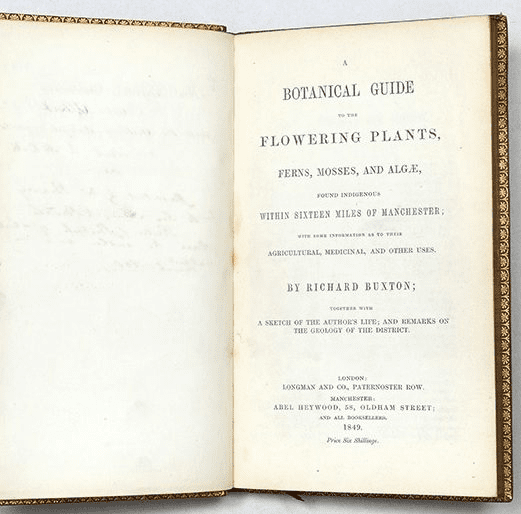
After years of meticulous fieldwork, Buxton published his most significant work, A Botanical Guide to Flowering Plants, Ferns, Mosses, and Algae Found in Native Districts Within Sixteen Miles of Manchester, in 1849. This groundbreaking book was particularly remarkable because it was authored by a self-taught botanist.
Buxton’s dedication to self-improvement also enabled him to teach natural history classes at the Manchester Mechanics’ Institute.
Legacy
The life of Richard Buxton, the self-taught botanist from Manchester, came to an end in 1865 at the age of 79. His tireless efforts to study and document the local flora left an indelible mark on the field of botany, inspiring future generations of scientists and enthusiasts alike.