

Robert Stephen Adamson was a British botanist who made significant contributions to plant ecology and education. Adamson built a successful career in botany not only in Manchester but also across continents such as Australia and Africa, showcasing a deep passion for plant life, the environment, and education. His research advanced botany as a science and laid the groundwork for modern ecological studies. From his early years to his last breath, Adamson’s life was dedicated to exploring the natural world. Next on manchestername.com.
Early Life and Education
Although Adamson became a successful and renowned botanist of the 19th and 20th centuries, little information about his early years has survived.
Adamson was born in Manchester in 1885. He grew up in the industrial northwest of England, a region rich in natural landscapes, which likely inspired his interest in the local flora. Determined to pursue botany, Adamson moved to Edinburgh at the beginning of the 20th century, where he enrolled at the University of Edinburgh. There, he studied botany and zoology, earning his Doctor of Science degree with distinction in 1907. His thirst for knowledge didn’t end there; in 1912, he earned a Master’s degree from Emmanuel College at the University of Cambridge.
After gaining experience at various universities across the United Kingdom, Adamson returned to his native Manchester in 1912. He began working as a lecturer in botany at the University of Manchester, continuing his botanical research and collaborating with prominent scientists of the time. This provided him with an opportunity to immerse himself further into scientific studies and the discipline that had become his life’s passion.
During his academic journey, Adamson focused on taxonomy, distribution, and plant ecology—topics central to his later research. His interest in the emerging field of ecology, which examined the relationships between organisms and their environment, deepened his understanding of plant communities and their adaptations.
Academic and Research Contributions
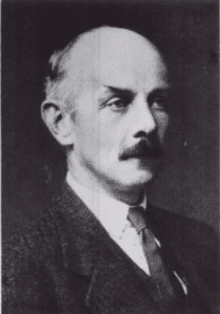
From 1912 to 1923, Adamson worked at the University of Manchester, focusing on the impact of British and Mediterranean climates on plant ecology.
In 1923, he decided to take his career to new heights by traveling to South Africa to expand his knowledge of floristics, systematics, and phytogeography. He settled in Cape Town, where he served as a professor of botany at the University of Cape Town until 1950.
In South Africa, Adamson not only studied the country’s unique plant life but also published scientific works. One of his most significant contributions was the book The Vegetation of South Africa, which provided a detailed description of South African flora and the Cape Town region’s biodiversity. This area is renowned for its extraordinary plant diversity, and Adamson’s work greatly enhanced the understanding of its ecosystems.
From 1946 to 1948, Adamson served as president of the Royal Society of South Africa, a key milestone in his career. In 1950, he contributed to Flora of the Cape Peninsula, further cementing his legacy.
One of Adamson’s most notable achievements was his focus on ecological research, which was still in its infancy at the time. He studied how plants adapted to the challenging conditions of South Africa, such as nutrient-poor soils and irregular rainfall. His research on plant ecology in the Cape region laid the groundwork for future biodiversity studies in the area.
In 1950, after nearly three decades in South Africa, Adamson retired from the University of Cape Town and returned to the United Kingdom.
Later Years and Legacy
Upon returning to the UK, Adamson was elected a fellow of the Linnean Society in 1956, an organisation dedicated to the study and dissemination of information about natural history, evolution, and taxonomy. He was also an honorary member of the British Ecological Society, one of the world’s oldest ecological societies, founded in 1913. Adamson promoted the study of ecology in its broadest sense during his membership.
In recognition of his contributions, a specific epithet, adamsonii, was named after him.
Adamson retired in 1955 and moved to Jedburgh, Scotland, where he spent the remainder of his life. The esteemed botanist passed away in 1965 at the age of 80, leaving behind a legacy of groundbreaking research and a deep impact on the field of botany.