

Park · Manchester · ⭐ 9.3/10 · 16460 reviews · updated: 2026-08-04 20:22:58
Address: Bury Old Rd, Manchester M25 0EQ, United Kingdom
Heaton Park — the aristocratic estate Manchester bought for itself
Most cities have a big park. Manchester has an entire eighteenth-century estate: a Grade I neoclassical hall, a domed temple standing on the highest ground in the city, a boating lake wide enough that the far bank blurs, a championship golf course, a farm you can walk into for nothing, and a working heritage tramway carrying passengers along rails first laid when Edward VII was on the throne. At more than 600 acres — roughly 243 hectares — Heaton Park is the largest park in Greater Manchester and among the largest municipal parks in Europe. What makes it remarkable is not the acreage but the feeling: you arrive expecting a park and find yourself walking through a designed landscape that was never meant for you, and has belonged to the city since 1902.
Highlights
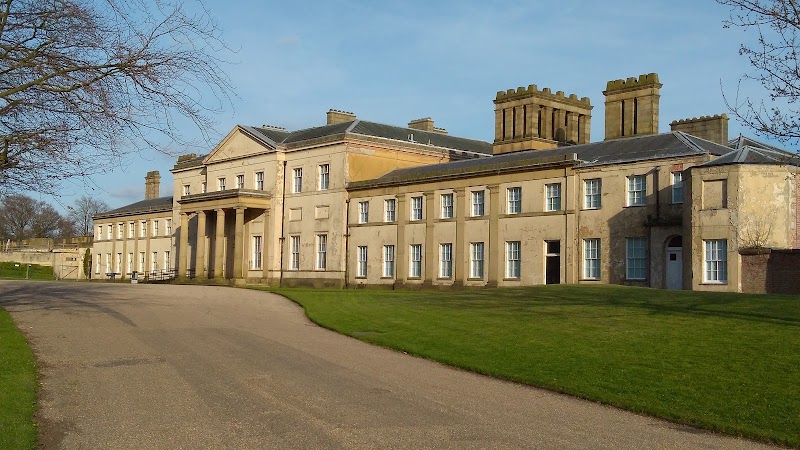
- Heaton Hall — remodelled by James Wyatt from 1772 and largely complete by 1789, listed Grade I since 1952 and long described as the finest house of its period in Lancashire; the painted ceiling of its Cupola Room is the reason architectural historians make the journey north.
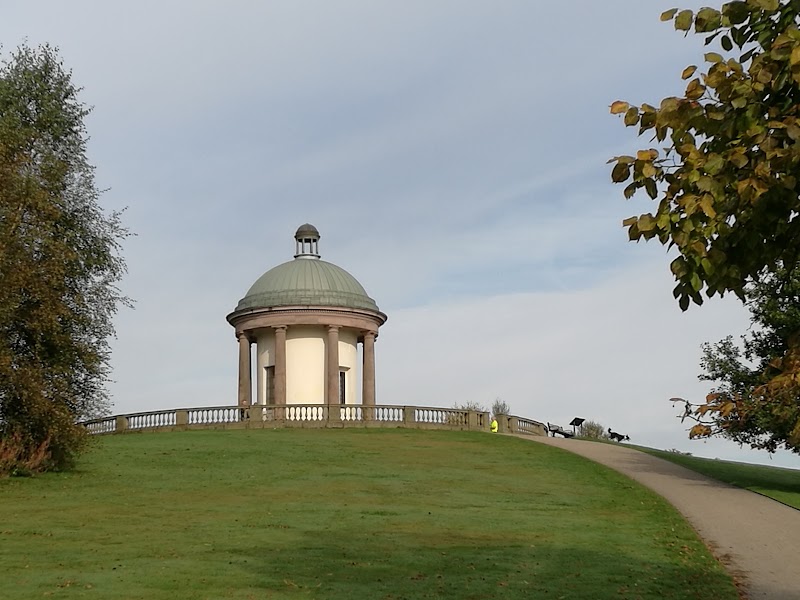
- The Temple — a small domed rotunda designed by Wyatt in 1800 and set on the highest point within the city of Manchester, Grade II listed, fitted with a fireplace and thought to have served the Earl as an observatory, complete with a telescope bought from Dollond’s of London.
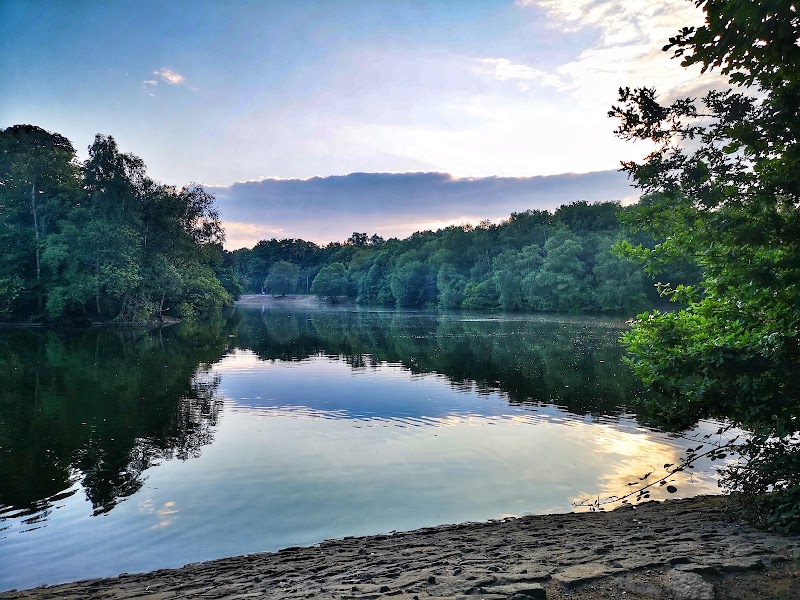
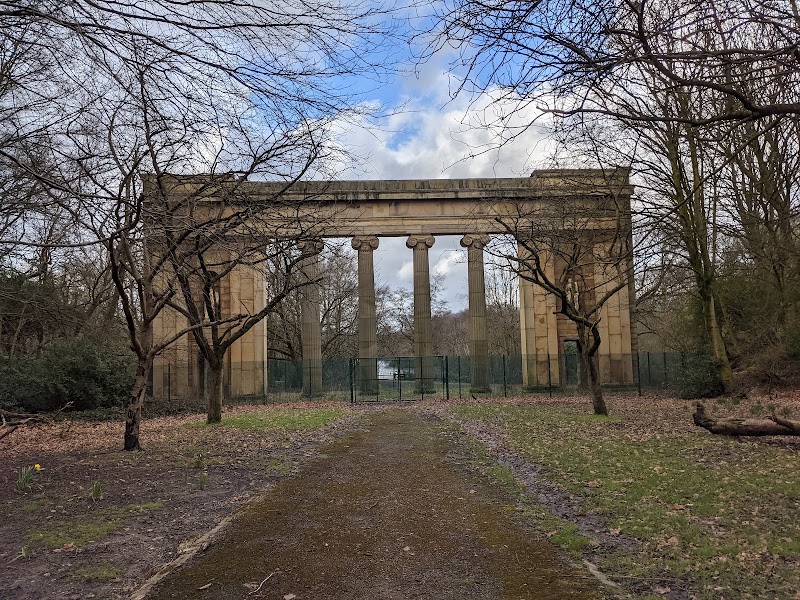
- The boating lake — twelve acres of water excavated between 1908 and 1912, stocked with carp, roach, rudd, bream, tench and chub, and overlooked by the stone colonnade salvaged from Manchester’s demolished old Town Hall and re-erected here.
- Heaton Park Tramway — a half-mile heritage line reopened on 28 March 1980 and run by the Manchester Transport Museum Society, whose flagship vehicle, Manchester Corporation car 765, is the only surviving Manchester electric tramcar still in regular passenger service anywhere.
- The Grand Lodge — a full ashlar sandstone triumphal arch commissioned from Lewis Wyatt in 1807, which closed the ten-foot boundary wall that once ringed the entire estate; it now carries a memorial to the Manchester Pals who trained here in 1914.
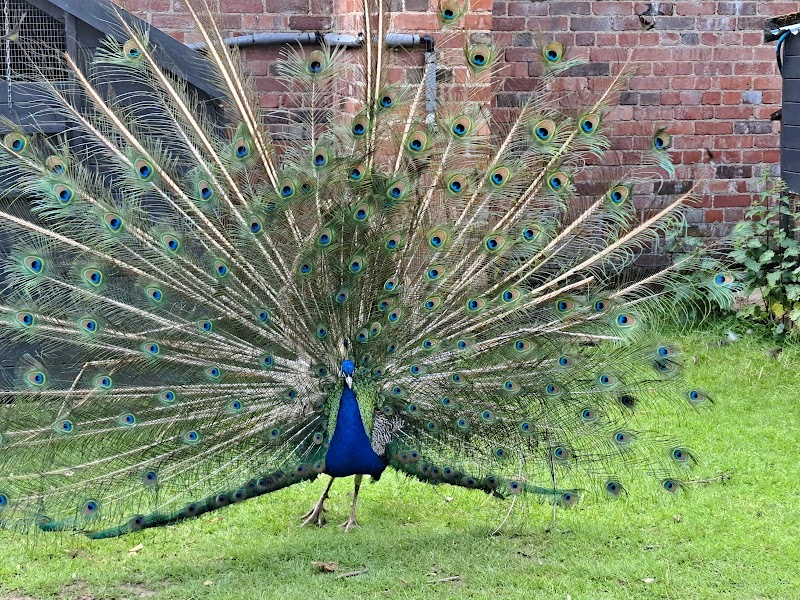
- The Animal Centre — built in 2003–04 on the site of the old Pets’ Corner, home to Hebridean sheep, alpacas, Kunekune pigs, donkeys, goats and cattle, and free to enter.
What you’ll find
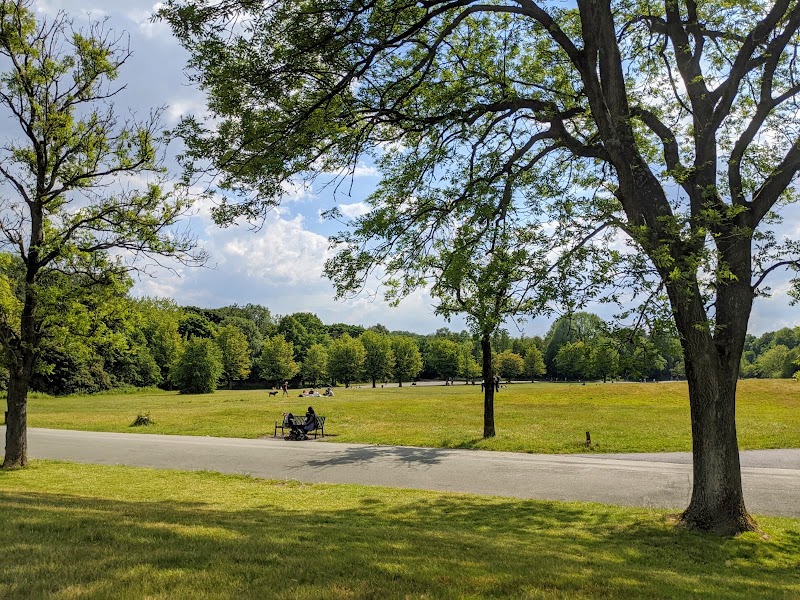
Heaton Park is really several landscapes stitched together, and the transitions are half the pleasure. The core is the parkland laid out by William Emes in the manner of Capability Brown — open sweeps of grass, scattered mature trees, a ha-ha designed to keep grazing cattle off the formal lawns while remaining all but invisible from the hall. Around that core sit an ornamental pleasure ground, a walled kitchen garden, deep woodland, sports ground, and a lake basin that reads as natural and is entirely Edwardian engineering.
- The Western Pleasure Grounds — early nineteenth-century ornamental gardens with pools, summerhouses and a tunnel behind a stone-faced cave mouth, built so that cattle could pass beneath the gardens rather than through them.
- The walled garden and Horticultural Centre — the eighteenth-century kitchen garden, now the working base of the Friends of Heaton Park, the volunteer group formed in 1992.
- The Dower House and the Orangery — the first a plain brick building given a decorative columned façade in 1803 and home to the Manchester and District Beekeepers’ Association since 2004; the second added by the 2nd Earl around 1823, its glazed dome removed after the city took over.
- Smithy Lodge — the octagonal “pepperpot” designed by Lewis Wyatt in 1806 at the eastern edge of the estate, fully restored in the late 1990s.
- The golf course and pitch and putt — a championship layout designed by J.H. Taylor, five times an Open champion, opened in 1912 on the old deer park; Henry Cotton called its 11th the toughest par-3 in England, and in 2005 it was voted the best municipal course in the country.
- Hazlitt Wood and its pond — in the far northern reaches, reachable only on foot, and the quietest ground in the whole park.
Things to do — and who it’s for
- Families with small children — the Animal Centre, the adventure playground and a short heritage tram ride form a natural half-day loop that needs no planning and very little money.
- Runners and walkers — a weekly Saturday-morning timed 5 km run uses the park, and the perimeter offers far longer circuits with real gradient, which is unusual for an English city park.
- Architecture and history enthusiasts — the Wyatt family’s hall, temple, lodges and arch amount to a compact tour of Georgian neoclassicism, all within one boundary wall.
- Anglers and boaters — the lake carries a serious coarse fishery, with rights held by the King William IV Angling Society, and boat hire operates in season.
- Sports players — golf, pitch and putt, tennis and the only flat green bowling greens in Manchester, which hosted the lawn bowls at the 2002 Commonwealth Games.
- Concert-goers — the natural amphitheatre south of the hall has held some of the biggest outdoor shows in British music, and the annual Parklife weekend has been staged here since 2013.
Getting there & practical
The park sits in north Manchester on the Prestwich and Higher Blackley side of the city, running right up to the boundary with Bury. Metrolink is the simplest approach: the Heaton Park and Bowker Vale stops both sit on the Bury line, served by the green Altrincham–Bury service and the yellow Piccadilly–Bury service, and it is roughly a ten-minute walk from the Heaton Park stop through the grounds to the Lakeside end of the heritage tramway. Several bus routes call at the same point, among them the 135 running between Manchester and Bury, plus the 90, 94 and 66. There are large car parks inside the grounds. Entry to the park itself is free, as is the Animal Centre; the heritage tramway, golf, boat hire and ticketed events are charged separately. Gates typically open early in the morning and are locked at dusk, so winter closing comes round much earlier than visitors expect. Allow at least half a day: the park is far bigger on foot than it looks on a map, and crossing it end to end is a genuine walk rather than a stroll.
When to visit
Spring is the ornamental gardens’ season: bulbs through the pleasure grounds, blossom along the avenues, lambs and kids at the Animal Centre, and the heritage trams beginning their Sunday running from March. Summer brings the fullest programme — boats on the lake, open-air theatre, the golf course at its best and, on certain weekends, tens of thousands of people arriving for concerts and festivals, which is glorious if you have a ticket and worth avoiding entirely if you do not. Autumn is arguably the connoisseur’s choice: the mature parkland timber turns spectacularly, the crowds thin, the light across the lake goes long and low, and the tramway keeps running on Sundays into mid-November. Winter strips the landscape back to its bones and reveals exactly what Emes was doing with those sightlines — the hall reads clearly from far off, the temple stands stark on its hilltop, and the November bonfire and firework display remains one of the biggest fixtures in the north Manchester calendar.
Good to know
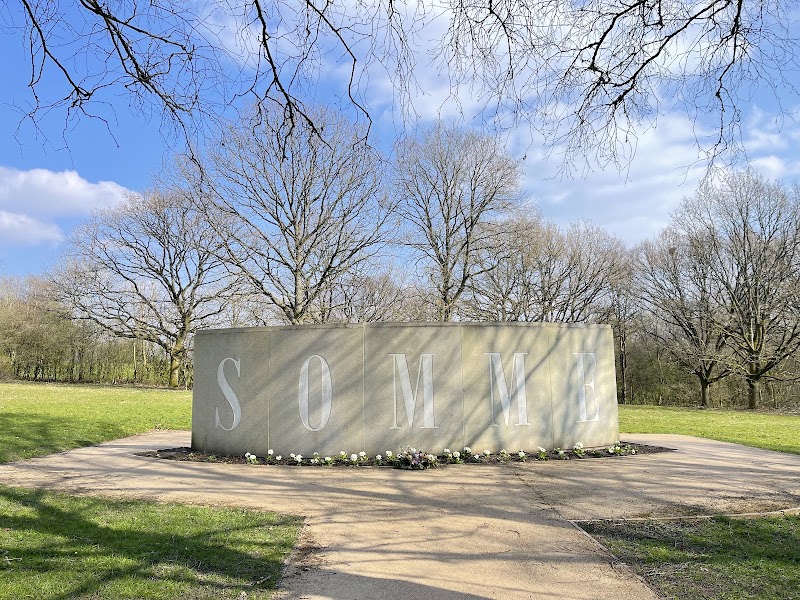
Heaton Park was the seat of the Egerton family, later Earls of Wilton, and the hall as it stands today is the work of James Wyatt, who from 1772 wrapped an older house in a neoclassical composition of bowed south front and flanking pavilions, largely finished by 1789. The landscape was laid out by William Emes in the Brownian idiom. Later generations added the Temple in 1800, Smithy Lodge in 1806, the Grand Lodge commissioned in 1807, the Dower House façade in 1803 and the Orangery around 1823, the last three attributed to Lewis Wyatt. The 2nd Earl established races here in 1827 which ran until 1839, when the fixture moved to Aintree. In 1879 a railway station opened at the estate’s edge — its successor is today’s Metrolink stop — and Lord Wilton insisted the line pass through a tunnel beneath his land. Manchester Corporation bought the estate from the 5th Earl of Wilton and opened it to the public in 1902; the first electric tram reached the park on 31 May 1903, and the golf course followed in 1912. Historic England placed the park on the national register of historic parks and gardens at Grade II on 20 February 1986. The twentieth century used the place hard: in the First World War it was a training camp for the Pals battalions of the Manchester Regiment while the hall became a military hospital; in the Second it was an RAF camp where 133,516 aircrew were trained, with a barrage balloon anchorage, an anti-aircraft emplacement and two estates of prefabricated housing. Public events have been on a similar scale. In 1909 some 40,000 people gathered to hear Enrico Caruso recordings played by William Grimshaw, the self-styled “Gramophone King”. On 31 May 1982 Pope John Paul II celebrated Mass here before a congregation of more than 100,000 and ordained twelve new priests, an occasion now marked by the papal monument and by the ground still known as the Papal Field. Oasis drew a combined 210,000 across three nights in June 2009, The Stone Roses sold out three shows in June 2012, Courteeners played their largest headline show to that date on 5 June 2015, the Hallé Orchestra and a national children’s choir marked the Somme centenary on 1 July 2016, and Oasis returned for five reunion concerts between 11 and 20 July 2025, with crowds massing on the south-facing rise that fans nicknamed Gallagher Hill. A millennium restoration partnership between the Heritage Lottery Fund and Manchester City Council spent over £10 million putting the historic fabric back together. Heaton Hall itself has always had limited public opening, and access has been restricted repeatedly in recent years: the hall closed to visitors in summer 2025 for major refurbishment including a full rewire, with guided tours in small groups by the Friends of Heaton Hall planned as it comes back into use. Check the current position before travelling specifically to see the interior — the park, the temple, the lake and the lodges are open regardless.
Visitor tips
- Arrive by tram if you can. Parking inside the grounds fills quickly on fine weekends and disappears entirely on event days, when road access around the whole area is managed.
- Check the heritage tramway’s operating pattern before you build a day around it — in a normal year it runs Sunday afternoons from March to mid-November and Saturday afternoons from May to mid-September, and it closes for major park events.
- Walk north into Hazlitt Wood if you want the park to yourself. It is foot access only, most visitors never leave the southern half, and the pond up there is a different world from the main lake.
Questions & answers
Is Heaton Park free to enter? Yes. The park and the Animal Centre are free. The heritage tramway, golf, boat hire and ticketed concerts and festivals are charged separately.
Can I go inside Heaton Hall? Not on demand. The hall has only ever opened occasionally, as a museum and events venue, and it closed to visitors in summer 2025 for major conservation work including rewiring. Small-group tours led by the Friends of Heaton Hall are planned as the building returns to use. Always check the current arrangements before travelling for the interior alone.
How big is it, really? Over 600 acres, about 243 hectares — the largest park in Greater Manchester and one of the largest municipal parks in Europe. Walking the full perimeter is a serious outing, not a lap.
How do I get there without a car? Take Metrolink to Heaton Park or Bowker Vale on the Bury line, served by the green and yellow services; from the Heaton Park stop it is about ten minutes on foot to the lake. Buses including the 135 between Manchester and Bury stop nearby.
Is the heritage tramway running today? It depends on the day and the season. The pattern is Sunday afternoons from March to mid-November, plus Saturday afternoons from May to mid-September, with closures during major events in the park. It is operated by volunteers of the Manchester Transport Museum Society.
Is it good for young children? Very. The Animal Centre is free and open most of the year, there is an adventure playground, the tram ride is short and popular, and the lakeside paths are pushchair-friendly. The park’s scale is the only real challenge — pick one area rather than trying to see everything.
Can you fish in the lake? Yes, it is a stocked coarse fishery holding carp, roach, rudd, bream, tench and chub, with rights held by the King William IV Angling Society. Standard permit rules apply.
What is the papal monument? It marks the Mass celebrated by Pope John Paul II on 31 May 1982 before more than 100,000 people, at which he ordained twelve priests. The open ground where it happened is still called the Papal Field.
When is the park open? Gates generally open early in the morning and are locked at dusk, which in midwinter means mid-afternoon. Individual attractions such as the Animal Centre keep their own shorter hours.
Photos
Show 1 more photos
Visitor reviews
Reviews last updated: 2026-08-04 20:22:58
Data is refreshed monthly. Sources: manchestername.com and editorial picks based on reviews.
Heaton Park is one of Manchester's best open spaces, ideal for family outings, walks, picnics and relaxing in nature. It is huge, well kept and offers plenty of attractions: from scenic trails and a boating lake to playg…
As always, we went by bus, we didn't have to walk far to find the park, we just crossed the road. When we entered the park, we noticed a lot of people running ("Park Run"). It was finishing. We looked at the signs to see…
This is the best park, where there is a small farm, big playgrounds, picnic areas, a café, and also lots of different birds and squirrels. The café has a tasty vegan menu
A very cosy, big park