

Laurence Pearl is a renowned biochemist and structural biologist from Manchester. He has worked at the Institute of Cancer Research in London as well as the School of Life Sciences and the Genome Damage and Stability Centre at the University of Sussex, as reported by manchestername.com.
Pearl’s research interests encompassed structural biology, protein biochemistry, and molecular biology. He also dedicated significant time to studying the HIV virus.
Early Years and Education
Laurence Harris Pearl was born on June 18, 1956, in Manchester to a Jewish family. He attended Manchester Grammar School, then the largest private boys’ school in the United Kingdom.
During his school years, Laurence Pearl showcased his talent for acting, participating in school theatrical productions. Many might have thought he was destined for a great stage career. However, life took a different turn. Years later, it became clear that the student who once graced the stage was destined to make significant contributions to the study of HIV and cancer.
Laurence Pearl pursued higher education in London, where he studied biochemistry at University College London, a part of the University of London.
He later earned a master’s degree and a doctorate in crystallography from Birkbeck College, University of London. During his time at Birkbeck, he represented the college in the popular ITV quiz show University Challenge. In 1984, the team, including Pearl, reached the semi-finals of the televised competition.
Career
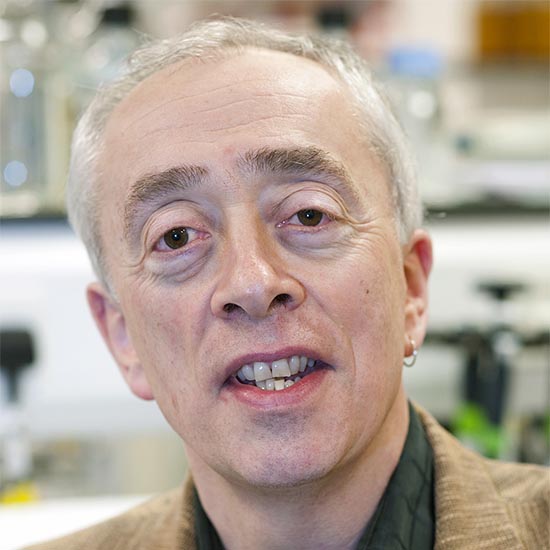
While completing his doctoral studies, Pearl worked at Birkbeck College and simultaneously at the Institute of Cancer Research in London. At the latter institution, the Manchester-born scientist established his own laboratory, which focused on structural biology related to DNA repair, signal transduction—the process by which cells convert signals from one form to another—and molecular chaperones.
In the late 1980s, Pearl returned to his alma mater, University College London, this time as a lecturer in biochemistry. In 1996, he was appointed Professor of Structural Biology.
Three years later, Pearl returned to the Institute of Cancer Research, where he co-headed the Division of Structural Biology alongside David Barford.
In 2009, Pearl became the head of the School of Life Sciences at the University of Sussex, a position he held until 2019. During his tenure, he conducted significant restructuring, including reducing staff numbers and streamlining degree programs. He also discontinued some underperforming master’s courses with low enrollment.
Through his efforts, Laurence Pearl significantly enhanced the prestige of the University of Sussex.
Laurence Pearl was a leading expert in structural biology, studying the shapes and sizes of molecules at the microscopic scale. His research focused particularly on the molecular “repair kits” within cells—molecules responsible for repairing DNA damage. DNA acts as a cell’s “instruction manual,” and the inability to repair damage can lead to severe problems, such as the development of cancer cells.
Pearl’s research in this field has provided a foundation for developing future methods of cancer treatment.
Additionally, his early work delved into the structure and mechanism of aspartic and retroviral HIV-1 protease, an enzyme involved in the hydrolysis of peptide bonds in retroviruses, which is essential to the HIV life cycle. His findings demonstrated that HIV-1 protease could serve as a therapeutic target for AIDS treatment.
Laurence Pearl received numerous awards and honors for his scientific contributions. He was married to Frances Pearl, with whom he had two sons and a daughter. Pearl’s legacy is not only marked by his family life but also by his groundbreaking contributions to biochemistry and structural biology.