

Park · Manchester · ⭐ 9.3/10 · 3008 reviews · updated: 2026-08-04 20:23:02
Address: Stannybrook Rd, Failsworth, Oldham, Manchester M35 9WJ, United Kingdom
Daisy Nook Country Park — a fictional name, a canal-made lake and a lost steam engine
Few parks in Greater Manchester take their name from a piece of Victorian fiction, and fewer still owe their lake to a Georgian engineering accident. Daisy Nook is both. Roughly forty hectares of the Medlock Valley, folded into the seam where Failsworth, Droylsden and the Oldham boundary meet, it is a country park stitched together from industrial leftovers: a derelict canal, a drowned brook, a wooded river gorge and the fields of a hamlet that a novelist and a painter turned into a household word. The result is one of the least suburban-feeling places you can reach on a tram from the middle of Manchester.
Highlights
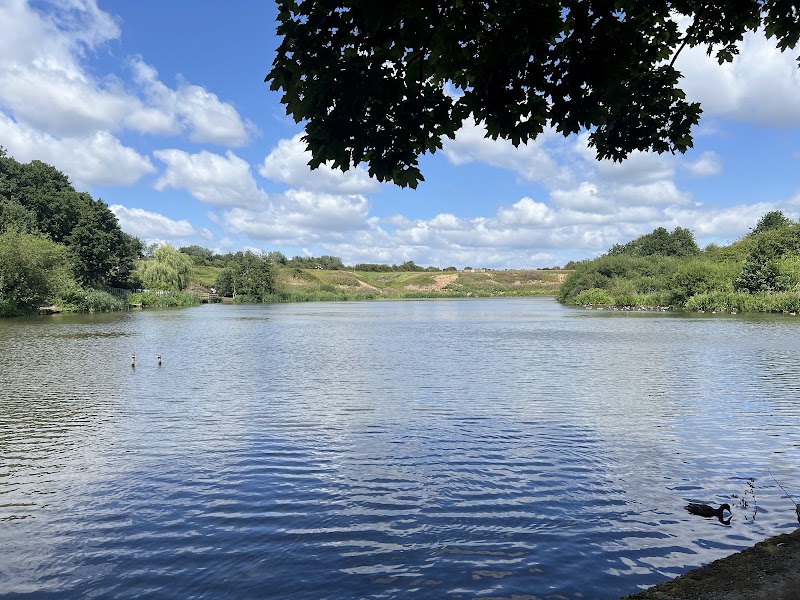
- Crime Lake — not a reservoir anyone meant to build. When the canal was cut in 1794 it severed a brook, a culvert was driven beneath the towpath to carry it, and a landslip promptly blocked the culvert. The impounded water backed up, merged with the canal and stayed. It was first recorded as Crime Bank Reservoir.
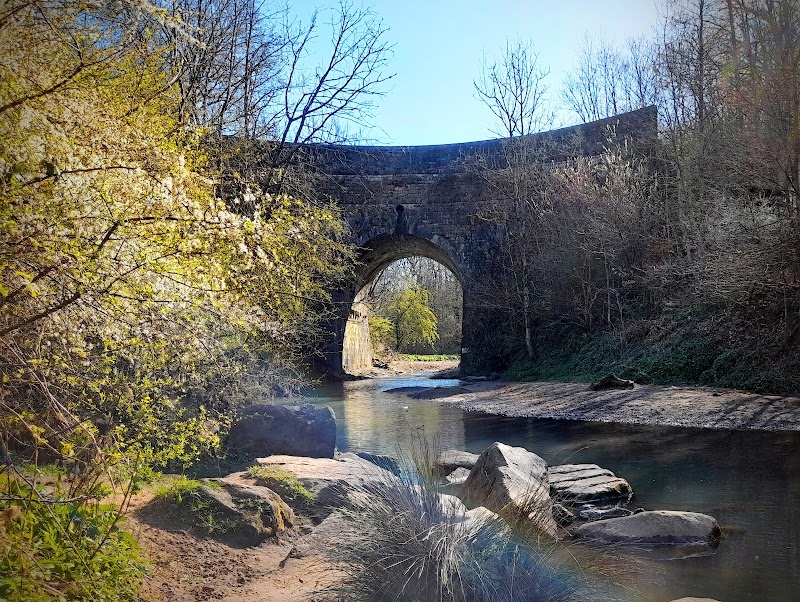
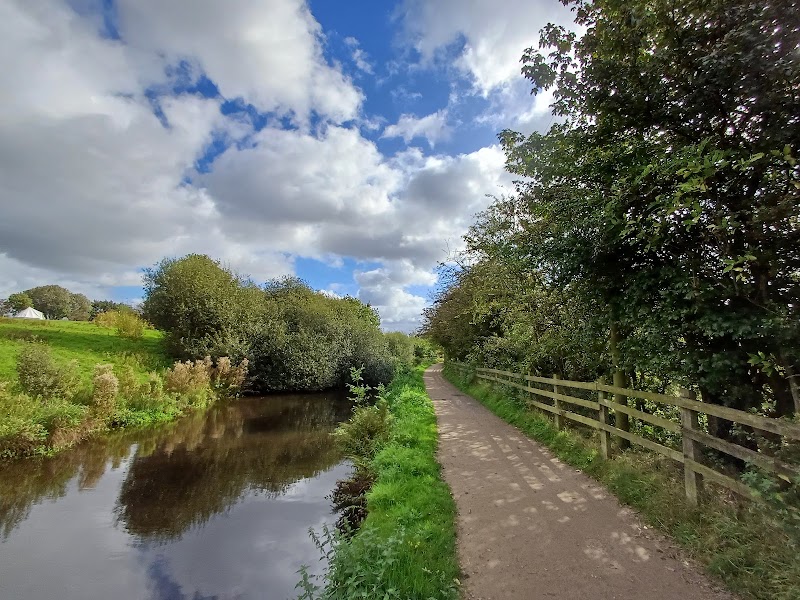
- The Hollinwood Branch Canal — opened in 1797 from Fairfield in Droylsden up to Hollinwood, with a further arm, the Fairbottom Branch, striking off towards Bardsley. Long disused, its line, lock chambers and aqueduct over the Medlock are the park’s spine, and the Hollinwood Canal Society campaigns for restoration.
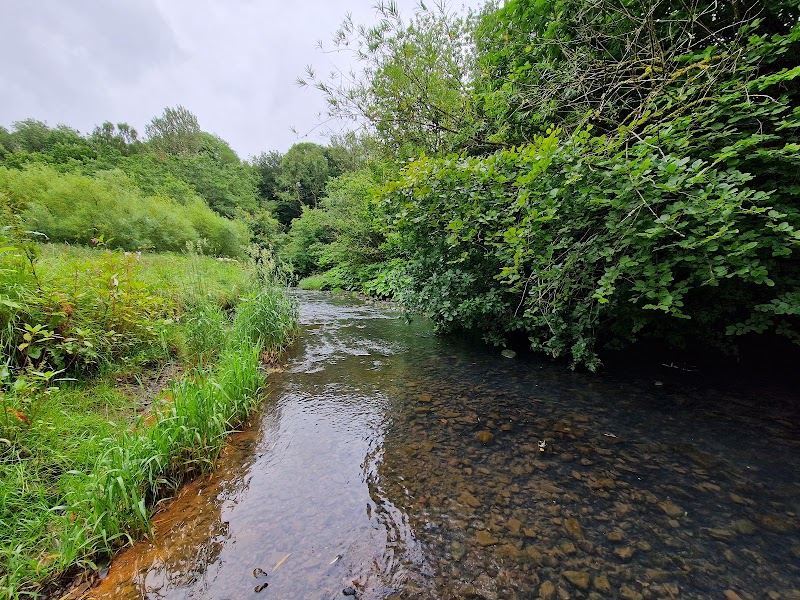
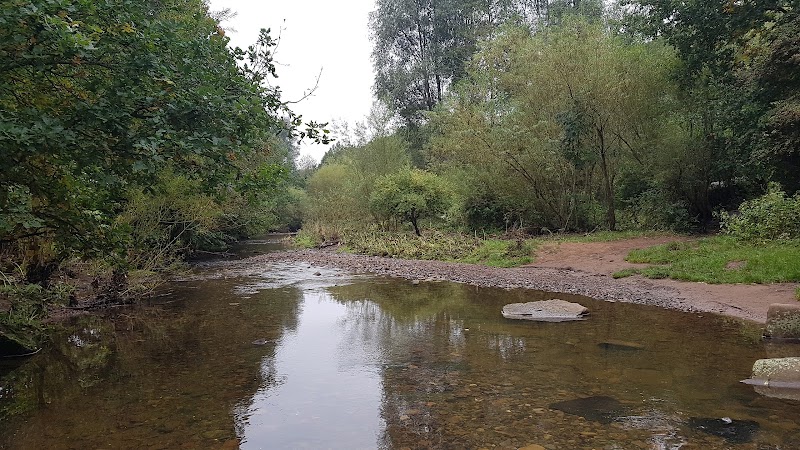
- The River Medlock — the reason the valley is wooded rather than built on. The river runs in a steep, shaded cut that flooding and instability kept free of housing, leaving mature woodland where mills once crowded the ridges.
- The Fairbottom Bobs site — a Newcomen atmospheric beam engine stood in this valley from about 1760, pumping water out of the Bardsley coal workings for some seventy-four years until it was stopped in 1834. Henry Ford bought the derelict machine in 1929 and shipped it to Dearborn, Michigan, where it survives as one of the oldest steam engines anywhere.
- The visitor centre and café — enlarged in 2011 with a bigger seating area and an information point, it is the practical hub for maps, toilets, parking and the ranger service.
- The Easter Fair — the annual funfair on the park’s fringe was painted by L. S. Lowry as Good Friday, Daisy Nook in 1946, and remains one of the most reproduced images of a Lancashire crowd at play.
What you’ll find
Daisy Nook is a working countryside site rather than a formal park: no bedding displays, no railings, no straight avenues. What it has instead is variety packed into a small area — water in three different forms, woodland at three different ages, and open meadow on the plateau above the valley.
- A network of woodland and riverside trails, some level and buggy-friendly, others steep enough to feel like proper walking.
- Three angling ponds fished on day tickets, plus the larger expanse of Crime Lake.
- Wildflower meadow and rough grassland managed for pollinators rather than mown flat.
- Picnic areas and a children’s play area near the main entrance.
- Bridleways used by horse riders, and off-road cycling links towards the wider Medlock Valley path network.
- Interpretation boards on the canal, the colliery landscape and the valley’s wildlife.
Things to do — and who it’s for
- Industrial-history walkers — few short walks anywhere pack in a lost canal, a drowned brook, colliery ground and the birthplace of a museum-piece steam engine.
- Families with small children — the café, toilets, play area and flat lakeside loop sit close together, so a first outing need not become a route march.
- Anglers — the ponds are the reason a good number of regulars come at all, and they are quiet on weekday mornings.
- Birdwatchers — kingfishers work the Medlock and the canal line, and woodpeckers are heard through the older woodland.
- Runners and cyclists — the valley gives genuine climbs, unusual this close to the city, and the towpath line gives a flat recovery leg.
- Horse riders — the bridleway network is one of the few of its kind within the built-up area.
Getting there & practical
The park sits in the Failsworth district on Manchester’s north-eastern edge, with the Oldham and Tameside boundaries close by. The Metrolink Pink Line, which runs between Rochdale and East Didsbury through the city centre, has stops at Failsworth and Hollinwood; both leave a walk or a short bus link down into the valley, and local bus services run from Oldham, Ashton-under-Lyne and Failsworth. There is a free car park at the visitor centre, which fills quickly on fine weekends. Entry to the park is free and it is open daily from morning until evening, with the café and information point keeping shorter hours. Allow ninety minutes for the lake and canal circuit, or half a day if you take the river trails and walk out towards the wider valley.
When to visit
Spring is the strongest season: the valley woods carry bluebells and wild garlic, the meadows come alive, and the Easter Fair brings the biggest crowds of the year to the park’s edge. Summer is for the water — the lake, the angling ponds and long light evenings on the towpath line — though the shaded river paths stay cool when the open ground bakes. Autumn is quietly the best for photographers, with beech and oak turning over dark water and mist sitting in the gorge on still mornings. Winter strips the trees back and reveals the industrial bones of the place: lock walls, bridge abutments and embankments that vanish under leaf in summer. Paths get genuinely muddy from November onwards, and the steeper river sections can be slippery.
Good to know
The name is an invention. The Lancashire dialect writer Benjamin Brierley set a sketch in an imaginary place he called Daisy Nook, and asked the Oldham artist Charles Potter to illustrate it; Potter came out to the real hamlet of Waterhouses to draw, and the fictional name attached itself permanently to the real valley. Much of the land is owned by the National Trust, left to it by the late James Lublam, JP, on the condition that the fields and woods be kept as a pleasure area, while Oldham Council’s countryside service manages the site day to day. The park as visitors know it was pulled together in the 1960s and 1970s out of that patchwork of trust land, abandoned canal and derelict industry — which is why its boundaries are so irregular and why so much of the landscape reads as reclaimed rather than designed.
Visitor tips
- Boots, not trainers, outside high summer — the riverside sections hold water long after the weather has cleared.
- Come early on Good Friday if you want the fair, or come somewhere else entirely if you don’t; it is the single busiest day of the park’s year.
- Follow the old canal line rather than the obvious lakeside path if you want the history — the lock chambers and the aqueduct are the most interesting structures on the site.
Questions & answers
Is Daisy Nook free to visit? Yes. Entry and parking are free; angling on the ponds is by day ticket and the café is a separate concession.
Why is it called Crime Lake? Not because of any crime. The lake began as Crime Bank Reservoir, and the name is generally traced to an old local field or meadow name rather than to any incident, though the etymology has never been settled.
Can I still see the Fairbottom Bobs engine? Not here. The Newcomen engine was dismantled in 1929 after Henry Ford bought it and now stands in his museum complex in Dearborn, Michigan. Only the valley setting and interpretation remain.
Is the canal navigable? No. The Hollinwood Branch has been disused for well over a century and survives as a dry or partly watered channel with derelict locks. A society campaigns for its restoration but the line is a footpath, not a waterway.
Is it suitable for pushchairs and wheelchairs? Partly. The area around the visitor centre, the café and the flatter lakeside and towpath sections are manageable; the river gorge paths involve steps, gradients and mud.
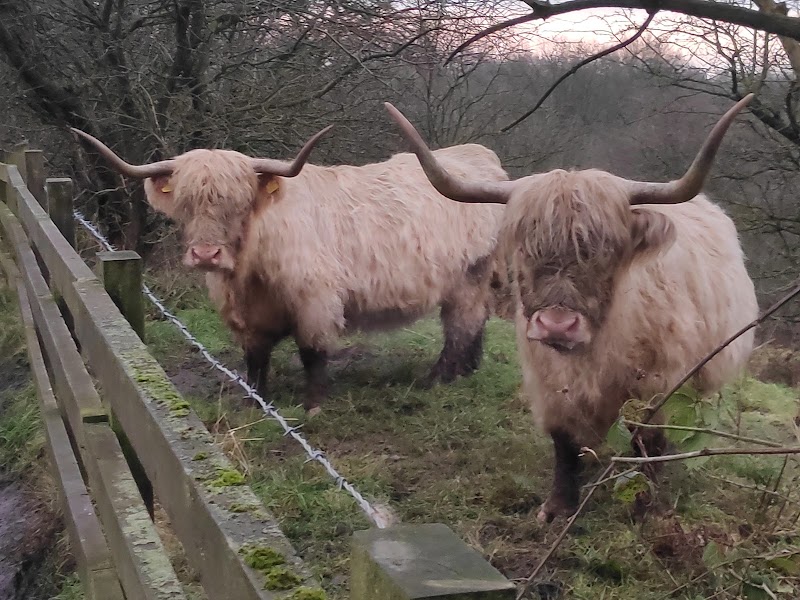
Are dogs allowed? Yes, and it is heavily used by dog walkers. Livestock grazing and ground-nesting birds mean lead control is expected on the meadow sections.
How does it compare with the city-centre parks? It is not a park in that sense at all. There are no formal gardens or ornamental planting — it is a countryside site with a café attached, and the appeal is the valley, the water and the industrial archaeology.
How long does a full visit take? An hour and a half covers the lake and the canal line comfortably. Walking the Medlock trails and out into the wider valley will take a half day.
Photos
Show 1 more photos
Visitor reviews
Reviews last updated: 2026-08-04 20:23:02
Data is refreshed monthly. Sources: manchestername.com and editorial picks based on reviews.
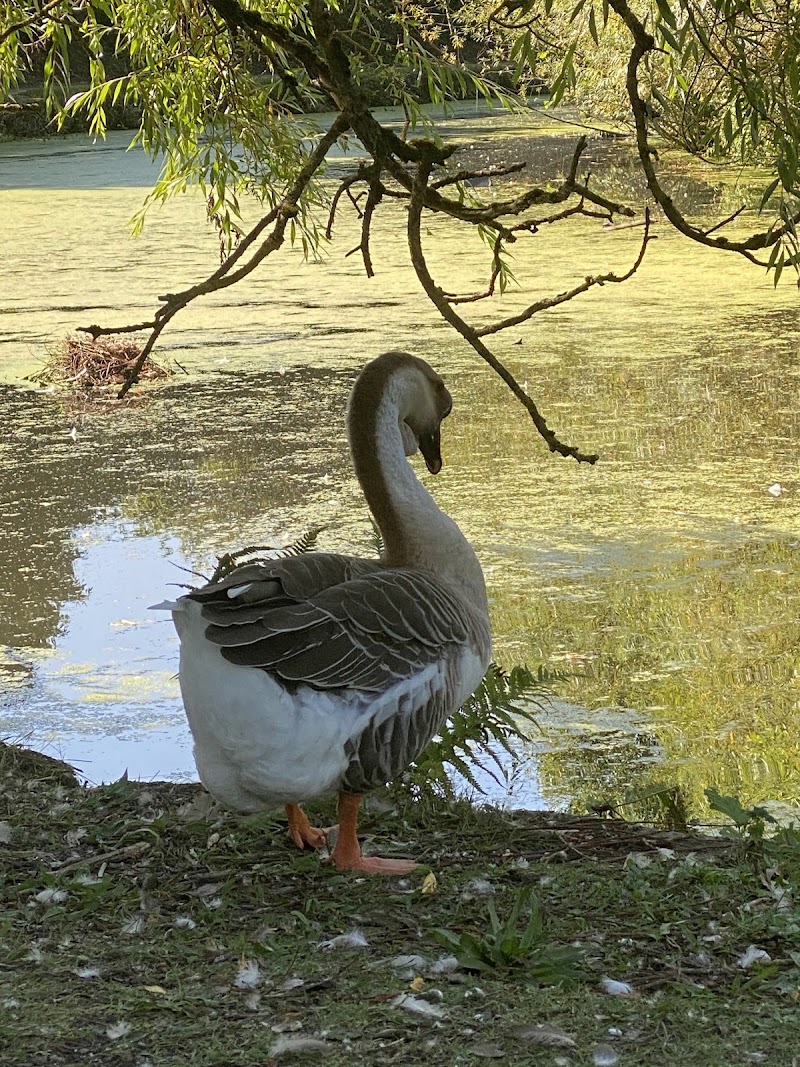
A really lovely walk, there were swans with their babies, a park for children, a big lake, fishing, a café on site and a place where dogs can have a drink.
This is a fantastic country park. Lots of parking. The food is nice at the cafe and you find your own space. You will want to visit again. Nice for a quick walk up and down, all fairly easy if you stick to the canal path…
What a wonderful place for a walk, finishing off with a sandwich and a drink. My friend and I went for a walk to the country park. I had not been there before and was pleasantly surprised. In this beautiful area there wa…
This was our first time walking around Daisy Nook, despite the fact that I have lived in Oldham all my life.
In total we walked a little over 2 miles.
Starting at the Stannybrook car park, going up the main path to Crime…
Start with a tip: check whether it rained the day before, if so, make sure you take suitable footwear, some places were slippery, had a walk, lovely views, a lake, saw some people fishing, lots of ducks and birds, good f…