

During the 19th and 20th centuries, Manchester emerged as a hub of innovation, attracting some of the brightest minds in physics, chemistry, and other scientific fields. These scholars carried out groundbreaking experiments and mentored future generations of scientists. The Meteorological Observatory at the University of Manchester stands as a testament to the city’s long-standing dedication to atmospheric research. Since its foundation, the observatory has served as a focal point for meteorological studies and education. Next on manchestername.com.
Founding the Observatory
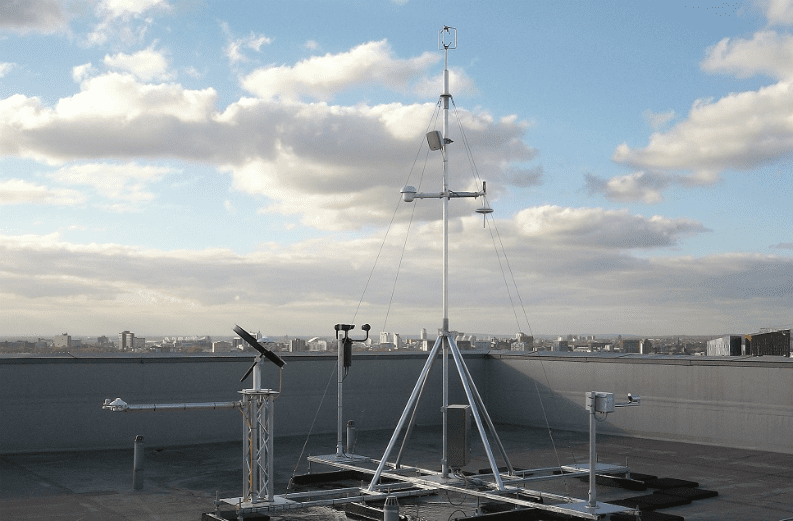
It is no surprise that the observatory was established at the University of Manchester. As the world’s first industrial city, Manchester experienced profound environmental and climatic impacts from industrial activity. This made it essential to establish a facility for continuous weather observation in an urban industrial context.
The observatory was founded in 1892, during a period of growing interest in climate and weather studies. Initially, it was equipped with basic instruments to measure temperature, humidity, and atmospheric pressure. These were primarily used for educational purposes, helping students and researchers understand the principles of meteorology.
The observatory was closely tied to the university’s Physics Department and was located in Whitworth Park, a short walk from the university campus. The Whitworth trustees provided consistent funding for the observatory, fostering its growth and enabling the acquisition of more advanced instruments.
Early directors and benefactors played a crucial role in shaping the observatory. Their passion for weather research and innovative approaches to forecasting laid the foundation for the observatory’s long-term contributions to meteorology.
Technological Progress and Daily Observations
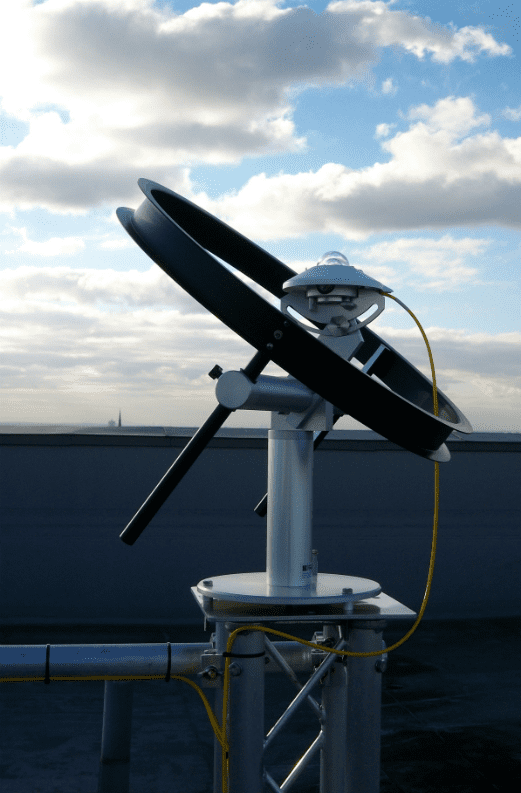
From its establishment, the observatory conducted systematic measurements twice daily at 9:00 a.m. and 9:00 p.m. Observations included barometric pressure, temperature, humidity, wind direction, wind speed, and sunlight hours. These findings were regularly published in local newspapers, such as the Manchester Guardian, Manchester Courier, and Manchester City News, providing the city’s residents with weekly weather reports.
In 1901, the observatory was officially designated as a second-class station and became affiliated with the Meteorological Office in London. Data collected in Manchester were sent to the central office, contributing to broader meteorological analyses and collaborative research.
As the 20th century progressed, the observatory adopted increasingly sophisticated technology. Instruments like anemometers for wind speed and direction, barographs for continuous pressure recording, and hygrometers for humidity measurement allowed for more precise and comprehensive data collection. These advancements enabled the observatory to provide invaluable information to both regional and national meteorological services.
Contributions to Atmospheric Science
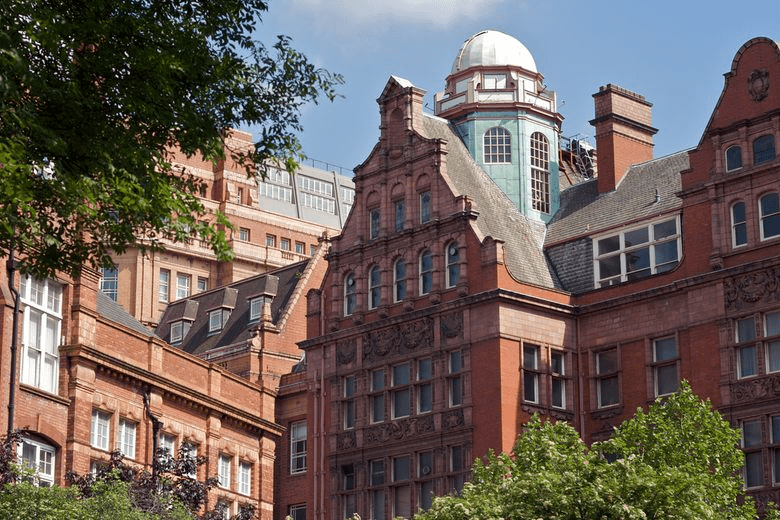
The University of Manchester’s Meteorological Observatory has significantly advanced the field of atmospheric science. One of its most important achievements is the maintenance of a long-term climate record, providing essential data for understanding climate variability and trends over decades. These records remain a vital resource for contemporary climate researchers studying the effects of global warming and developing strategies for mitigation and adaptation.
The observatory has also been a leader in air quality research. Manchester’s industrial past left a lasting legacy of environmental challenges, including significant air pollution. The observatory’s work in monitoring and analysing air quality has deepened understanding of pollutant sources and their impacts. This research has informed public health initiatives and contributed to policies aimed at improving air quality in Manchester and the surrounding areas.
In recent years, the observatory has integrated modern technologies, including satellite-based remote sensing and radar systems, for real-time weather tracking. The use of advanced climate models has also enhanced the accuracy of forecasts for extreme weather events and long-term climate projections.
Educational Role and Integration with Modern Research
As the observatory evolved, the University of Manchester established a dedicated meteorology department, where students actively participate in data collection and research. Observations continue to be conducted at 9:00 a.m. and 9:00 p.m., using a range of instruments such as:
- Barometers
- Dry and wet bulb thermometers
- Maximum and minimum thermometers
- Black bulb and grass thermometers
- Rain gauges
The observatory also utilises recording instruments, including:
- Barographs
- Robinson anemometers
- Dines-Baxendell pressure tubes
- Anemographs
- Sunshine recorders
Through its commitment to education, the observatory has become an invaluable resource for training future meteorologists while fostering public engagement with climate science. By balancing academic research with student involvement and public outreach, the Meteorological Observatory at the University of Manchester continues to make critical contributions to the understanding of weather and climate.