

Park · Manchester · ⭐ 9.3/10 · 4518 reviews · updated: 2026-08-04 20:23:00
Address: 180 Russell St, Manchester M16 7JL, United Kingdom
Alexandra Park — the Victorian park where Manchester’s politics happened outdoors
Sixty acres of high Victorian park design in Whalley Range, laid out in the 1860s and opened in 1870, Alexandra Park is one of the very few municipal parks in England whose historical importance is as much political as horticultural. Its half-mile lime avenue was built wide enough for carriages; its lake was scooped out of old marl pits; and its open ground has hosted a mass May Day rally, a women’s suffrage demonstration and a suffragette bombing, all within a generation. After a five-million-pound restoration completed in 2014 the park is now one of the most comprehensively repaired Victorian landscapes in the north of England — and it still fills every August with the Manchester Caribbean Carnival.
Highlights
- The Broad Walk — a lime avenue running roughly half a mile through the park, deliberately built wide enough for horse-drawn carriages to pass and still the spine of the whole design.
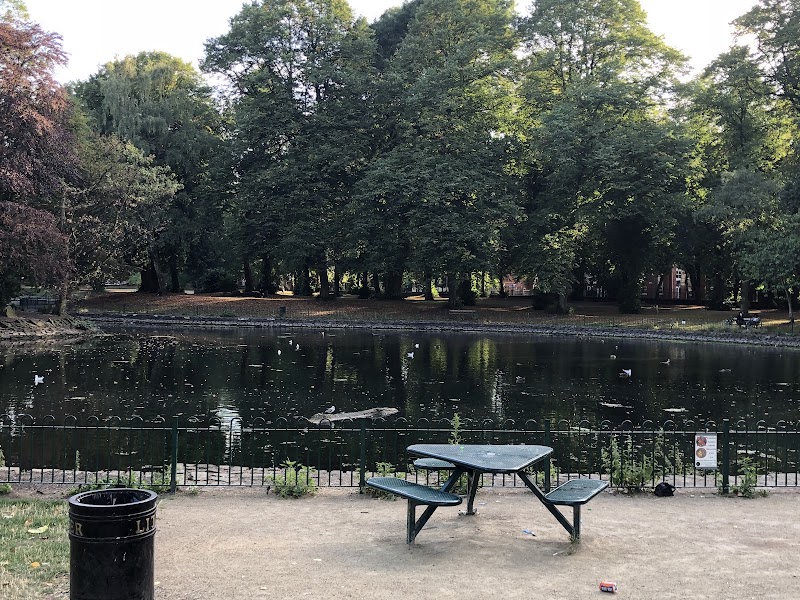
- The ornamental lake — formed from former marl pits, restored with the rest of the park and now used for coarse fishing as well as being the main wildlife feature.
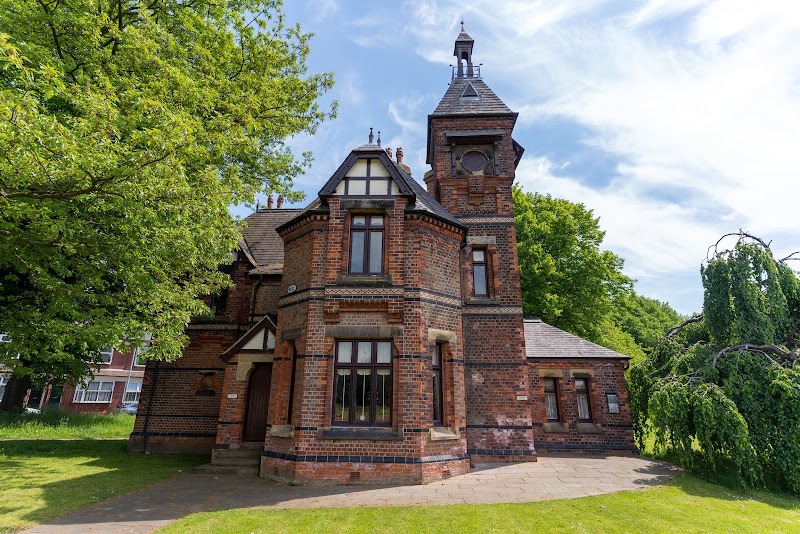
- Chorlton Lodge — the surviving superintendent’s residence, part of the lodge and gateway scheme designed by the Manchester architect Alfred Darbyshire, restored to hold community space on the ground floor and offices above.
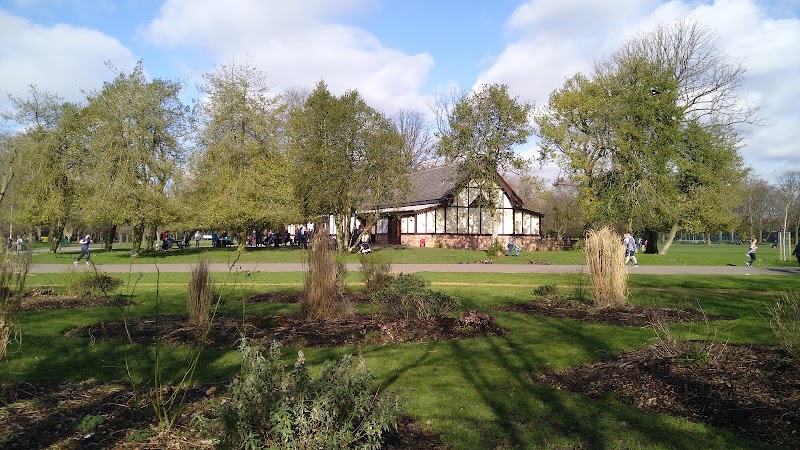
- The Pavilion — extended at both ends during the restoration to provide cricket changing rooms, public toilets, flexible community rooms and the Coffee Cranks community café.
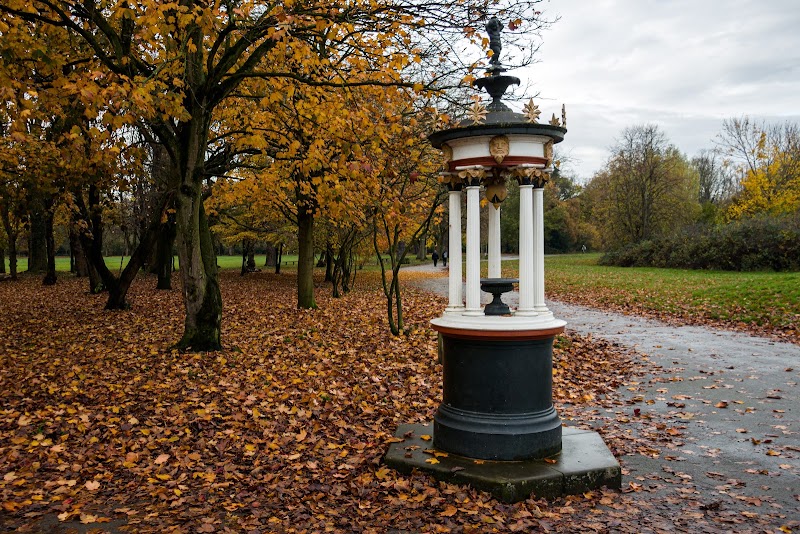
- The Grade II registered landscape — designed by Alexander Gordon Hennell and placed on the national register of historic parks and gardens in 1995, with restored historic details including the drinking fountain and the tabernacle.
- The sports core — four tennis courts, a cricket square, bowling greens, a football pitch and a multi-use games area, upgraded with funding from three national governing bodies.
What you’ll find
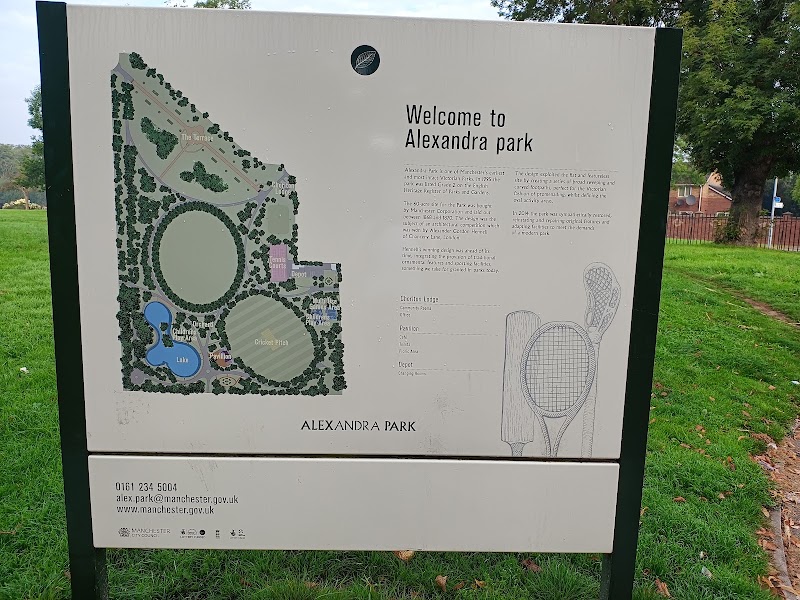
Alexandra Park is compact enough to read in a single walk and dense enough to keep rewarding you. The formal Victorian structure survives intact: axial walks, tree-lined avenues, a lake to the north-west, bowling greens near the bridge, and set-piece features placed at deliberate intervals. Around that skeleton the 2010s restoration hung a genuinely modern set of facilities, so the park works as heritage landscape and as a neighbourhood sports and community hub at the same time.
- Mature tree collection — the limes of the Broad Walk plus a wide range of specimen trees planted through the Victorian and Edwardian decades.
- Water — the ornamental lake, with fishing permitted, sitting at the quieter north-western end.
- Community buildings — the restored Pavilion and Chorlton Lodge, offering a café, toilets with baby change, sports changing rooms with showers, accessible changing and rooms available for hire.
- Play and wheels — children’s play areas, a multi-use games area and a bike hub.
- Sports provision — tennis, cricket, bowls and football, all rebuilt as part of the restoration rather than patched.
- Heritage detail — the restored drinking fountain and tabernacle, and the gateways and lodge design by Darbyshire, which give the park its distinctly Victorian civic edges.
Things to do — and who it’s for
- Local families — play areas, flat wide walks, a café inside the park and toilets that actually work make this an easy default for an afternoon.
- Tennis and cricket players — four courts and a proper cricket square with changing rooms, all rebuilt to national governing-body standards during the restoration.
- Anglers — the lake is a fishing water as well as an ornamental one, and it is far quieter than the big lakes elsewhere in the city.
- History and politics enthusiasts — this is a park where the events matter as much as the design, and part of Manchester’s Black History Trail crosses the grounds.
- Carnival-goers — the August weekend of the Manchester Caribbean Carnival is one of the city’s landmark free events, held right here.
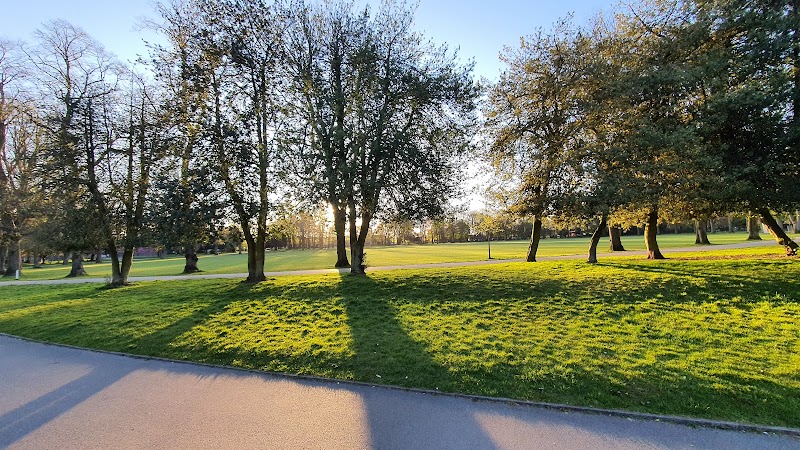
- Walkers and dog owners — the Broad Walk plus the perimeter gives a satisfying circuit with mature tree cover most of the way round.
Getting there & practical
The park sits in Whalley Range, on the borders of Moss Side and Fallowfield, a couple of miles south-west of the city centre. Buses are the most direct option: routes 85 and 85A run between the city centre, the park and Chorlton, and other services on the main radial corridors stop within a short walk. By Metrolink, the nearest stops are Firswood, Chorlton and St Werburgh’s Road on the pink East Didsbury–Rochdale line, with Trafford Bar a useful interchange for the green and purple services; from any of them the park is a walk of fifteen to twenty-five minutes, or a short bus connection. There is limited on-street parking around the edges. Entry is free and the park is open daily from morning until dusk, with the café, changing rooms and community spaces keeping their own shorter hours. Allow one to two hours to walk the park properly, more if you are playing sport or coming for an event. Note that the bandstand that once stood east of the Broad Walk no longer exists — the historic features you will see today are the restored fountain, tabernacle, lodge and gateways.
When to visit
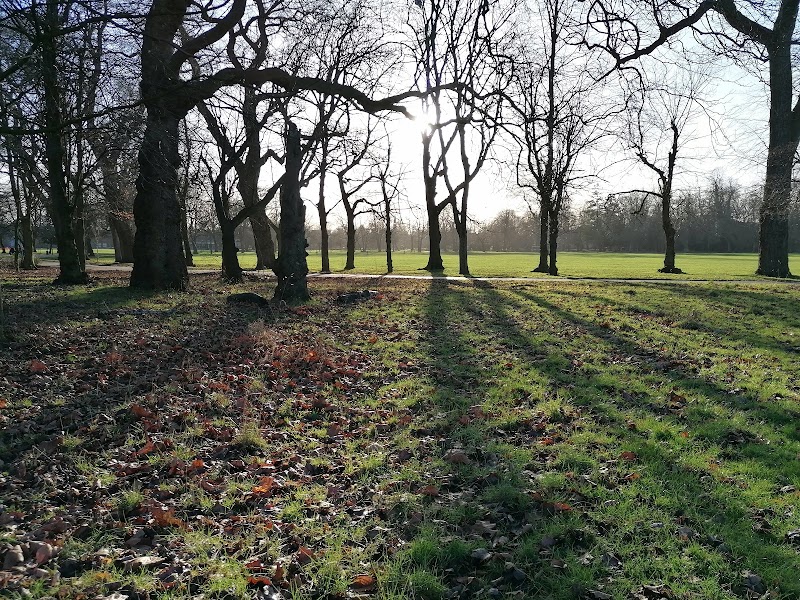
Spring is the best season for the tree collection: the lime avenue leafs up, bulbs come through the grass, and the lake edge is loud with nesting birds before the summer crowds arrive. Summer is peak use — cricket on the square, tennis courts booked out, families spread across the open ground, and in early August the Caribbean Carnival, which fills the entire park with sound systems, costume and food and is one of the great free days out in Manchester. Autumn suits the park’s formal bones: the avenues turn colour along their full length, the light comes low through the limes, and fishing on the lake is at its most productive and most peaceful. Winter is bare but architectural — the Victorian layout is at its most legible when the leaves are down, the restored paths drain properly after the 2010s works, and the Pavilion café makes the park usable in weather that would otherwise send you home.
Good to know
Manchester Corporation bought the site in 1864 from William Egerton, 1st Baron Egerton — the middle of the Lancashire Cotton Famine years, when the city was under acute economic strain. The layout was designed by Alexander Gordon Hennell, and the lodge and gateways by the Manchester architect Alfred Darbyshire; the park opened to the public in 1870. It was named in honour of Princess Alexandra of Denmark, who had married the Prince of Wales in 1863, and the surrounding street names were chosen to match. The lake was formed from former marl pits on the site, and the Broad Walk was laid out as a lime avenue wide enough to take horse-drawn carriages. What followed made the park nationally significant. On 2 May 1892 Keir Hardie organised here what is recorded as the first Independent Labour Party May Day rally, drawing a crowd of around 60,000. On 24 October 1908 the park held a major women’s suffrage demonstration. On 11 November 1913 the suffragette Kitty Marion planted a bomb that damaged the park’s cactus house — a collection that had been bequeathed in 1904 by the widow of Charles Darrah and which was eventually moved to Wythenshawe Park around 1980. During the First World War the neighbouring Alexandra Park Aerodrome was in operation. Historic England placed the park on the national register of historic parks and gardens at Grade II in 1995. By the early 2000s the Victorian fabric was worn out, and in 2011 the park was awarded £2.2 million from the Heritage Lottery Fund; Manchester City Council match-funded it, and a further £600,000 came from Sport England, the Lawn Tennis Association and the England and Wales Cricket Board, bringing the total to roughly £5 million. Work began in December 2012, ran mainly through 2013 and 2014, and the park formally reopened in August 2014, with Chorlton Lodge and the Pavilion brought back into use, the lake, paths and drainage overhauled, and the drinking fountain and tabernacle restored. The park has since retained its Green Flag Award, and it remains the permanent home of the Manchester Caribbean Carnival, held over a weekend each August.
Visitor tips
- Walk the Broad Walk from end to end before doing anything else — it is the axis the whole Victorian design hangs on, and the park makes far more sense once you have.
- Time your visit around the Caribbean Carnival deliberately. Come for it if you want the park at its most alive; avoid that weekend entirely if you want the lake to yourself.
- Use the Pavilion. The café, toilets and changing rooms are genuinely inside the park, which is unusual for a green space of this size, and it makes a longer visit far more comfortable.
Questions & answers
When did Alexandra Park open? It opened to the public in 1870, on a site Manchester Corporation had bought in 1864 from William Egerton, 1st Baron Egerton.
Who was it named after? Princess Alexandra of Denmark, who married the Prince of Wales in 1863. Nearby street names were chosen to match.
Is it a protected historic landscape? Yes. It was placed on the national register of historic parks and gardens at Grade II in 1995, and the restoration was designed around conserving that Victorian layout.
What happened in the restoration? The park was awarded £2.2 million from the Heritage Lottery Fund in 2011, match-funded by Manchester City Council with a further £600,000 from Sport England, the Lawn Tennis Association and the England and Wales Cricket Board — around £5 million in total. Work started in December 2012 and the park reopened in August 2014.
Is there still a bandstand? No. The bandstand that once stood east of the Broad Walk is gone. The surviving historic features include the drinking fountain, the tabernacle, Chorlton Lodge and Darbyshire’s gateways.
Can you fish in the lake? Yes, the ornamental lake — formed from old marl pits — is used for coarse fishing under the usual permit arrangements.
How do I get there by public transport? Buses 85 and 85A link the city centre, the park and Chorlton. The nearest Metrolink stops are Firswood, Chorlton and St Werburgh’s Road on the pink East Didsbury–Rochdale line, each a fifteen to twenty-five minute walk or a short bus connection away.
What is the Caribbean Carnival? Manchester’s Caribbean Carnival is held in the park over a weekend each August — a free, family-friendly celebration of Caribbean music, costume, food and community, and one of the city’s biggest annual outdoor events.
What are the park’s sports facilities? Four tennis courts, a cricket square with changing rooms, bowling greens, a football pitch, a multi-use games area and a bike hub, most of it rebuilt during the restoration.
Photos
Show 1 more photos
Visitor reviews
Reviews last updated: 2026-08-04 20:23:00
Data is refreshed monthly. Sources: manchestername.com and editorial picks based on reviews.
A lovely park with great facilities and lots of wildlife, beautiful all year round, but especially stunning in spring, when the bluebells and the wild garlic are in bloom and the ducklings are still tiny and fluffy. The…
This park is lovely, with cherry blossom in bloom. The staff at Chorlton Lodge are very kind and welcoming. It is a great place for family gatherings and solo runs.
Tai chi with Huan and Megs on the flagpole field – wonderful. Sunday, 11:00-13:00
A great park, lots of trees, parakeets and waterfowl on the pond (including a heron). A nice, lively café serving hot drinks and snacks.
A wonderful walk, lots to see and do. A lovely walk around the lake with plenty of wildlife. Lots of places to sit and plenty of fields where you can sit and play. Play parks – there are several, both for younger and for…
Alexandra Park is a decent option if you are looking for a quiet, easy walk rather than a moment of excitement. It is fairly spacious, well kept and great for clearing your head or getting a few steps in. Although it is…