

The city of Manchester gave the world an outstanding biologist and researcher in the fields of protozoology and parasitology, Anne Bishop. She was one of the few women scientists to become a Fellow of the Royal Society, the oldest scientific community in the United Kingdom.
Anne Bishop spent most of her professional life in Cambridge, working at the Institute of Parasitology at the University of Cambridge. Her significant research contributions included studies on parasitic amoebae and the development of chemotherapeutic treatments for amoebic diseases such as amoebic dysentery, as reported by manchestername.com.
Early Life and Education
Anne Bishop was born on 19 December 1899 in Manchester to a family with ties to the cotton industry. Her father, James Kiberley Bishop, inherited a cotton mill and also ventured into furniture manufacturing. Her mother, Ellen Ginger, hailed from Bedfordshire. Anne also had a younger brother, thirteen years her junior.
Until the age of seven, Anne was educated at home before attending a private elementary school. At the age of nine, she enrolled at Fielden School in Manchester, where she studied for three years. She completed her secondary education at the Manchester High School for Girls.
Initially, Anne envisioned continuing her family’s business. However, her interest in science grew, and in the autumn of 1918, she began studying chemistry, botany, and zoology at the University of Manchester. After being introduced to zoology, Anne realised it was her true calling.
She earned a Bachelor’s degree in 1921, followed by a Master’s degree in 1922.
Scientific Career
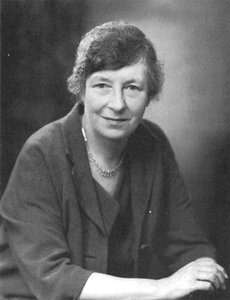
Following her university years, Anne Bishop joined the team of Sydney John Hickson, a Royal Society member known for his pioneering work in embryology, genetics, and evolution.
In 1932, she earned her Doctor of Science degree after defending her doctoral thesis. By this time, she had already been working for several years as a lecturer in the Department of Zoology at Cambridge. At a time when women rarely pursued scientific careers, Anne faced many challenges. For instance, she was not allowed to sit at the same table as her male colleagues during tea breaks.
In 1926, Bishop joined the team of Clifford Dobell at the National Institute for Medical Research in London. There, she studied parasitic amoebae found in the human gastrointestinal tract and investigated chemotherapeutic treatments for amoebic diseases, particularly amoebic dysentery.
She spent most of her career at the Molteno Institute of Parasitology in Cambridge, where she began working in 1929. At the institute, Bishop continued her research on parasitic amoebae and studied blackhead disease, which predominantly affects chickens and turkeys.
By the late 1930s, Anne Bishop was researching malaria, focusing on its vectors, mosquitoes of the Anopheles genus. Her work laid the foundation for further studies and vaccine development for malaria.
The scientist also explored drug resistance in both parasites and their hosts.
Anne Bishop remained at the Molteno Institute until 1967. She became one of the few women to be elected as a Fellow of the Royal Society. She also founded the British Society for Parasitology and served on the World Health Organization (WHO) committee for malaria.
Her scientific career earned her numerous awards and honours.
Interests and Hobbies
Anne Bishop was a well-rounded individual. From an early age, she loved music and regularly attended orchestral concerts, opera, and ballet performances. She was also an art enthusiast, often visiting galleries.
In addition to her scientific pursuits, Bishop was skilled in cooking and needlework. She enjoyed travelling, primarily within the UK.
In her work, Anne was exceptionally meticulous and preferred working independently rather than in a team. She was an introvert by nature.
Anne Bishop passed away on 7 May 1990 at the age of 90. In her later years, arthritis restricted her mobility. She was laid to rest in the company of friends.