

Trafford Park is considered the world’s first industrial park. It has also remained the largest in Europe for many years. Trafford Park is located approximately 4.6 miles (7.4 kilometres) southwest of central Manchester. This industrial area spreads on the south side of the Manchester Ship Canal.
Before the rapid industrial revolution, it was a beautiful park with roaming deer. It belonged to the de Trafford family. However, in 1896, this territory was purchased by the financier Ernest Terah Hooley, who decided to turn the acquired land into the world’s first industrial park. Learn more about what happened next at manchestername.com.
General information about industrial parks
Before we get to know the history of Trafford Park in more detail, let’s find out what industrial parks are in general. These are areas designated for industrial development. As a rule, industrial parks have engineering and transport infrastructure and are located on the outskirts of cities.
The first industrial parks began to appear in Western Europe and the USA at the end of the 19th and the beginning of the 20th centuries. The first one to appear was Trafford Park near Manchester. In the USA, the first industrial park appeared near Chicago in 1907.
Industrialisation of Trafford Park
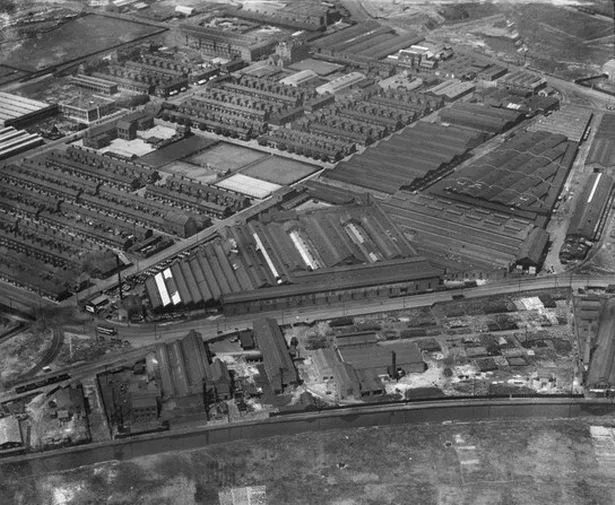
Before the Industrial Revolution, Trafford Park was a beautiful place with meadows, pastures, an avenue, an ornamental lake and a manor. The manor and 1,183-acre (479 ha) estate has belonged to the Trafford family since the 13th century.
The de Trafford family is one of the oldest in England. At one time, the family was one of the largest landowners in Stretford.
Before the Industrial Revolution, deer were bred on the territory of Trafford Park. These beautiful and graceful animals roamed freely in the vast area around the Trafford manor.
It is worth noting that the Trafford family opposed the construction of the Manchester Ship Canal, which appeared in 1893. Rich landowners believed that dirty water would approach their residence through the canal and generally make the area around uninhabitable.
However, after the launch of shipping on the Manchester Canal, it became clear that the area of Trafford Park would be ideal for industrial development.
In May 1896, Humphrey Francis de Trafford put 479 hectares of Trafford Park up for sale. While Manchester Corporation agreed terms with a representative of the de Trafford family, another man quickly managed to become the new owner of the park. He turned out to be Ernest Terah Hooley, a financier with a dubious reputation who was repeatedly accused of fraud. Hooley bought Trafford Park for £360,000.
The transformation of the former Trafford Park into an industrial area began almost immediately after Hooley bought it. Thus, the Manchester Patent Fuel Company appeared here in 1898. Later, other firms, such as Trafford Brick Company, JW Southern & Co, James Greshama and WT Glovers & Co, started their activities on the territory of the park too. In addition, a power plant was built there as well.
In 1899, the leading American electrical engineering and nuclear power company Westinghouse Electric Corporation began operating on the territory of Trafford Park. They created a subsidiary British company called British Westinghouse there.
Another large American company that operated on the territory of Manchester’s Trafford Park was the world-famous Ford Motor Company. There, they opened an assembly plant.
As of 1915, a total of 100 American companies were working on the territory of Trafford Park, and in 1933, there were more than 200 of them. Of course, in addition to American companies, there were also British ones, such as The Co-operative Group, Kilverts, Liverpool Warehousing Company and Lancashire Dynamo & Crypto Ltd.
As of 1903, 6,000 people worked in the local industrial zone. Later, that figure increased to 24,000 people. On the eve of World War II, the industrial park employed about 50,000 workers.
By the way, what about the deer that lived on the territory of Trafford Park? At first, the animals continued to freely roam the territory of the park, despite the appearance of the first industrial enterprises. However, later, their presence on the territory of the industrial park was deemed inappropriate. Unfortunately, the deer were killed. The last of them was killed in 1900.
During the world wars
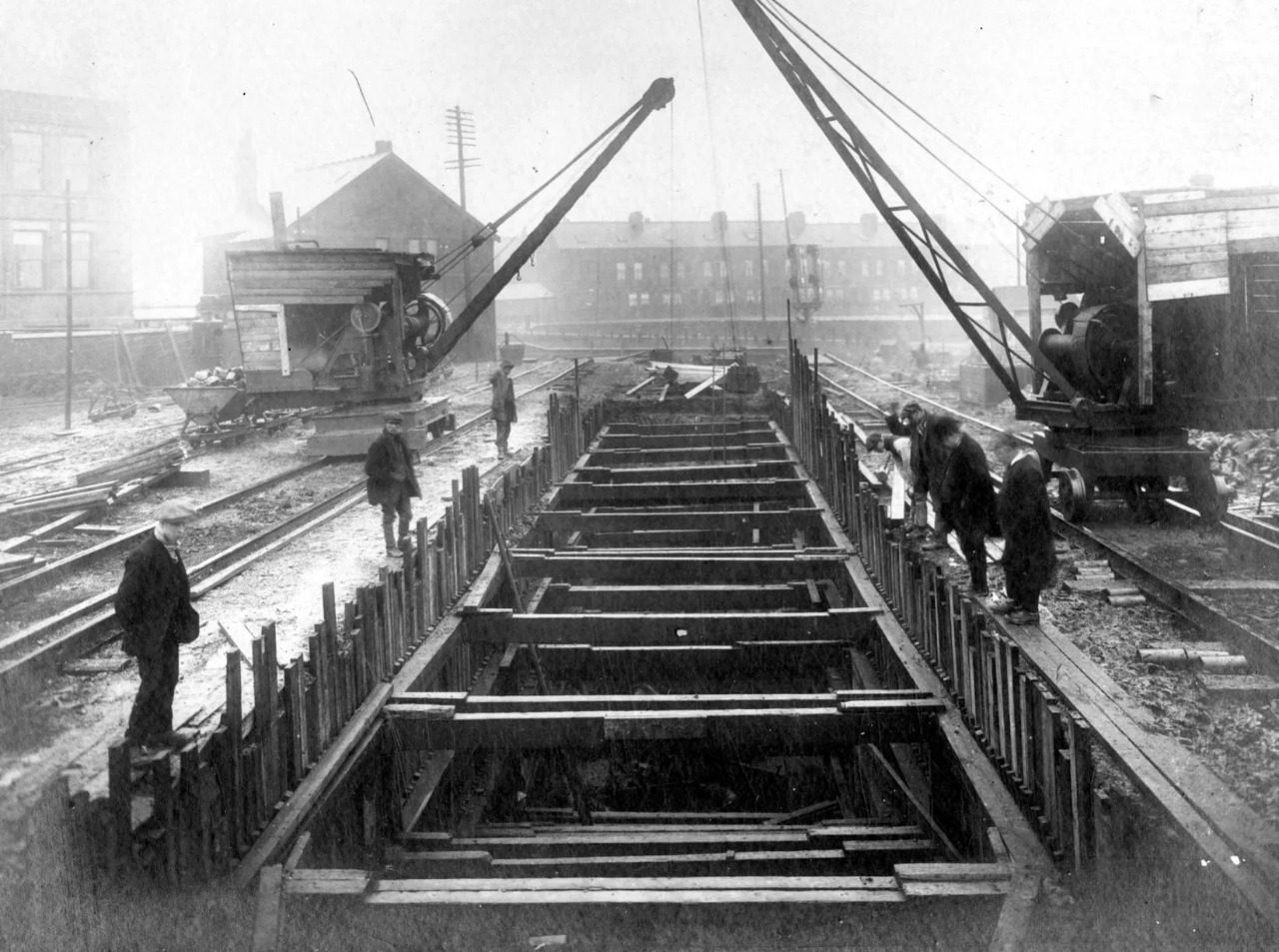
During the First and Second World Wars, the industrial park worked for the military needs of Great Britain. In particular, during the First World War, the park was used for the production of ammunition, chemicals and other materials.
During the Second World War, the capacity of Trafford Park was directed to the production of military equipment, in particular, bombers and fighters, as well as engines for them. Other companies produced bearings, ammunition, tank tracks, portable bridges and penicillin in large quantities.
Since Trafford Park was used by the British military complex during the Second World War, it was a sweet target for the air force of Nazi Germany. The industrial park was repeatedly bombed, most notoriously during the so-called Manchester Blitz in December 1940.
Decline and recovery
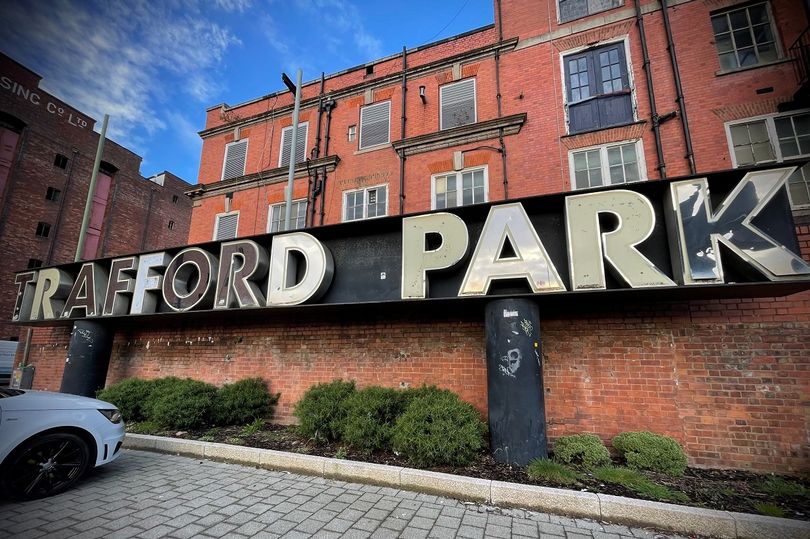
In the 1960s, companies and factories began to gradually close and relocate from Trafford Park. Thousands of workers lost their jobs. Obviously, it meant that years of decline awaited the industrial park ahead.
In an attempt to revive industry in Trafford Park, the British government declared the park an enterprise zone in August 1981. The main goal was to create 7,000 new jobs over the next 10 years. However, that plan failed, and by 1986, they managed to create only 2,500 jobs.
Therefore, the Trafford Park Urban Development Corporation was established a year later, in 1987. It was entrusted with the task of restoring the previously prosperous industrial park. The corporation succeeded. In a few years, it attracted investments and hundreds of companies. At the turn of the century, more than 1,400 local firms employed 35,000 people.
As of the beginning of the 21st century, Trafford Park remained the largest industrial area in Europe. Such well-known companies as Amazon UK, DHL Parcel, Unilever Foods and Procter & Gamble have worked there. The park also housed a huge number of wholesale and retail stores. Some of the local companies provided logistics and transport services as well as waste processing and disposal services.
At one time, Trafford Park acquired landmarks, which aroused the interest of travellers. In particular, the most famous of them was the Imperial War Museum North, which was opened in 2002.
Another tourist attraction is Old Trafford, the home stadium of Manchester United FC. It is located south of the aforementioned museum and can accommodate 76,000 people in its stands.
You can easily get to Trafford Park from central Manchester by taking a bus, tram or taxi. The Metrolink railway line connecting central Manchester to the Trafford Centre was laid in 2020.
Visitors can also get to Trafford Park on foot crossing two footbridges across the Manchester Canal.
Although Trafford Park doesn’t guarantee a lot of spectacles to its visitors, it is still worth seeing. After all, this location is an integral part of Manchester’s glorious industrial past.