

Manchester, like many cities worldwide, has experienced rapid industrialisation and urbanisation, which have largely displaced green urban areas. The city is dominated by high-rise buildings of glass, steel, and concrete, which reflect heat and trap pollution. In the 21st century, the creation of green facades has emerged as a solution. They blur the line between architecture and nature, transforming concrete urban neighbourhoods into living ecosystems. One of the most striking examples of this ecological transformation is the “HYVERT” modular living wall, first developed in the UK. It is considered not just a decorative trend, but an effective response to climate change, air pollution, and the emotional fatigue of living in grey cities. More at manchestername.com.
Transforming walls into ecosystems
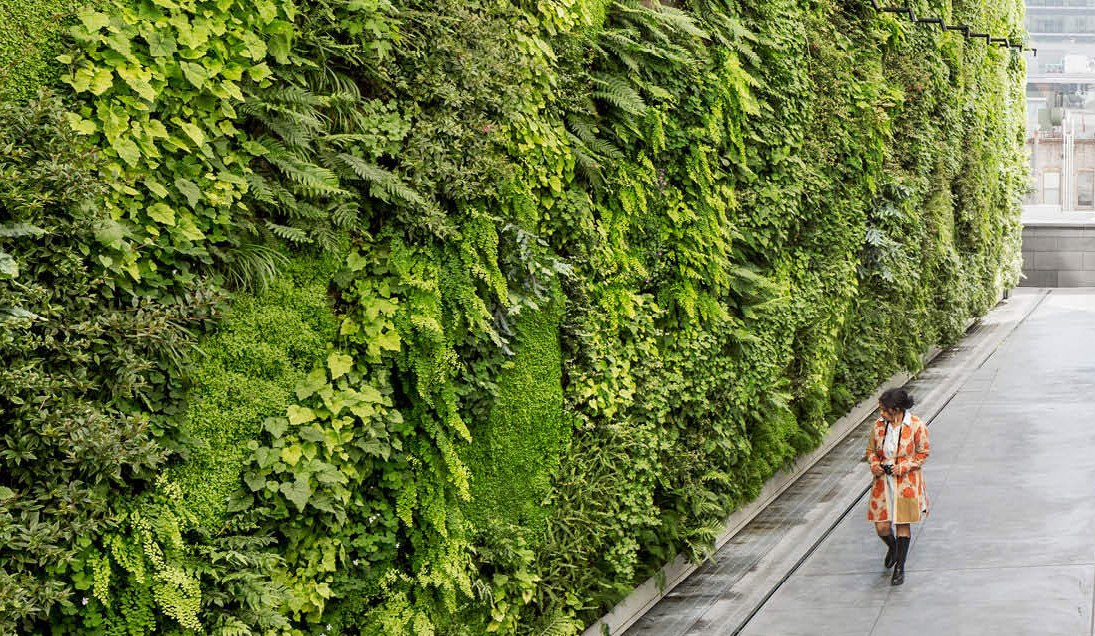
The “HYVERT” system in Manchester redefines the role of the concrete wall – from a passive structure, it transforms into an active participant in urban life. Each green module contains a mix of plants, carefully selected to suit the local climate, possessing air-purifying properties and requiring minimal maintenance. These panels can be installed on both new and existing buildings, instantly turning a dull facade into a lush vertical garden.
The distinctive feature of “HYVERT” is its sophisticated engineering. The system uses lightweight materials, efficient irrigation, and intelligent sensors that monitor plant health and water consumption. As a result, the walls “know” when they need watering and how to adapt to weather changes – a kind of 21st-century “green intelligence”. But beyond the technology, it is also about beauty and functionality: creating living, breathing walls that change with the seasons, bloom in spring, and cool the air in summer.
Why are green facades important for Manchester?
Manchester is a city whose history is literally steeped in industrial smoke. It was once the industrial heart of the country, with factories operating, looms clattering, and the sun obscured by thick manufacturing smoke. It was the Industrial Revolution that made Manchester wealthy, but also one of the most polluted cities in 19th-century Europe. The traces of this era were felt for decades: high concentrations of pollutants in the air, increased levels of respiratory diseases, grey buildings, and a lack of green spaces in the city centre.
In the 20th century, the city took a step forward, leaving its industrial smoke behind, but the consequences of those times lingered. Even in the 21st century, air quality remained a serious problem: according to Manchester City Council, air pollution reduces the average life expectancy of residents by 6-8 months. Add to this climate change — heavy rainfall, floods, rising temperatures — and it becomes clear that Manchester needs more than just “greening”, but a new ecological philosophy.
This is precisely why green facades are not just another fashion trend, but a necessity. Vertical gardens, like the “HYVERT” systems or urban “living walls”, have become a symbol of how Manchester is reimagining its space. They literally help the city “breathe”: plants on facades absorb carbon dioxide and dust, filter the air, lower temperatures on hot days, and reduce urban noise levels. Every square metre of a green wall can release oxygen, absorb tens of grams of pollutants per year, and create a microclimate that literally saves the health of its residents.
But it’s not just about ecology. For a city with a powerful industrial heritage, green facades are a symbol of a new, sustainable path. Where factory chimneys once stood, living walls now grow; where there was once concrete and rust, leaves and flowers now appear. Manchester is transforming its “industrial wounds” into natural air filters.
In the 21st century, as the entire world grapples with the consequences of global warming, green solutions have become part of the city’s sustainable development strategy. Manchester is implementing its “Green & Blue Infrastructure Strategy”, supporting projects to create green roofs, living facades, and urban gardens, striving for carbon neutrality by 2038.
Yes, vertical gardens are not just plants on walls. They are a reminder that even an industrial city can be reborn if it learns to work in harmony with nature.
It is also worth noting that green facades in Manchester are not just an aesthetic solution. According to ecologists, buildings covered in vegetation can reduce surface temperatures by up to 10°C, improve air quality, and absorb noise in busy urban areas. They also attract pollinators — bees and butterflies — restoring the micro-environment in urban centres where nature has long been destroyed by urbanism.
In Manchester and other British cities, such walls are being installed on office buildings, residential blocks, and even car parks. The results of this ecological initiative are impressive: lower energy costs, cleaner air, and more satisfied residents. Moreover, studies have shown that exposure to green facades significantly improves well-being, reduces stress, and enhances concentration. It turns out that even a simple garden can make urban life more pleasant.
The popularisation of vertical gardens in Manchester, the UK, and beyond
The success of “HYVERT” has sparked a wave of similar projects across the UK. From The Rubens at the Palace hotel in London, home to one of Europe’s largest living walls with over 10,000 plants, to the “Living Wall” project in Birmingham – green facades are rapidly becoming symbols of modern urban sustainability. They show that innovation and nature can coexist and even thrive together.
Furthermore, these systems are scalable. Schools use them to create outdoor classrooms surrounded by greenery, hospitals install them to speed up patient recovery, and companies invest in them to improve employee well-being. This is a true ecological revolution, promoting the greening and prosperity of modern metropolises.
A look into a sustainable future
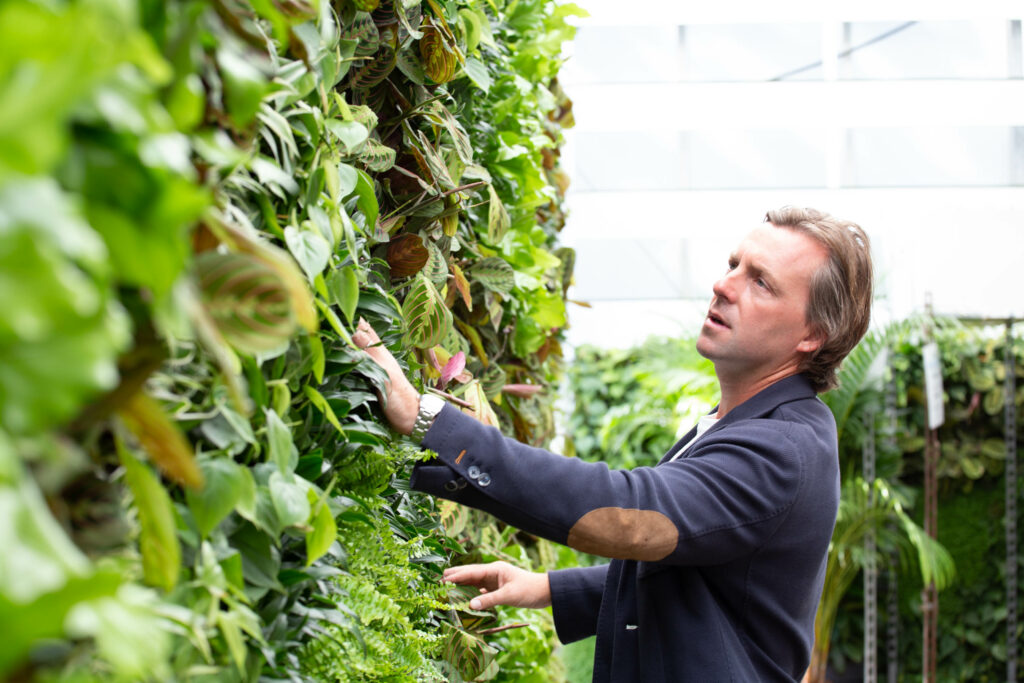
The “HYVERT” modular wall and its counterparts remind us that the future of urban development is not necessarily just brick, glass, and concrete. As climate problems intensify, the idea of living, breathing buildings opens the way to a more balanced urban future.
In a sense, green facades show that progress isn’t always about building higher or faster — sometimes it means allowing nature to literally return and take its place, for example, on the walls of buildings. This return is not only aesthetic but also philosophical: cities are beginning to perceive greenery not as decoration, but as part of their infrastructure.
Living walls are becoming a new type of “urban lung” – they mitigate the climate, retain moisture, create comfort, and even influence people’s moods. Studies show that views of green surfaces reduce stress levels, improve concentration, and make residents happier.
Projects like “HYVERT” are an example of how architecture and ecology cease to be adversaries and become allies. And perhaps this is the true meaning of progress in the 21st century: building cities where humans and nature do not hinder one another.
- https://www.iwantplants.co.uk/what-is-hyvert/
- https://www.iwantplants.co.uk/hyvert-external-living-walls/
- https://epc.ac.uk/article/a-case-study-for-the-epcs-engineering-a-better-future-for-all-of-us-campaign-featuring-the-manchester-metropolitan-university-university-of-manchester-university-of-cumbria-salford-university/