

For many people, Manchester is often associated with industry, famous music bands, or football glory. However, in the 2020s, the city is forging a different image — that of an ecological and sustainable city. It has seen an increase in lush parks, flowing rivers, green roofs, and community gardens. Such transformations are no accident; they are part of a strategy aimed at a sustainable future – the “Green & Blue Infrastructure Strategy”. This strategy is changing the city’s post-industrial infrastructure, improving the health of its residents, and tackling climate change. More at manchestername.com.
From Grey to Green: Why Did Manchester Need to Change?
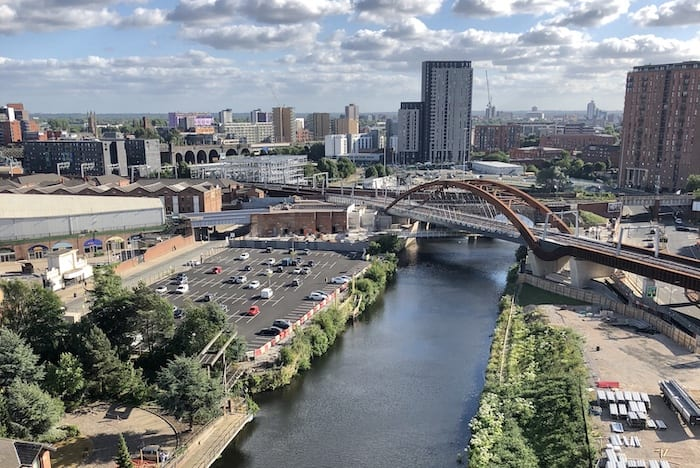
For over a century, Manchester was known as the world’s first industrial city. It was a symbol of progress, but rapid industrialisation made the city one of the most polluted. Factories, warehouses, and railways appeared at an unprecedented speed, destroying natural habitats and culverting rivers. Tonnes of industrial waste were regularly dumped into rivers like the Irwell and the Medlock. By the end of the 20th century, this industrial legacy had left behind not only the title of “The World’s First Industrial City” but also a city with limited green spaces and poor air quality.
This large-scale industrial impact left its mark not only on the city’s ecology but also on climate change in general. Floods, rising temperatures, and worsening air quality made it clear that Manchester’s infrastructure needed a complete rethink. The city authorities decided to begin implementing sustainable development. For Manchester, this became not just an environmental goal, but a social and economic necessity.
In 2015, Manchester launched the “Green & Blue Infrastructure Strategy” — a comprehensive plan to integrate people, nature, and urban development. “Green” refers to parks, gardens, trees, and meadows, while “Blue” refers to rivers, canals, ponds, and wetlands. Together, these elements form a living network designed to make Manchester not only more sustainable but also more beautiful, healthier, and more inclusive.
A Healthy and Happy City
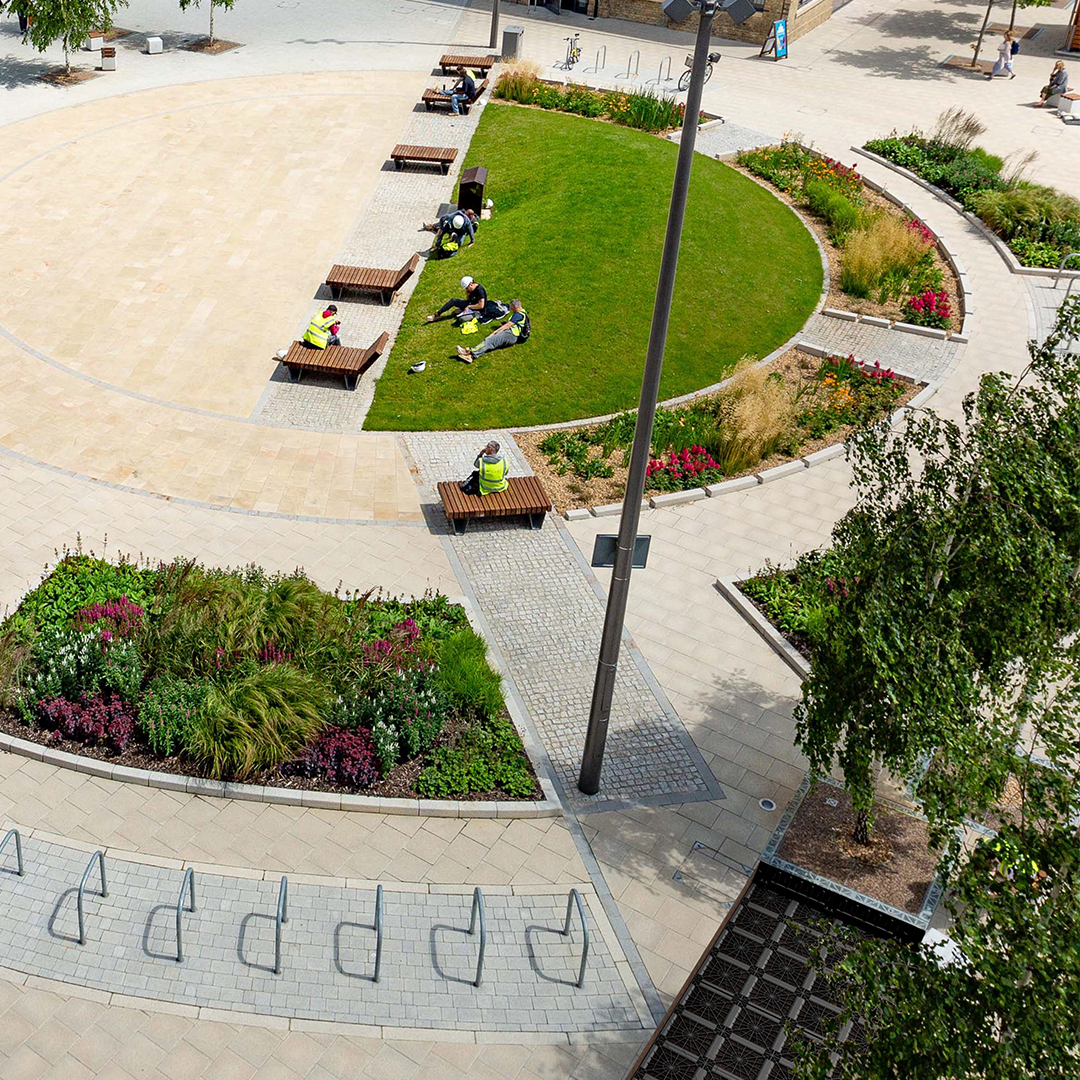
At the heart of the “Green & Blue Infrastructure Strategy” is the belief that access to nature improves quality of life. Studies have shown that Manchester residents living near green spaces report improved mental and physical health, greater satisfaction with their neighbourhood, and stronger ties with the local community.
This urban plan set ambitious goals: to increase woodland cover, restore rivers, improve flood management, and expand public green spaces. As part of the project, around three million trees were planted in Greater Manchester. These trees are not just decorative — they absorb CO₂, filter pollution, and cool the streets during heatwaves.
Meanwhile, projects like the “Sponge Park” in West Gorton and Mayfield Park demonstrate how ecological design can be combined with community needs. The “Sponge Park” naturally manages rainwater, preventing floods and creating a space for family recreation. And Mayfield Park is the first new city centre park in Manchester in a century. It has daylighted the previously hidden River Medlock. Such initiatives are transforming Manchester’s industrial areas into a thriving green oasis.
Through urban planning and the implementation of environmental initiatives, strategies, and programmes, Manchester is turning once-forgotten spaces into dynamic ecosystems that benefit both people and the planet.
Climate Change Resilience: Nature as a Tool for Survival
Climate change has made resilience one of Manchester’s priorities. The city faces increased rainfall, more frequent heatwaves, and a heightened risk of flooding, especially in densely built-up areas. Traditional drainage systems cannot always cope with these challenges. This is where the “Green & Blue Infrastructure Strategy” comes in.
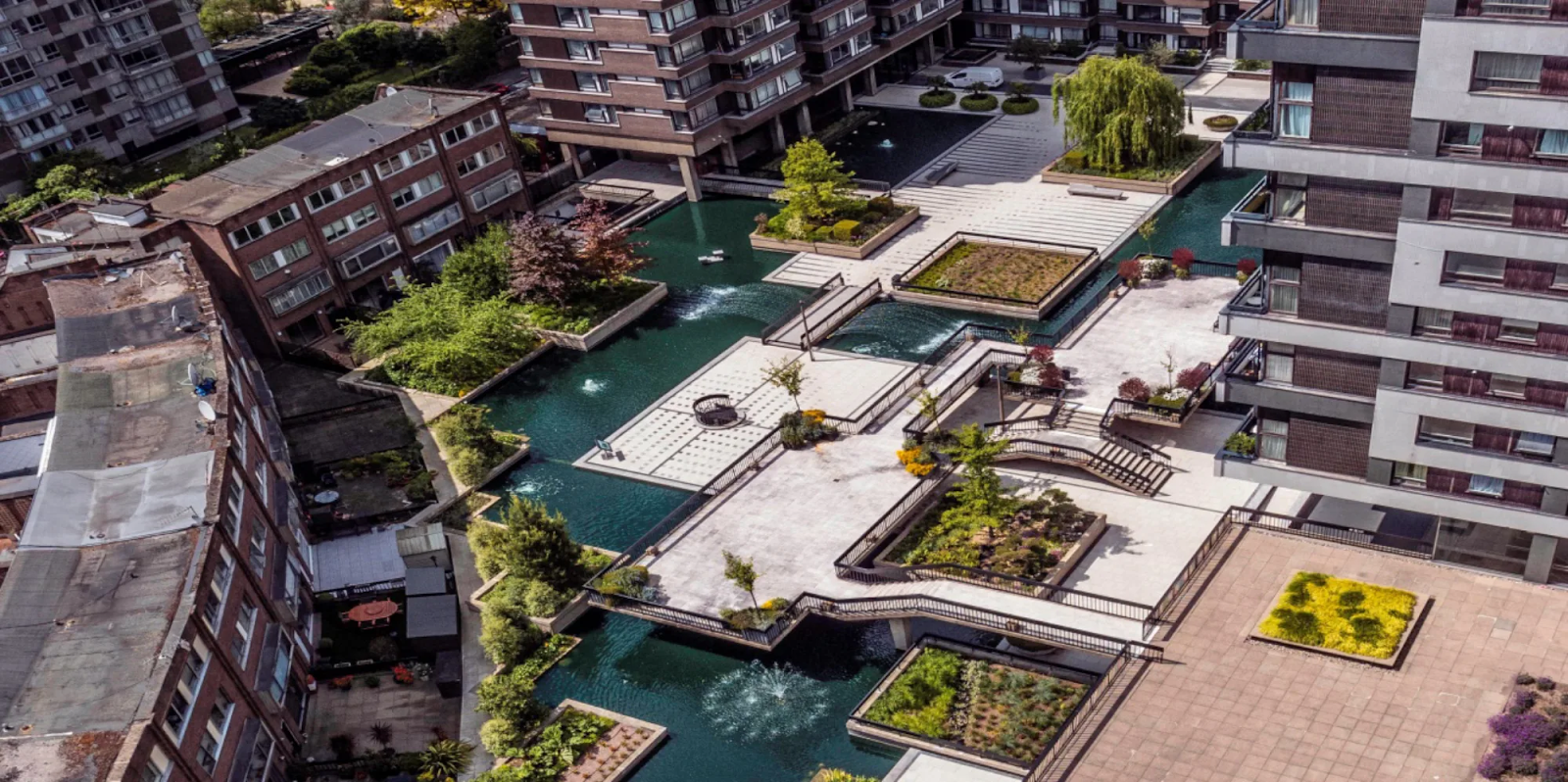
Across Manchester, rain gardens, green roofs, and permeable surfaces are being created to capture and manage excess rainwater, reducing the strain on the city’s drainage system. Rivers like the Irk and the Irwell are being reconnected with their natural floodplains, allowing water to flow more freely and safely.
But resilience is not just about engineering solutions; it’s a mindset. Manchester’s “Green & Blue Infrastructure Strategy” encourages local communities, schools, and businesses to participate in sustainable development projects — from planting community gardens to implementing green roofs. In this way, the programme is fostering a culture of environmental responsibility among the local population.
Thanks to this multifaceted approach, Manchester will be prepared for the future challenges of a changing world.
Manchester: A City of the Future?
The “Green & Blue Infrastructure Strategy” in Manchester is not just about creating green spaces; it’s about identity. Once a city famed for its cotton industry, it is now becoming a leader in sustainable urban living. Every new park, river restoration, and green corridor is a step towards an ecological future and a new, sustainable story.
Although the “Green & Blue Infrastructure Strategy” was implemented relatively recently, its benefits are already clear: cleaner air, cooler summers, and greener streets and neighbourhoods.
It is worth noting that the city’s green strategies not only improve Manchester’s environmental condition but also attract investment, boost tourism, and increase property values.
Furthermore, this strategy plays a vital role in education. Schools now include environmental learning in their curricula, using local parks and wetlands as outdoor classrooms. Children are growing up understanding how ecosystems work and how their actions affect the city’s future. This is shaping a new generation of Mancunians who value sustainability not as an obligation, but as a way of life.
Manchester’s transformation from an industrial city to a sustainable one shows that it is possible.
It should be noted that Manchester’s “Green & Blue Infrastructure Strategy” is more than just an urban programme; it is a revolution on the path to a sustainable future and reconnecting people with the nature that once defined this region.
For Manchester, the founding city of the industrial era, green and blue infrastructure has become an urgent necessity. Spaces such as parks, canals, and lakes play a huge role in the life of the city.
In 2022, Manchester’s “Green” and “Blue” infrastructure strategy was updated. A new implementation plan is being created, which will define the main priorities, goals, and projects aimed at the development and enhancement of the city’s natural areas in the coming years. This document will serve as a practical guide to implementing the vision of a sustainable and ecological Manchester.
The updated strategy has received national recognition: The Chartered Institute of Ecology and Environmental Management recognised it as one of the best examples of ecological planning in the UK. For its contribution to knowledge sharing and the development of sustainable urban solutions, Manchester received a National Knowledge and Innovation Award.
In this way, the city is not just preserving natural resources but making them part of urban life, shaping a new vision of modern urbanism — one that is green, liveable, and sustainable.
In every drop of rain absorbed by a garden, in every tree casting a shadow on a busy street, Manchester has completely transformed from an industrial city into one of the most ecological cities in the world.