

Reservoirs are artificial water bodies created to regulate water flow, generate electricity, or serve other practical needs. At the same time, they often become habitats for fish, amphibians, birds, and other wildlife dependent on nearby water sources.
Dove Stone Reservoir, whose name translates to “Blue Stone,” captivates with its extraordinary beauty. Nestled in a valley surrounded by hills and cliffs, this man-made lake lies above the village of Greenfield in Greater Manchester. It is part of the Peak District National Park, offering exceptional recreational opportunities, as reported by manchestername.com.
The Creation of Dove Stone Reservoir
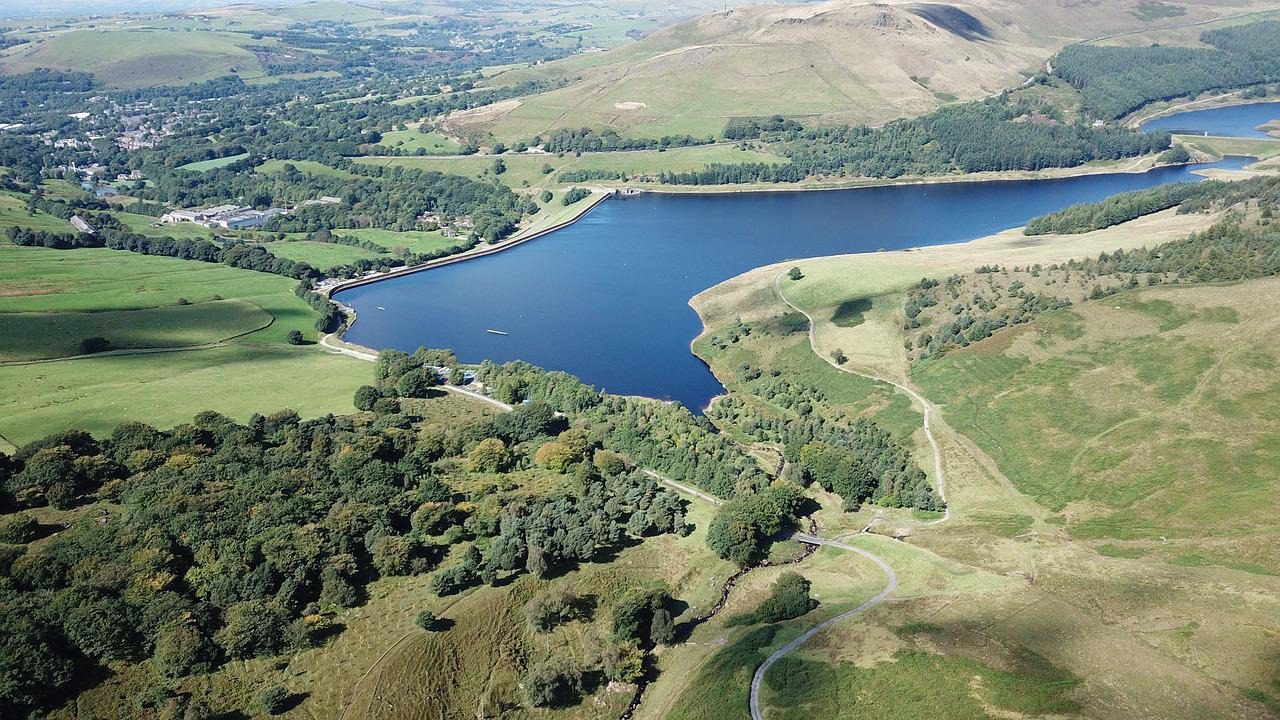
Dove Stone Reservoir was established in the valleys of Greenfield and Chew Brooks, near the village of Greenfield in Greater Manchester. This region, characterised by its moorland landscape, surrounded by cliffs and hills, creates breathtaking and dramatic scenery.
The reservoir’s history dates back to the 1870s, when it became part of a reservoir system initiated by the Joint Waterworks Committee of Ashton-under-Lyne, Stalybridge, and Dukinfield.
Initially, the construction of the reservoir faced opposition from mill owners, who feared that damming the river would disrupt their water supply and negatively impact their operations. A compromise was reached by building a hydraulic tunnel on the hillside to bypass the reservoir.
Construction of the reservoir was completed in the 1960s.
Dove Stone Reservoir holds historical significance beyond its utility. Before its construction, the southern valley hosted a neo-Gothic mansion built by John Platt, a textile company owner and mayor of Oldham. The estate served as a hunting lodge.
However, tragedy struck during a hunting expedition when John Platt’s brother, James, was accidentally shot and killed near the estate. The mansion remained unoccupied for many years until it was acquired by the Joint Waterworks Committee.
During World War I, the estate was handed over to the Red Cross and converted into a hospital for wounded soldiers. In World War II, it housed Italian prisoners of war.
After the war, the building deteriorated and was rarely used for committee meetings. By the early 1970s, the dilapidated structure served as a filming location for the comedy Last of the Baskets.
Severe dampness and vandalism led to the building’s demolition in 1981. The only remnant of the onc.
Purpose of the Reservoir
Dove Stone Reservoir was constructed to collect water from the moorland and provide drinking water to nearby settlements.
The earthen dam of the reservoir stands 38 metres tall and stretches 550 metres in length. It features an overflow spillway designed to regulate the water level. An additional emergency spillway activates during sudden floods, allowing the reservoir to manage a surge of approximately two metres.
Attractions Near Dove Stone Reservoir
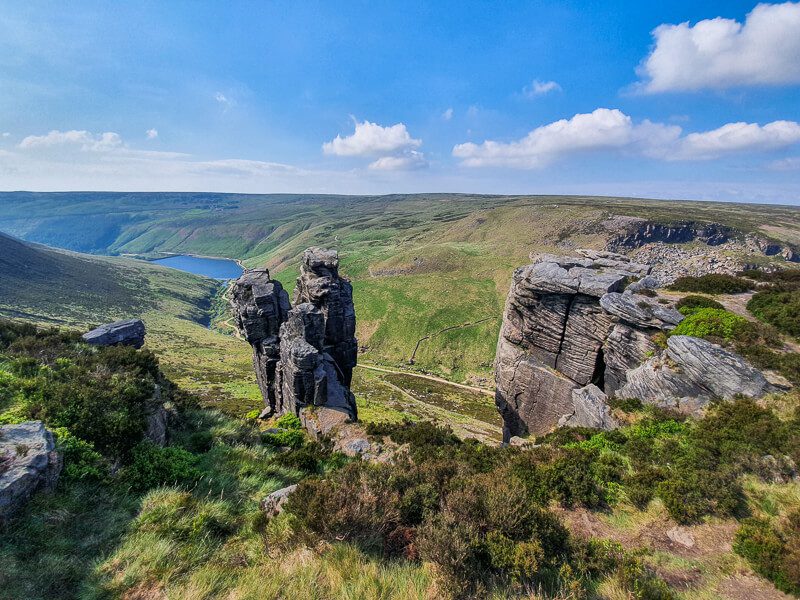
Dove Stone Reservoir is also a key recreational site. Located on the edge of the Peak District National Park, the area is home to woodlands and meadows, creating a haven for wildlife, birds, and insects.
The surrounding area offers opportunities for hiking and cycling, while the Chew Brook valley is a popular spot for rock climbing. Visitors can also enjoy sailing on the reservoir, though swimming is prohibited due to the presence of drainage pipes that pose a safety risk.
Near the reservoir lies the “Life for a Life” plantation, where, for a fee, people can plant a tree in memory of a loved one. By the early 2020s, over 700 trees had been planted.
For visitors, there are also eateries near Dove Stone Reservoir, making it a convenient and inviting destination. The site is best reached by private transport.
Dove Stone Reservoir is not only a critical utility for water management but also a beloved recreational site. Its rich history, stunning natural beauty, and accessibility make it a treasured destination for locals and tourists alike.